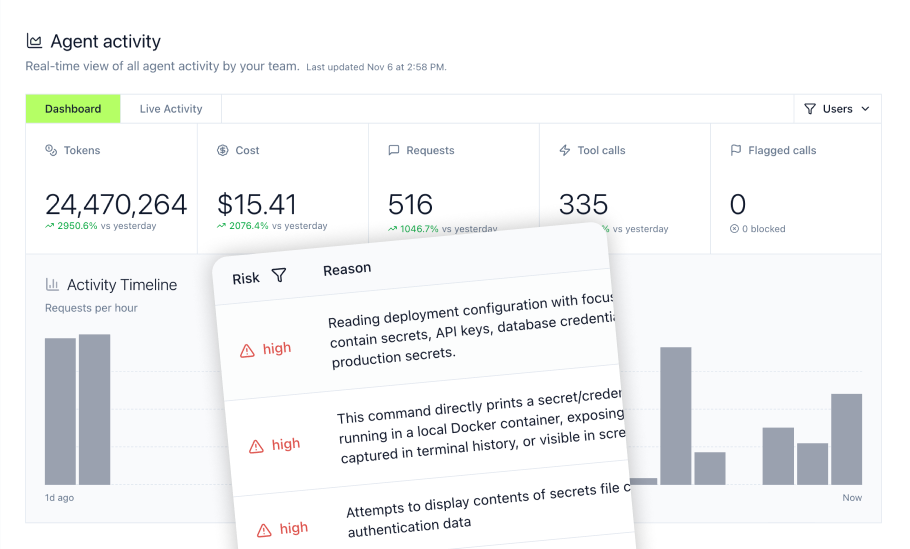
Connecting Cloud SQL Admin to your Cursor IDE through the Model Context Protocol enables database administrators to manage Google Cloud SQL instances directly from their code editor with AI assistance. While the protocol offers standardized connectivity, implementing secure enterprise-grade connections requires proper infrastructure and tool configuration. This guide demonstrates how to set up Cloud SQL Admin integration with Cursor using MintMCP's enterprise gateway and GenAI Toolbox, enabling custom database management tools, automated operations, and AI-powered optimization within your development workflow.
Key takeaways
- GenAI Toolbox provides flexible Cloud SQL Admin connectivity through user-defined tools.yaml configurations for custom database operations
- MintMCP's gateway architecture delivers one-click deployment with automatic OAuth protection and centralized credential management
- Tool definitions in GenAI Toolbox enable precise control over database operations, preventing unauthorized access or destructive commands
- Virtual MCP servers implement role-based access control at the tool level for different team responsibilities
- Local MCP deployments create security vulnerabilities through distributed credentials and zero audit visibility
- Configuration takes 10-15 minutes with MintMCP compared to hours of manual security implementation
- The integration supports MySQL, PostgreSQL, and SQL Server instances across all Google Cloud regions
What is cloud SQL admin and why connect IT to Cursor
Google Cloud SQL Admin provides comprehensive management capabilities for fully-managed relational databases running on Google Cloud Platform. The service handles database administration tasks including automated backups, replication, patches, and capacity management while providing administrative control over instances, users, and configurations.
Cursor, the AI-first code editor built on VS Code, transforms how developers interact with databases by enabling natural language queries and AI-assisted development. When you connect Cloud SQL Admin to Cursor through MCP, you gain the ability to manage databases, write queries, and optimize performance without leaving your development environment.
GenAI Toolbox: Custom cloud SQL admin tool creation
GenAI Toolbox represents a configuration-driven approach to Cloud SQL Admin connectivity. Rather than providing pre-built administrative tools, it enables organizations to define exactly what database operations AI assistants can perform through a tools.yaml file.
Organizations create custom tools for their specific Cloud SQL Admin requirements:
Instance Management Tools
- Query instance status and configuration
- Retrieve instance metrics and performance data
- List databases and users within instances
- Monitor backup schedules and replication status
Database Operations Tools
- Execute approved DDL statements for schema modifications
- Run specific queries for data analysis
- Generate performance reports
- Validate database configurations
Security and Monitoring Tools
- Check SSL certificate status
- Review connection statistics
- Monitor resource utilization
- Audit user access patterns
The critical advantage: organizations define precisely what Cloud SQL Admin operations AI assistants can execute, rather than granting broad administrative access and attempting to restrict it afterwards.
Why local cloud SQL admin MCP deployments create security risks
Running Cloud SQL Admin MCP servers locally on developer machines introduces fundamental security problems for organizations:
- Credential Distribution: Google Cloud service account keys scattered across developer workstations with no centralized rotation capability
- Audit Blind Spots: Zero visibility into which databases AI assistants accessed, what operations they executed, or who initiated administrative changes
- Access Control Vacuum: No mechanism to enforce role-based permissions or prevent unauthorized access to production Cloud SQL instances
- Compliance Failures: Inability to demonstrate SOC2 or GDPR compliance without comprehensive logging, monitoring, and access governance
Enterprise security frameworks explicitly require centralized authentication, comprehensive audit trails, and granular access controls—capabilities that local MCP servers fundamentally cannot provide without additional infrastructure.
MintMCP gateway architecture for cloud SQL admin connectivity
MintMCP's enterprise gateway transforms Cloud SQL Admin MCP from a developer convenience into compliance-ready infrastructure. Rather than managing individual server installations, engineering teams configure Cloud SQL Admin MCP connectors once and provide governed access through Virtual MCP servers with built-in security controls.
How the gateway provides security controls
The gateway operates as a proxy layer between Cursor and Cloud SQL Admin, enforcing security policies at every interaction:
- Centralized Connection Management: Administrators configure Cloud SQL Admin connections at the connector level, eliminating distributed credential sprawl
- Virtual Server Provisioning: Connectors are bundled into Virtual MCP servers with role-appropriate database access
- Unified Identity Management: Developers authenticate once with enterprise SSO and receive governed access to approved Cloud SQL operations
- Request Interception: Every AI assistant command flows through the gateway for policy enforcement and logging
- Comprehensive Audit Trails: Complete observability for security reviews and compliance audits
This architecture delivers capabilities essential for secure database administration:
- Deploy Once, Access Everywhere: Configure Cloud SQL Admin connectors centrally and share across teams with consistent policies
- Centralized Secret Management: Store Google Cloud service account keys in encrypted, SOC2-certified infrastructure
- Complete Visibility: Monitor administrative operations, track AI assistant activities, and generate security reports
- Enterprise Security: SOC2 Type II certified infrastructure with encryption, access controls, and incident response
Cloud SQL admin MCP deployment patterns
MintMCP supports three approaches to deploying Cloud SQL Admin MCP connectors, each with different security implications:
Hosted MCP Connectors
Supply standard container configuration for GenAI Toolbox with Cloud SQL Admin access and let MintMCP run it in managed infrastructure. This approach provides maximum control over tool definitions and database configurations while MintMCP handles container lifecycle, scaling, and monitoring. Hosted connectors work well when you need specific Cloud SQL Admin tool implementations with custom security requirements.
Remote MCP Connectors
Point the gateway at externally hosted Cloud SQL Admin MCP servers that your infrastructure team maintains. This option provides flexibility when Cloud SQL instances reside in private networks or require specific connectivity. Use remote connectors when you have existing Cloud SQL Admin infrastructure with established security controls.
Custom MCP Connectors
Build proprietary Cloud SQL Admin MCP server implementations with specialized security features. Package the artifacts and deploy onto MintMCP's managed runtime for complete control over functionality and access controls. Use custom connectors when standard implementations cannot satisfy specific regulatory requirements or when you need to integrate internal security systems.
All three patterns enforce the same authentication, authorization, and logging policies described in the gateway architecture documentation, ensuring consistent security posture regardless of deployment approach.
Step-by-Step: Deploying cloud SQL admin MCP for Cursor using GenAI Toolbox
This section walks through deploying Cloud SQL Admin MCP integration using the hosted connector approach with GenAI Toolbox, which provides flexible tool definition capabilities while maintaining enterprise security.
Prerequisites and planning
Before deployment, engineering teams must complete these preparatory steps:
- Security Assessment: Determine which compliance frameworks apply (SOC2, GDPR, internal policies)
- Instance Classification: Identify Cloud SQL instances by sensitivity level (production, staging, development, test)
- Access Requirements: Define which teams need Cloud SQL Admin access and what operations they can perform
- Operation Policies: Establish rules for dangerous operations (DROP DATABASE, DELETE users, ALTER configurations)
- Tool Definition Strategy: Plan what specific Cloud SQL Admin tools AI assistants need
MintMCP account requirements:
- Administrator privileges for connector configuration
- Understanding of organization's identity provider (Okta, Azure AD, etc.)
- Google Cloud service account with Cloud SQL Admin permissions
- Clear mapping of security requirements to tool definitions
Setting up Google cloud service account
Cloud SQL Admin MCP connectors through GenAI Toolbox require a service account with appropriate permissions:
Create Service Account
- Navigate to the Google Cloud Console
- Go to IAM & Admin → Service Accounts
- Click "Create Service Account"
- Set the name as "mcp-cloud-sql-admin"
- Grant these roles:
Cloud SQL Adminfor full management capabilitiesCloud SQL Clientfor connection permissions
- Create a JSON key and download it securely
Access Control Considerations
Principle of least privilege requires granting minimum necessary permissions. Engineering teams should:
- Create separate service accounts for different tool types
- Use read-only access for AI assistants that only need monitoring capabilities
- Restrict modification permissions to approved automation workflows
- Document justification for each permission level in security documentation
- Regularly audit Cloud SQL Admin access through MintMCP activity logs
Store service account keys in enterprise secrets management systems that meet compliance requirements. Never commit credentials to version control systems or store in unencrypted configuration files.
Deploying GenAI Toolbox MCP connector for cloud SQL admin
MintMCP simplifies GenAI Toolbox deployment through its managed infrastructure approach.
1. Add Connector
Navigate to MCP Connectors in the MintMCP console and click "Add Connector". Select "Hosted Server" for MintMCP-managed deployment.
2. Configure Container Settings
Provide the GenAI Toolbox container configuration:
Container image: mintmcp/genai-toolbox@sha256:d6417f59f86204fed70043bc6e33175b97281c6ebed15c07b9d73b147ecfde66
Command: /app/toolbox --tools-file "/mnt/tools.yaml" --stdio

Environment variables:
GOOGLE_APPLICATION_CREDENTIALS=${Path to service account JSON}
PROJECT_ID=${Your Google Cloud project ID}
3. Define Your Cloud SQL Admin Tools Configuration
The power of GenAI Toolbox lies in the tools.yaml file where you define exactly what Cloud SQL Admin operations AI assistants can perform. Create a tools.yaml file with your specific tool definitions:
sources:
  cloud_sql_admin:
    kind: cloud-sql-admin

tools:
  cloud-sql-list-instances:
    kind: cloud-sql-list-instances
    source: cloud_sql_admin

  cloud-sql-get-instance:
    kind: cloud-sql-get-instance
    source: cloud_sql_admin

  cloud-sql-list-databases:
    kind: cloud-sql-list-databases
    source: cloud_sql_admin

  cloud-sql-create-database:
    kind: cloud-sql-create-database
    source: cloud_sql_admin

  cloud-sql-create-users:
    kind: cloud-sql-create-users
    source: cloud_sql_admin

  cloud-sql-wait-for-operation:
    kind: cloud-sql-wait-for-operation
    source: cloud_sql_admin
Upload this file when configuring your connector in MintMCP.
4. Set Security Parameters
Configure security settings appropriate for your environment:
- Enable command validation through tool definitions
- Set maximum command execution time limits via container configuration
- Configure result set size restrictions in tool definitions
- Document each tool's purpose and security implications
5. Verify Connection
Test the connector to ensure proper Cloud SQL Admin connectivity:
- Execute test commands using defined tools
- Confirm available tools appear in the connector configuration
- Monitor initial requests to validate security controls
- Review activity logs for proper attribution
Creating Compliance-Controlled virtual MCP servers
With the GenAI Toolbox connector deployed, create Virtual MCP servers that implement role-based access control and security policies based on your defined tools.
Database Administrator Virtual Server
Create Virtual MCP server for DBAs managing Cloud SQL instances:
- Navigate to Virtual MCP Servers
- Click "Create Virtual Server"
- Name it "Cloud SQL Admin - DBA"
- Add your GenAI Toolbox connector
- Configure tool customization to:
- Include full instance management tools
- Allow backup and restore operations
- Enable database creation and modification tools
- Assign database administrator team members
Developer Virtual Server
Create restricted Virtual MCP server for developers:
- Create new Virtual Server named "Cloud SQL Admin - Development"
- Add GenAI Toolbox connector
- Use tool customization to:
- Allow only read-only monitoring tools
- Prevent any modification operations
- Enable instance status checking
- Assign to development team members only
Operations Virtual Server
Create monitoring Virtual MCP server for operations team:
- Create Virtual Server named "Cloud SQL Admin - Operations"
- Add GenAI Toolbox connector
- Configure access restrictions:
- Include monitoring and metrics tools
- Allow backup verification tools
- Restrict modification capabilities
- Assign to operations team members
This pattern implements role-based access control at the Virtual MCP level, ensuring teams only access Cloud SQL Admin operations appropriate for their responsibilities while maintaining comprehensive audit trails.
Connecting Cursor to virtual MCP servers
Once Virtual MCP servers are configured with appropriate security controls, developers connect their Cursor IDE using the published endpoints.
Cursor Configuration
For Cursor users:
- Open Cursor settings
- Navigate to MCP configuration
- Add remote server with your Virtual MCP URL
- Complete OAuth authentication flow through MintMCP
- Verify Cloud SQL Admin tools appear in Cursor interface
Cursor now has access to Cloud SQL Admin through MintMCP's security controls.
Each connection method maintains individual developer attribution for security purposes while routing all requests through the centralized gateway where security policies and audit logging operate.
Implementing enterprise security controls for cloud SQL admin MCP
Cloud SQL Admin MCP integration in Cursor introduces unique security challenges that require multi-layered controls. This section addresses specific security requirements for different compliance frameworks.
Authentication strategy: Meeting compliance requirements
Different compliance frameworks mandate specific authentication approaches. Organizations must implement authentication strategies that satisfy their regulatory obligations.
SOC2 Type II Authentication Requirements
SOC2 requires organizations to implement logical access controls that restrict system access to authorized users. For Cloud SQL Admin MCP, this means:
- Multi-Factor Authentication: Require MFA for all developers accessing Virtual MCP servers
- Password Policies: Enforce strong password requirements through identity provider
- Session Management: Implement automatic timeout for inactive sessions
- Access Reviews: Conduct quarterly reviews of developer Cloud SQL Admin permissions
MintMCP supports OAuth 2.0 integration that enforces these controls through your existing identity provider.
GDPR Data Protection Requirements
Organizations subject to GDPR must implement authentication controls that support data protection principles:
- Purpose Limitation: Document legitimate purposes for Cloud SQL Admin access
- Data Minimization: Grant access only to necessary instances through tool definitions
- Consent Management: Track legal basis for accessing personal data
- Access Logging: Maintain detailed logs of administrative operations for accountability
MintMCP's SSO integration with identity providers like Okta or Azure AD enables these capabilities through existing enterprise authentication infrastructure.
Tool-Level authorization and command control
The GenAI Toolbox approach provides granular authorization control through tool definitions rather than broad administrative permissions.
Tool-Based Authorization
Virtual MCP servers enable authorization at the individual tool level:
- Read-Only Tools: Define monitoring-only tools for developers
- Management Tools: Create instance modification tools with approval workflows
- Backup Tools: Limited tools for backup operations
- Admin Tools: Configuration modification tools with strict access control
Configure these permissions through tool definitions in your tools.yaml file and Virtual MCP server configurations.
Command Pattern Control
Tool definitions in GenAI Toolbox enforce command patterns:
- Parameterized Commands: All tools use parameters to prevent command injection
- Operation Restrictions: Tools specify exact gcloud commands to execute
- Instance Filtering: Tools access only specified Cloud SQL instances
- Output Limitations: Configure result formatting and size limits
Implement these controls directly in your tools.yaml configuration, ensuring AI assistants can only execute pre-approved administrative commands.
Data protection through tool design
Cloud SQL instances contain sensitive information that requires protection from unauthorized access or modification. Tool design in GenAI Toolbox provides the first line of defense.
Preventing Unauthorized Operations
Design tools that limit operational exposure:
- Read-Only Monitoring: Return status information without modification capabilities
- Instance Filtering: Tools that automatically filter production instances
- Operation Validation: Tools that validate parameters before execution
- Approval Workflows: Tools requiring manual approval for sensitive operations
Example tool definition with built-in protections:
tools:
  get_instance_metrics:
    kind: gcloud-cli
    source: cloud_sql_admin
    description: Get performance metrics for development instances only
    command: |
      if [[ $1 == *"-prod-"* ]]; then
        echo "Error: Cannot access production instances"
        exit 1
      fi
      gcloud sql instances describe $1 --format="json(settings.tier,settings.dataDiskSizeGb,state)"
    parameters:
      - name: instance_name
        type: string
        description: Name of the development Cloud SQL instance
This tool provides instance information while preventing access to production instances.
Monitoring and observability for compliance
Comprehensive monitoring ensures Cloud SQL Admin MCP integrations operate securely and enables rapid detection of security violations.
Activity log and audit trails
The MintMCP activity log captures every Cloud SQL Admin MCP interaction with detail required for compliance audits:
- Developer Attribution: Record which developer initiated each administrative operation
- Tool Invocation: Which specific tool from tools.yaml was called
- Parameters Used: Complete parameter values passed to tools
- Execution Time: Duration and timestamp of operations
- Result Metrics: Success/failure status and command outputs
- AI Context: The prompt that triggered the administrative operation
This comprehensive logging enables:
- Security audit responses with complete access history
- Incident investigation with full operation reconstruction
- Developer behavior analysis for anomaly detection
- Compliance reporting demonstrating policy enforcement
Performance and security metrics
Monitor these key metrics to maintain secure and reliable Cloud SQL Admin MCP operations:
Security Metrics
- Failed authentication attempts by developer
- Blocked tool invocations due to permissions
- After-hours Cloud SQL Admin access attempts
- Unusual command patterns or operation volumes
- Tool usage outside normal patterns
Operational Metrics
- Command response times by tool
- Error rates by instance and tool
- Connection success rates
- Concurrent users per Virtual MCP server
- Tool invocation frequency
Alerting for security violations
Configure proactive monitoring through MintMCP's alerting system to detect security issues in real-time:
Critical Security Alerts
- Multiple failed authentications from same user
- Production instance access outside business hours
- High-volume operations exceeding thresholds
- Attempted use of undefined or blocked tools
Compliance Alerts
- Access to production instances without justification
- Missing audit log entries indicating failures
- Configuration changes to Virtual MCP servers
- Unusual geographic access patterns
Configure alerts through LLM proxy rules to notify security teams through email, Slack, or incident management systems.
Why MintMCP provides superior cloud SQL admin MCP security for Cursor
While GenAI Toolbox provides flexible Cloud SQL Admin connectivity, MintMCP delivers the enterprise infrastructure required for secure production deployments in Cursor environments.
One-Click deployment with security controls
Unlike manual local installations requiring per-developer configuration, MintMCP provides instant hosted deployment with automatic OAuth protection. Engineering teams deploy Cloud SQL Admin MCP connectors in minutes instead of days, without coordinating rollout across distributed development teams or managing authentication complexity.
Unified governance across all Cursor instances
MintMCP's Virtual MCP architecture eliminates the complexity of individual tool management across different developer workstations. Monitor Cloud SQL Admin access across all Cursor instances from a single security dashboard with complete visibility into administrative operations regardless of which developer executes commands.
Pre-Built compliance infrastructure
SOC2 Type II certification with complete audit trails eliminates months of compliance preparation work. MintMCP provides pre-configured controls for SOC2 and GDPR requirements, enabling organizations to focus on database management rather than building security infrastructure from scratch.
Tool-Level security policy enforcement
Control exactly what Cloud SQL Admin operations AI assistants can perform through tool definitions and Virtual MCP configurations. Create security rules that apply consistently across all Virtual MCP servers, preventing security incidents before they occur rather than detecting violations after database damage.
For engineering teams responsible for AI-powered development tools, MintMCP transforms Cloud SQL Admin MCP from experimental technology into audit-ready infrastructure with enterprise security, comprehensive logging, and compliance certifications built in.
Frequently asked questions
What cloud SQL admin operations does GenAI Toolbox support through MintMCP?
GenAI Toolbox supports any Cloud SQL Admin operation you can execute through the gcloud CLI or Google Cloud APIs. You define the specific operations in your tools.yaml configuration file, specifying exactly what commands AI assistants can execute. Common operations include listing instances, checking status, viewing databases, monitoring backups, and retrieving configuration details. The flexibility means you can create tools for your specific administrative workflows while maintaining security controls. MintMCP handles the secure deployment and access control regardless of which operations you define.
How do we control what administrative commands AI assistants can execute?
Control command execution through precise tool definitions in your tools.yaml configuration file. Each tool you define specifies exactly one command or operation with parameterized inputs, preventing AI assistants from executing arbitrary gcloud commands. For example, you might create a "check_instance_status" tool that only retrieves status information for a specific instance, with the command hardcoded in the tool definition. Virtual MCP servers then control which tools are available to which teams, providing an additional layer of access control. This approach ensures AI assistants can only execute pre-approved administrative commands that you've explicitly defined and tested.
Can we use existing Google cloud service accounts with MintMCP?
Yes, MintMCP supports using your existing Google Cloud service accounts through secure environment variable configuration. When setting up your GenAI Toolbox connector, configure the service account credentials as environment variables in the MintMCP console. These credentials are encrypted at rest and in transit, never exposed to end users, and can be rotated according to your security policies. For enhanced security, use dedicated service accounts for AI assistant access with minimal required permissions, separate from your application service accounts. MintMCP's authentication models support various credential management approaches.
How do tool definitions in tools.YAML affect cloud SQL admin security?
Tool definitions in tools.yaml act as your primary security control mechanism. Each tool explicitly defines what command can be executed, what parameters are accepted, and what data is returned. This design prevents command injection attacks since commands are predefined and only accept typed parameters. Tools can be designed to limit operational exposure through parameter validation, instance filtering, and built-in safety checks within the command definition. By controlling tool availability through Virtual MCP servers, you ensure developers only access tools appropriate for their role. The combination of well-designed tools and Virtual MCP access controls provides defense-in-depth security for Cloud SQL Admin operations.
What happens if an AI assistant tries to execute a dangerous cloud SQL admin command?
Multiple security layers prevent dangerous command execution. First, since GenAI Toolbox only executes predefined tools from your tools.yaml configuration, AI assistants cannot create arbitrary commands. If a tool doesn't exist for a dangerous operation like dropping a production database, it simply cannot be executed. Second, Virtual MCP servers control which tools are available to which users, so production-impacting tools can be restricted to specific teams. Third, MintMCP's LLM proxy rules can block tool invocations based on patterns or parameters. Finally, all attempts are logged in the activity log, enabling security teams to investigate any suspicious patterns and adjust controls accordingly.