With 71% of organizations regularly using generative AI in at least one business function, enterprises face a critical infrastructure challenge: how do you give AI coding assistants and agents access to Microsoft 365 tools without losing control over credentials, audit trails, and security policies?
MCP (Model Context Protocol) Gateways solve this problem. Instead of configuring separate connections between every AI agent and every M365 tool, agents connect once to a gateway, which handles authentication, permissions, and compliance logging for all downstream integrations. An MCP Gateway transforms what would require managing many separate tool connections into a single, governed endpoint.
The challenge? Not all gateways offer the same M365 integration depth, compliance posture, or deployment simplicity. This guide examines the six leading MCP gateways for Microsoft 365 environments in 2026, with specific attention to Entra ID integration, audit capabilities, and time-to-production.
Key Takeaways
- MCP Gateways centralize AI agent governance by providing a single authenticated endpoint between AI tools such as Cursor, Claude Code, Microsoft 365 Copilot, and enterprise data sources, eliminating scattered API keys and credential management headaches
- Microsoft 365 integration requires specific capabilities including Entra ID authentication, audit logging compatible with security review workflows, and governed access to Outlook, Teams, SharePoint, and other Microsoft 365 resources
- Deployment effort varies significantly between managed SaaS-first platforms and self-hosted or API-gateway-based approaches, so choose based on governance requirements and team DevOps capacity
- SOC 2 Type II audited controls matter for enterprise procurement. Prioritize gateways that can provide current compliance documentation and confirm whether the scope covers managed, self-hosted, or hybrid deployments
- Native M365 integration vs. universal compatibility represents the core tradeoff. Microsoft Agent 365 offers deep Microsoft ecosystem alignment, while third-party gateways can provide broader cross-platform governance across multiple AI clients, MCP servers, and enterprise systems
1. MintMCP: Enterprise-Grade Governance with Managed SaaS-First Deployment
MintMCP is a SOC 2 Type II audited MCP gateway built for enterprise authentication, tool-level access control, credential management, logging, rule-based policy, and agent governance. It is a strong fit for organizations that require compliance documentation and centralized MCP governance without operating gateway infrastructure themselves. The platform is managed SaaS-first, with US and EU deployment options and VPC or self-hosted deployment available on request.
What Makes MintMCP Different
MintMCP's Virtual MCP Bundles address a fundamental enterprise challenge: tool explosion. Rather than exposing every tool from an MCP server to every user or agent, Virtual MCP Bundles let administrators create per-use-case endpoints with SCIM-driven membership, curated tools, and role-based policy. Sales teams can see the tools they need; engineering teams can receive a different governed endpoint. Each Bundle inherits centralized OAuth protection, credential management, and audit logging automatically.
MintMCP also supports Agent Bundles with M2M authentication and an "act as agent" flow, giving internal agents first-class identities rather than relying on shared service-account keys. For Microsoft 365 environments, this matters because employee and agent access can be governed through the same data-permissions-first model.
Microsoft 365 Integration Capabilities
- Entra ID SSO/SAML integration through enterprise SSO and identity-provider-based access patterns
- SSO and SCIM-driven RBAC for group-based access to governed MCP Bundles
- Complete audit trails designed to support security reviews and compliance programs, including SOC 2-aligned controls and GDPR-oriented workflows
- Tool-level allowlisting and rule-based policy so admins can control which users or agents can call specific tools
- Credential management and OAuth brokering for stdio and hosted MCP servers
- Hosted MCP connectors run by MintMCP, extending governed agent access beyond Microsoft 365 into other enterprise systems
Enterprise Security Features
- SOC 2 Type II audited
- Compliant with HIPAA standards
- Penetration tested
- Data encrypted in transit and at rest
- Enterprise SSO and role-based access control
- Granular tool-level access control by role
- Audit logs and centralized observability
- External DLP and guardrails integrations through JavaScript Gateway Middleware in a JS sandbox
Deployment Details
- Setup Model: Managed SaaS-first deployment
- Infrastructure: US and EU managed SaaS, with VPC or self-hosted deployment available on request
- Support: Enterprise support and onboarding available
- Pricing: Enterprise tier, contact for demo
Best For: Organizations requiring compliance documentation who want production-ready MCP governance without infrastructure overhead. MintMCP is especially relevant for mid-market and enterprise teams in regulated industries where SOC 2 Type II audited controls, compliant with HIPAA standards workflows, tool-level policy, and centralized auditability are procurement requirements.
2. Microsoft Agent 365
Microsoft Agent 365 platform offers deep native Microsoft 365 Admin Center integration for Copilot-first environments, with Microsoft-built MCP servers for core M365 services. Currently available through the Frontier preview program, Agent 365 provides pre-built MCP servers for Outlook Mail, Outlook Calendar, Teams, SharePoint, OneDrive, Dataverse, and Word.
Pre-Built Microsoft 365 MCP Servers
- Outlook Mail – Create, update, delete messages; semantic search; reply/reply-all
- Outlook Calendar – Create, list, update, delete events; accept/decline; resolve conflicts
- Teams – Create/update/delete chats; add members; post messages; channel operations
- SharePoint/OneDrive – Upload files, get metadata, search, manage lists
- Dataverse – CRUD operations on business data
- Word – Create/read documents; add/reply to comments
Governance and Observability
- Microsoft Defender Advanced Hunting for audit log queries
- M365 Admin Center for server permission management
- Entra ID native authentication without additional configuration
- Azure Monitor integration for performance metrics
Access Requirements
- Frontier Preview Program enrollment required
- Microsoft Entra Admin role for granting MCP server permissions
- At least one Microsoft 365 Copilot license in tenant, per current prerequisites
Tradeoffs to consider
Microsoft Agent 365 is the most Microsoft-native option, but teams should evaluate whether they need cross-platform governance beyond Microsoft 365. MintMCP is better suited when the same governance layer must cover Claude, Cursor, ChatGPT, Gemini, Copilot, hosted MCP connectors, custom MCP servers, Virtual MCP Bundles, and Agent Bundles across multiple enterprise systems.
3. TrueFoundry
TrueFoundry serves organizations where low gateway overhead and hybrid deployment are important requirements. The platform reports low-millisecond gateway processing and high throughput on limited infrastructure, which can be relevant for latency-sensitive agent workloads. For many Microsoft 365 tool calls, Microsoft Graph and network latency will dominate, so governance, identity integration, and auditability often drive the decision.
TrueFoundry's Primary Focus
TrueFoundry combines LLM routing and MCP gateway functionality in a single platform. Organizations already using TrueFoundry for LLM management, including model routing, cost optimization, and provider fallback, can add MCP governance with minimal additional configuration. The hybrid deployment model supports managed SaaS and self-hosted control-plane patterns.
Microsoft 365 Integration Approach
- Custom MCP server development for M365 integration
- Entra ID SSO support
- Azure deployment option for network proximity to M365 services
- Custom audit logging destination configuration
Performance Specifications
- Latency: Low-millisecond gateway processing reported by the vendor
- Throughput: High-throughput gateway processing reported by the vendor
- Deployment: Managed SaaS and self-hosted control-plane options
- Scaling: Infrastructure-dependent scaling model
Compliance Posture
For TrueFoundry deployments, compliance scope depends on the selected managed, self-hosted, or hybrid architecture. Procurement teams should confirm which controls are covered by vendor documentation and which remain the customer's responsibility.
Tradeoffs to consider
TrueFoundry can fit teams already standardizing on its broader AI platform, but Microsoft 365 governance may require custom MCP server development and configuration. MintMCP is more focused on data-permissions-first MCP governance with SSO and SCIM-driven RBAC, Virtual MCP Bundles, Agent Bundles, hosted MCP connectors, and centralized auditability as first-class platform primitives.
4. Bifrost
Bifrost by Maxim AI highlights microsecond-level gateway overhead in published benchmarks, with end-to-end latency still dominated by model, provider, tool, and network behavior. As an open-source, self-hosted-first solution, Bifrost can reduce licensing costs, but requires teams to operate and maintain the gateway infrastructure themselves.
Bifrost for Performance-First Teams
Built in Go for performance, Bifrost provides the gateway layer without managed SaaS lock-in. Organizations with existing Kubernetes or container infrastructure can deploy Bifrost alongside current DevOps workflows. The registry-based architecture connects to community-contributed MCP servers.
Microsoft 365 Integration Approach
- Manual Entra ID integration configuration
- Custom MCP server development required for M365 tools
- Prometheus/OTLP observability with customer-configured dashboards
- Customer-operated compliance and audit infrastructure
Performance Benchmarks
- Latency: About 11µs gateway overhead in published benchmark context
- Throughput: High-throughput gateway processing reported in benchmark materials
- Resource Efficiency: Minimal hardware requirements
- Deployment: Self-hosted, with Docker or Kubernetes-based operations
Tradeoffs to consider
Bifrost can fit teams that want open-source control and are comfortable operating the gateway layer. It may make Microsoft 365 governance harder for teams that do not want to own connector hosting, scaling, Entra ID configuration, audit pipelines, or Kubernetes operations. MintMCP addresses those gaps with managed SaaS-first deployment, hosted MCP connectors, credential management, audit logs, and SCIM-driven access policy.
5. Azure API Management
Azure API Management extends Microsoft's existing API gateway to support MCP protocol traffic. For organizations already standardizing on Azure infrastructure, APIM provides MCP capabilities that inherit existing Azure policies, monitoring, and security configurations.
Azure APIM for Azure-Native Environments
APIM is not purpose-built for MCP. It is an enterprise API gateway that can support MCP traffic and expose existing APIs through governed API-management workflows. This means existing Azure investments such as Key Vault, Monitor, Entra ID, and network policies can apply. APIM can expose existing REST APIs as MCP tools and can front existing MCP servers, but configuration is still required to determine which Graph or API operations become tools and to apply the right policies. There are no Microsoft 365 pre-built MCP connectors in APIM out of the box.
Microsoft 365 Integration Approach
- Native Entra ID authentication
- Azure Key Vault for secrets management
- Azure Monitor for observability
- Custom MCP server configuration required
- Microsoft Graph API exposure through custom configuration
Infrastructure Specifications
- Latency: typically tens of milliseconds of gateway overhead, architecture- and policy-dependent
- Deployment: Azure-based
- Compliance: Azure-level compliance programs, with scope dependent on configuration and deployment model
- Scaling: Azure consumption-based
Configuration Complexity
Azure APIM setup typically requires API Management expertise, plus additional time for custom MCP server development and Microsoft Graph tool design. Teams need Azure API Management expertise, not just general Azure familiarity.
Tradeoffs to consider
Azure APIM can fit Azure-native platform teams that want to reuse existing API gateway investments. The tradeoff is that APIM is an API gateway adapted for MCP rather than an MCP governance platform built around Virtual MCP Bundles, Agent Bundles, tool-update policy, OAuth brokering for stdio and hosted MCP servers, and MCP-specific audit workflows.
6. IBM ContextForge
IBM ContextForge addresses a specific enterprise scenario: organizations with multiple gateways requiring federation and coordination. Released under Apache 2.0 license, ContextForge provides architectural patterns for large-scale, distributed MCP deployments.
ContextForge for Distributed Enterprises
ContextForge's federation capability allows multiple gateways to coordinate across distributed deployments. Regional offices can connect to local gateways for performance, while cross-region tool discovery can be coordinated through the gateway architecture. This architecture suits multinational enterprises evaluating distributed MCP patterns.
Microsoft 365 Integration Approach
- Custom MCP server development for M365 tools
- Entra ID integration through manual configuration
- Federation with regional deployments
- Custom audit logging infrastructure
Enterprise Architecture Features
- Multi-gateway federation for distributed MCP deployments
- Regional deployment patterns for distributed enterprise architecture
- Kubernetes-native orchestration
- Apache 2.0 license
Tradeoffs to consider
ContextForge can fit teams that want open-source federation patterns and have the infrastructure capacity to run distributed gateways. It may create more operational work for teams that want managed SaaS-first deployment, hosted MCP connectors, SSO and SCIM-driven RBAC, centralized audit logs, Agent Bundles, and per-use-case Virtual MCP Bundles without operating the gateway layer themselves.
Deploy Enterprise MCP Governance with Confidence
The Model Context Protocol has established itself as the standard for connecting AI agents to enterprise tools and data. For Microsoft 365 environments specifically, the decision comes down to three core factors: compliance requirements, M365 integration depth, and deployment complexity.
Organizations requiring SOC 2 Type II audited controls with minimal infrastructure overhead will find MintMCP provides a direct path from pilot to production. The platform's Virtual MCP Bundles solve the tool explosion challenge by creating role-based, per-use-case endpoints that expose only necessary capabilities while inheriting centralized OAuth protection, credential management, and audit logging automatically.
For enterprises extending AI capabilities beyond Microsoft 365, MintMCP's hosted MCP connectors enable governance across Snowflake data warehouses, Elasticsearch knowledge bases, and other critical enterprise systems. Managed SaaS-first deployment reduces the configuration and operational burden often associated with self-hosted enterprise AI infrastructure.
Microsoft 365-only environments with deep Copilot Studio investments may prefer Agent 365's native Admin Center integration. DevOps-capable teams prioritizing performance and open-source flexibility can evaluate Bifrost or ContextForge based on specific latency and federation requirements. Organizations already standardized on Azure infrastructure or TrueFoundry LLM management can leverage existing investments while adding MCP governance.
The key distinction: enterprise MCP governance requires more than protocol support. It demands authentication, authorization, audit logging, credential management, tool-level policy, and agent governance that transforms experimental AI into production-ready infrastructure. MintMCP provides this governance layer with a compliance-forward posture, including SOC 2 Type II audited controls and compliance with HIPAA standards, suited to regulated enterprise procurement.
Ready to transform AI infrastructure? Visit mintmcp.com to see how Virtual MCP Bundles, role-based access control, and agent governance accelerate enterprise AI deployment.
Frequently Asked Questions
What is an MCP Gateway and why is it essential for Microsoft 365 integration?
An MCP Gateway provides a centralized infrastructure layer between AI agents such as Cursor, Claude Code, Microsoft 365 Copilot, and enterprise tools. Instead of managing separate credentials and audit logs for each AI-to-tool connection, the gateway handles authentication, permissions, and compliance logging for all integrations. For M365 environments, this means AI agents can access Outlook, Teams, and SharePoint through a governed endpoint that integrates with Entra ID and produces audit trails for security review.
How do MCP Gateways ensure compliance with SOC 2, HIPAA, and GDPR?
Compliance support varies significantly across gateways. MintMCP is SOC 2 Type II audited, compliant with HIPAA standards, penetration tested, and built with complete audit trails. Customers handling protected health information can request HIPAA documentation, and MintMCP signs BAAs. Other platforms may offer compliance documentation for managed infrastructure or inherit compliance from underlying cloud infrastructure, but procurement teams should confirm scope for managed, self-hosted, and hybrid deployments. GDPR-oriented governance requires data deletion capabilities, access controls, and comprehensive audit logging.
Can an MCP Gateway integrate with existing Entra ID authentication?
Yes, enterprise MCP gateways can support Entra ID integration, though depth varies. Microsoft Agent 365 provides native Entra ID authentication without additional configuration. MintMCP supports enterprise SSO with Azure AD (Entra ID) via SAML/OIDC; see the authentication models overview for supported IdPs and identity flows. MintMCP also supports SCIM-driven RBAC for group-based access to Virtual MCP Bundles. Open-source solutions such as Bifrost and ContextForge require manual configuration. The key benefit: once integrated, revoking Entra ID access can also revoke MCP gateway access.
What monitoring and observability capabilities should be expected from an MCP Gateway?
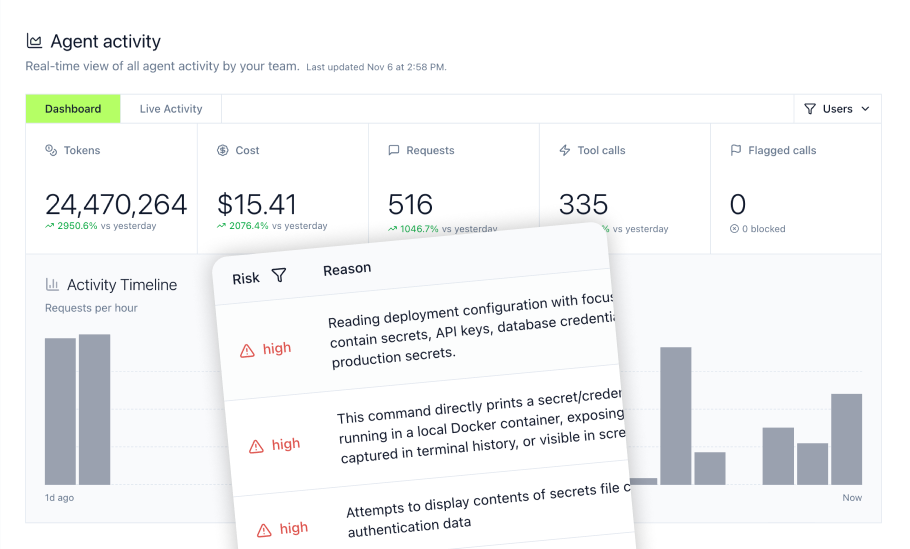
Production-grade gateways provide audit logs and dashboards showing which AI agents called which tools, with what parameters, and what results. MintMCP provides audit logs and centralized observability across governed MCP traffic, with Gateway + Agent Monitor coverage for Claude, Cursor, ChatGPT, Gemini, and Copilot governance. Microsoft Agent 365 integrates with Defender Advanced Hunting for audit log queries. Open-source solutions require custom observability setup using Prometheus, Grafana, or similar tools. At minimum, expect complete audit trails of tool invocations for compliance reviews.
How does an MCP Gateway help manage coding agents accessing internal systems?
Coding agents such as Cursor, Claude Code, and GitHub Copilot operate with extensive system access, including reading files, executing commands, and calling APIs. Without governance, organizations have limited visibility into agent behavior. MCP Gateways provide tool-level access control, credential management, rule-based policy, and complete audit trails for security review. MintMCP adds a two-layer model: Gateway governance for MCP traffic and Agent Monitor coverage for local non-MCP agent activity such as Bash, file reads and writes, and prompt submissions.