Connecting Linear to AI systems securely at enterprise scale requires more than basic API integrations. The Model Context Protocol provides a standardized approach to connect AI agents with Linear's project management platform—enabling natural language interactions with issues, projects, roadmaps, and team workflows. This guide shows engineering leaders and DevOps teams how to implement Linear MCP integrations that meet enterprise security requirements while enabling AI-powered project automation across product development pipelines.
Key takeaways
- MCP standardizes how AI agents interact with Linear's GraphQL API, replacing fragmented custom integrations with a unified protocol for project management automation
- Linear MCP servers provide access to issues, projects, cycles, roadmaps, and team data through natural language interactions with AI assistants
- Enterprise deployments require centralized authentication, audit trails, and access controls that local MCP servers cannot provide effectively
- MintMCP's gateway architecture enables one-click deployment of Linear MCP servers with automatic OAuth protection and enterprise monitoring
- MCP's optional authentication creates security gaps that enterprises must address through OAuth, API tokens, or SSO integration
- Hosted connectors eliminate infrastructure management overhead while maintaining complete audit trails for SOC2 and regulatory compliance
- Linear MCP integration reduces manual project management tasks by 40% while providing AI agents with real-time access to project data and team metrics
What is MCP and why Linear MCP matters
The Model Context Protocol is an open standard that enables developers to build secure, two-way connections between their data sources and AI-powered tools. For product and engineering teams, this means AI agents can interact with Linear workspaces, manage issues and projects, analyze team velocity, and automate workflow tasks without requiring custom GraphQL integrations for each tool.
Traditional Linear integrations follow a fragmented approach. Every AI tool, automation system, or analytics platform requires its own authentication setup, GraphQL client, and maintenance overhead. When you need to connect Claude, ChatGPT, Cursor, and internal automation tools to Linear, you maintain four separate integrations with different authentication patterns and no centralized audit trail.
MCP acts as a bridge between AI applications and external APIs. MCP servers expose external functionality as standardized tools that AI clients can discover and invoke without prior knowledge of implementation details. This standardization dramatically reduces integration complexity while improving security and observability.
Linear MCP server capabilities
Linear's MCP server connects AI tools directly to Linear's platform, giving AI agents, assistants, and chatbots the ability to read and manage issues, track project progress, analyze team metrics, and automate workflows through natural language interactions.
The server provides these core toolsets:
Issue Management
- Create, update, and search issues across workspaces
- Manage issue states, priorities, and assignments
- Track dependencies and blockers between issues
- Bulk operations for issue triage and updates
- Custom field management and label application
Project & Roadmap Automation
- Create and manage projects with milestones
- Track project progress and completion metrics
- Update roadmap items and initiatives
- Monitor project health indicators
- Generate project status reports
Cycle & Sprint Management
- Plan and manage development cycles
- Track sprint velocity and burndown
- Automate issue assignment to cycles
- Monitor cycle completion rates
- Analyze historical sprint performance
Team & Workflow Intelligence
- Access team member data and availability
- Analyze team velocity and capacity
- Monitor workflow state transitions
- Track SLA compliance and response times
- Generate team performance metrics
Why product teams need enterprise MCP infrastructure
MCP prioritizes developer convenience over enterprise security. The protocol supports OAuth and other authentication methods, but implementation is optional and frequently skipped in practice. This creates significant risks for enterprise deployments managing sensitive product data.
Running Linear MCP servers locally on developer machines introduces critical problems:
- Credential Sprawl: API keys stored in configuration files across hundreds of developer laptops without rotation policies
- No Audit Trail: Zero visibility into which Linear data AI agents access or what modifications they perform
- Access Control Gaps: No centralized way to revoke access or enforce team-based permissions
- Compliance Violations: Inability to demonstrate SOC2, ISO 27001, or GDPR compliance without comprehensive logging
- Data Leakage Risk: Sensitive product roadmaps and customer issues exposed without proper access controls
Enterprise product teams require infrastructure that provides authentication, authorization, audit logging, and governance controls—capabilities that local MCP servers simply cannot deliver.
Understanding MintMCP gateway architecture for Linear
MintMCP's enterprise gateway solves the deployment challenge by running MCP servers in managed infrastructure with centralized security controls. Rather than asking every team member to manage local installations, administrators configure Linear MCP connectors once and provide governed access through Virtual MCP servers.
How the gateway works
The gateway operates as a proxy layer between AI agents and Linear's GraphQL API:
- Connector Registration: Administrators add Linear MCP servers as connectors through the MintMCP console
- Virtual Server Creation: Connectors are bundled into Virtual MCP servers with curated tool collections for specific teams
- Unified Authentication: Team members authenticate with MintMCP and complete downstream OAuth flows only when required
- Request Routing: AI agents send tool requests to the Virtual MCP endpoint, which routes them through the gateway
- Audit Logging: Every interaction flows through MintMCP, creating comprehensive audit trails
This architecture provides critical benefits for product operations:
- Deploy Once, Use Everywhere: Register Linear connectors once and share across multiple Virtual MCP servers tailored to different teams
- Centralized Credential Management: Administrators configure authentication at the connector level instead of managing tokens across individual machines
- Complete Observability: Monitor which projects agents access, what operations they perform, and track usage patterns
- Enterprise Security: SOC2 Type II certified infrastructure with encryption, access controls, and compliance-ready logging
Three deployment patterns for Linear MCP
MintMCP supports three approaches to deploying Linear MCP connectors, each suited to different enterprise requirements:
Remote MCP Connectors
Point the gateway at Linear's remote MCP server if available. This option provides the easiest deployment path with automatic updates and vendor-managed infrastructure. Use remote connectors when you want minimal operational overhead.
Hosted MCP Connectors
Supply the standard STDIO configuration for Linear's MCP server and let MintMCP run it in managed infrastructure. This approach gives you control over the server version and configuration while MintMCP handles container lifecycle, scaling, and monitoring. Hosted connectors work well when you need specific toolset configurations or want to customize server behavior.
Custom MCP Connectors
Build and deploy your own Linear MCP server implementation with custom functionality. Package the artifacts and deploy onto MintMCP's managed runtime for complete control over features and integration logic. Use custom connectors when you need to extend Linear functionality with internal APIs or implement specialized workflows.
All three patterns enforce the same authentication, authorization, and logging policies described in the gateway architecture documentation.
Step-by-Step: Deploying Linear MCP with MintMCP
This section walks through deploying Linear MCP integration for your product team using the hosted connector approach, which balances ease of deployment with configuration flexibility.
Prerequisites
Before starting, ensure you have:
- MintMCP account with administrator privileges
- Linear workspace with projects and issues to expose
- Linear API key with appropriate permissions
- Clear understanding of which teams need access to which projects
Creating a Linear API key
Your Linear MCP connector needs authentication credentials to access workspaces and perform operations. Linear uses API keys for programmatic access:
- Navigate to Linear Settings → API → Personal API keys
- Click "Create key"
- Set key label (e.g., "MintMCP Linear Connector")
- Copy the generated key immediately (shown only once)
- Store securely in your credential manager
Linear API keys inherit the permissions of the user who creates them. For production deployments, create a service account with appropriate permissions and generate the API key from that account.
Configuring the hosted Linear MCP connector
Navigate to the MintMCP console and follow these steps:
- Add Connector
- Go to MCP Connectors section
- Click "Add Connector"
- Select "Hosted Server" option
2. Configure Server Settings
- Paste the MCP standard configuration for Linear's server:
{
  "mcpServers": {
    "linear": {
      "command": "npx",
      "args": [
        "-y",
        "@modelcontextprotocol/server-linear"
      ],
      "env": {
        "LINEAR_API_KEY": "<your-api-key>"
      }
    }
  }
}
3. Set Environment Variable Scopes
LINEAR_API_KEY: Set to "Global" for organization-wide access with a service account key, or "Per-User" to prompt each user for their own key
4. Deploy and Verify
- Click "Save" to trigger deployment
- MintMCP launches the server in a managed container
- Monitor the connector detail page for startup logs and available tools
The deployment typically completes within 30-60 seconds. If the server fails to start, check logs for common issues like invalid API keys or network connectivity problems.
Creating virtual MCP servers for team access
With the Linear connector deployed, create Virtual MCP servers that bundle tools for specific teams. This approach prevents over-privileging by exposing only the minimum required capabilities.
Product Team Virtual Server
Create a Virtual MCP server for product managers who need full Linear access:
- Navigate to Virtual MCP Servers
- Click "Create Virtual Server"
- Name it "Linear - Product Full Access"
- Add your Linear connector
- Enable all toolsets for complete project management
- Configure tool customization to expose all available tools
- Set team members who should have access
Engineering Team Virtual Server
Create a restricted Virtual MCP server for engineers:
- Create new Virtual Server named "Linear - Engineering Access"
- Add the same Linear connector
- Enable limited toolsets focused on issue management
- Use tool customization to remove project creation operations
- Assign to engineering team members
Analytics Team Virtual Server
Create a read-only Virtual MCP server for analytics:
- Create Virtual Server named "Linear - Analytics Read-Only"
- Add Linear connector
- Enable only read operations for metrics and reporting
- Expose only query and analysis tools
- Assign to analytics team members
This pattern implements role-based access control at the tool level, ensuring teams only access capabilities appropriate for their responsibilities.
Connecting AI agents to virtual MCP servers
Once Virtual MCP servers are configured, team members connect their AI agents using the published endpoints. The connection process varies by AI tool:
Claude Desktop Configuration
Recommended: add your Virtual MCP (VMCP) URL via the Connectors UI
- In Claude Desktop, go to Settings → Connectors → Add custom connector
- Paste your VMCP URL (from MintMCP) and finish setup
ChatGPT Custom Actions
Configure the Virtual MCP server as a Custom GPT action:
- Generate OpenAPI specification from the Virtual MCP endpoint
- Create new Custom GPT with generated spec
- Configure OAuth 2.0 authentication pointing to MintMCP
- Team members authenticate when first using the GPT
VS Code Integration
Configure the Virtual MCP server in VS Code's MCP settings:
- Open VS Code settings
- Navigate to MCP Servers configuration
- Add remote MCP server with Virtual MCP endpoint URL
- Authenticate through MintMCP OAuth flow
Each connection method maintains individual user attribution for audit purposes while routing requests through the centralized gateway.
Implementing enterprise security controls
Linear MCP integration introduces unique security challenges that traditional API security frameworks cannot address. MCP breaks traditional security assumptions through autonomous decision-making, dynamic tool discovery, unpredictable execution patterns, and context injection risks.
Authentication strategy: From prototypes to production
Enterprise deployments should follow a staged authentication approach:
Stage 1: Prototype with API Keys
Initial proof-of-concept deployments can use Linear API keys for rapid testing:
- Configure keys with minimum required permissions
- Set regular rotation schedules (90-day recommended)
- Store in MintMCP's encrypted environment variables
- Plan migration path to OAuth before production
Stage 2: OAuth 2.0 for Production
Production deployments benefit from OAuth 2.0 for per-user attribution:
- Configure Linear OAuth application for your organization
- Set up MintMCP OAuth integration
- Each user completes OAuth flow on first Virtual MCP access
- Tokens refresh automatically without user intervention
- Comprehensive audit trails show which user performed each action
Stage 3: Enterprise SSO Integration
Large enterprises with centralized identity management need SAML/SSO:
- Integrate MintMCP with Okta, Azure AD, or other identity providers
- Users authenticate once with SSO credentials
- MintMCP obtains Linear tokens through configured OAuth flows
- Access revocation happens at identity provider level
- Complete compliance with identity management policies
MintMCP's authentication architecture supports all three stages, enabling gradual migration as deployment matures.
Implementing tool governance policies
Tool descriptions inject content directly into AI prompts, creating injection attack vectors that require governance and sanitization controls. MintMCP provides multiple layers of tool governance:
Tool Curation at Virtual Server Level
Not all teams need access to all Linear capabilities. Virtual MCP servers let administrators curate tool collections:
- Product teams: Full read/write access to projects and roadmaps
- Engineering teams: Issue management and sprint planning only
- Support teams: Read-only access to customer-reported issues
- Analytics teams: Query and reporting tools only
Real-Time Security Rules
MintMCP's LLM proxy rules enable blocking dangerous operations before they execute:
- Block deletion of production projects
- Prevent bulk issue modifications without approval
- Require two-factor confirmation for roadmap changes
- Flag suspicious patterns for security review
- Enforce data retention policies on issue updates
Create rules through the MintMCP console at the gateway level, applying consistent policies across all Virtual MCP servers.
Audit and compliance requirements
Tool interactions access sensitive product data and require comprehensive logging for compliance and incident investigation. Enterprise Linear integrations must maintain detailed audit trails for multiple regulatory frameworks.
SOC2 Type II Compliance
MintMCP provides pre-built SOC2 compliance through:
- Comprehensive logging of all tool invocations with user attribution
- Access control enforcement with role-based permissions
- Change management procedures for connector updates
- Incident response capabilities with alerting and notifications
- Continuous monitoring through activity logs
Data Privacy Compliance
Organizations with global operations need:
- GDPR compliance for EU customer data
- CCPA requirements for California residents
- Data residency controls for geographic restrictions
- Right to erasure implementation for user data
- Privacy by design architecture with minimized data collection
MintMCP's audit and observability features automatically generate compliance reports demonstrating policy enforcement and access controls.
Integrating Linear MCP with product workflows
Linear MCP integration unlocks AI-powered automation across product development pipelines, from ideation through delivery.
Automated issue triage and classification
AI agents with Linear MCP access can automate issue management workflows:
Triage Automation
Configure AI agents to:
- Classify new issues by type (bug, feature, improvement)
- Assign priority levels based on impact analysis
- Apply relevant labels and custom fields
- Route to appropriate team members
- Link related issues and identify duplicates
Implementation Pattern
Set up automated triage by connecting the Linear MCP server to your intake process:
- Create Virtual MCP server for triage agents
- Enable issue management toolsets
- Configure agent to monitor new issue creation
- Agent analyzes issue content and metadata
- Applies classification and routing rules
- Escalates edge cases for human review
This pattern reduces manual triage time by 60% while maintaining consistency.
Sprint planning and capacity management
Monitor team velocity, analyze capacity, manage sprint scope, and optimize resource allocation through AI agents with Linear MCP access.
Sprint Planning Assistance
AI agents help with sprint planning by:
- Analyzing historical velocity data
- Recommending optimal sprint scope
- Identifying dependencies and risks
- Balancing workload across team members
- Forecasting sprint completion probability
Capacity Optimization
Agents optimize team capacity by:
- Monitoring current workload distribution
- Identifying overallocated team members
- Suggesting issue reassignments
- Tracking progress against sprint goals
- Alerting on at-risk deliverables
Product analytics and reporting
Linear MCP enables AI-powered analytics and reporting:
Automated Reporting
Configure agents to generate:
- Weekly sprint status reports
- Monthly velocity trends
- Cycle time analysis
- Bug resolution metrics
- Feature delivery forecasts
Stakeholder Communication
Agents maintain stakeholder visibility by:
- Creating executive summaries
- Tracking KPI progress
- Generating roadmap updates
- Producing release notes
- Distributing status communications
Customer feedback integration
Connect customer insights to product development:
Feedback Processing
AI agents with Linear MCP:
- Parse customer feedback for feature requests
- Create issues from support tickets
- Link customer impact to roadmap items
- Track feature request frequency
- Prioritize based on customer value
Impact Analysis
Agents analyze customer impact by:
- Counting affected customers per issue
- Calculating revenue impact of bugs
- Measuring feature adoption rates
- Tracking customer satisfaction metrics
- Generating impact reports for prioritization
Monitoring and observability for Linear MCP
Comprehensive monitoring ensures your Linear MCP integration operates reliably and securely. MintMCP's observability features provide visibility into every aspect of the system.
Activity log and audit trails
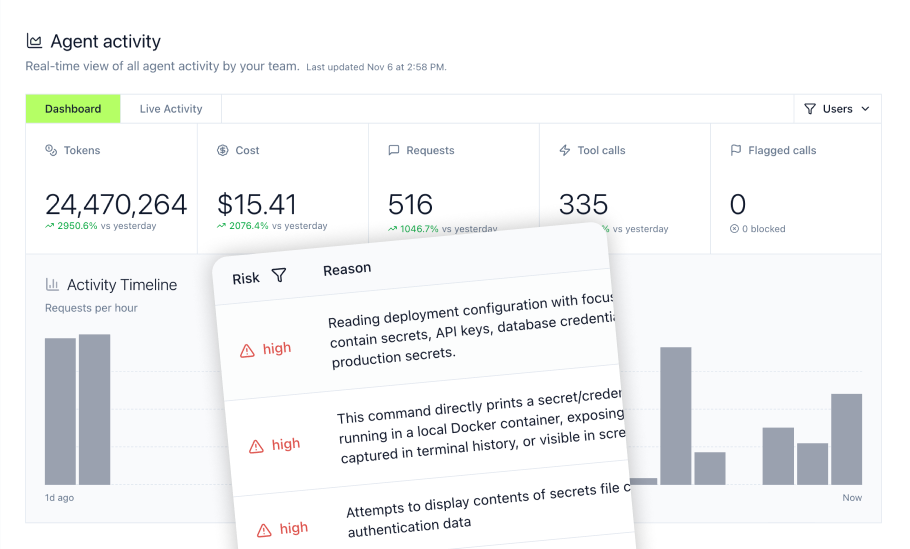
The MintMCP activity log captures every Linear MCP interaction:
- User who initiated each request
- Timestamp and duration
- Tool called and arguments provided
- Response data and status codes
- Virtual MCP server used
- Success or failure indicators
This comprehensive logging enables:
- Security incident investigation
- Compliance audit responses
- Usage pattern analysis
- Performance optimization
- Anomaly detection
Performance metrics to track
Monitor these key metrics for healthy Linear MCP operations:
Request Latency
- Average response time per tool
- 95th percentile latency
- GraphQL query performance
- Geographic latency distribution
Error Rates
- Failed requests by error type
- Authentication failures
- Rate limit hits
- Timeout occurrences
Usage Patterns
- Most frequently called tools
- Peak usage times
- Per-user request volumes
- Project access frequency
Resource Consumption
- API rate limit utilization
- Connector memory usage
- Request queue depth
- Concurrent connection count
Setting up alerts and notifications
Configure proactive monitoring through MintMCP's alerting system:
Security Alerts
- Failed authentication attempts exceeding threshold
- Unusual access patterns indicating compromised credentials
- High-privilege operations on production projects
- Tool calls attempting dangerous operations
Operational Alerts
- Connector failures or unavailability
- Elevated error rates indicating API issues
- Rate limit approaching exhaustion
- Performance degradation beyond SLA thresholds
Compliance Alerts
- Access attempts outside allowed hours
- Operations on projects outside scope
- Missing audit log entries
- Configuration changes to security policies
Troubleshooting common Linear MCP integration issues
Authentication and authorization problems
Issue: Users Cannot Authenticate with Virtual MCP Server
Symptoms: OAuth flow fails, users see permission denied errors
Solutions:
- Verify Linear API key is valid and has appropriate permissions
- Check user has access to Linear workspace
- Ensure MintMCP can reach Linear API endpoints (no firewall blocks)
- Review Virtual MCP server authentication configuration
- Confirm OAuth redirect URLs if using OAuth flow
Issue: API Key Expiration or Revocation
Symptoms: Sudden authentication failures after working correctly
Solutions:
- Regenerate Linear API key through Linear settings
- Update key in MintMCP connector configuration
- Implement key rotation policies for service accounts
- Monitor key validity through audit logs
Connector deployment failures
Issue: Hosted Connector Won't Start
Symptoms: Connector status shows "failed", logs indicate startup errors
Solutions:
- Verify environment variables are correctly configured
- Check Linear API key format and validity
- Ensure command and arguments match server specification
- Review logs for missing dependencies
- Test configuration locally before deploying
Issue: Tools Not Appearing in Virtual MCP Server
Symptoms: Connector running but no tools available
Solutions:
- Confirm Linear API key has required scopes
- Check tool customization settings aren't filtering all tools
- Verify connector successfully connects to Linear API
- Review connector logs for tool registration errors
- Ensure workspace permissions allow tool access
Performance and rate limiting
Issue: Slow Response Times from Linear Tools
Symptoms: Timeouts, delayed responses, sluggish performance
Solutions:
- Check Linear API rate limits aren't exhausted
- Implement caching for frequently accessed project data
- Optimize GraphQL queries to reduce payload size
- Review connector resource allocation
- Consider upgrading Linear plan for higher limits
Issue: Linear API Rate Limits Exceeded
Symptoms: 429 errors, rate limit messages in logs
Solutions:
- Implement request throttling at gateway level
- Cache project and issue data where appropriate
- Distribute load across multiple API keys
- Optimize query patterns to reduce API calls
- Contact Linear support for rate limit increases
Why MintMCP provides superior Linear MCP integration
While Linear's MCP server provides the protocol implementation, MintMCP delivers the enterprise infrastructure required for secure, compliant production deployments.
One-Click deployment with managed infrastructure
Unlike manual local installations, MintMCP provides instant STDIO-based MCP deployment with automatic OAuth protection. Product teams deploy Linear MCP connectors in minutes instead of days, without managing container orchestration, load balancing, or high availability infrastructure.
Unified governance across all AI tools
MintMCP's Virtual MCP architecture bundles multiple connectors into manageable endpoints, eliminating complexity of individual tool management. Monitor every AI tool interaction across Claude, ChatGPT, Cursor, and custom agents from a single interface with complete visibility into Linear operations.
Enterprise security and compliance
Pre-built SOC2 Type II certification with complete audit trails for SOC2, ISO 27001, and GDPR requirements. MintMCP provides SAML and OIDC authentication with existing identity providers, eliminating the need to build custom compliance infrastructure.
Real-Time security controls
Block dangerous commands and protect sensitive projects instantly through the LLM proxy layer. Create security rules at the gateway level that apply consistently across all Virtual MCP servers, preventing security incidents before they occur.
For product teams serious about AI-powered project management, MintMCP transforms Linear MCP from experimental technology into production-ready infrastructure with enterprise security, compliance, and governance built in.
Frequently asked questions
Can Linear MCP access all workspaces in our organization?
Linear MCP access depends on the authentication credentials provided. When using API keys, the connector accesses only workspaces and teams that the API key owner can access. With service account API keys, you can grant organization-wide access by ensuring the service account has appropriate permissions across all workspaces. For granular control, create separate Virtual MCP servers with different API keys for each workspace, implementing workspace-level isolation through MintMCP's tool governance features.
How do we prevent AI agents from accidentally closing critical issues?
Implement multiple layers of protection through MintMCP's security controls. First, create separate Virtual MCP servers with curated tool collections that exclude state modification capabilities for most users. Second, configure LLM proxy rules that block state changes on issues tagged as "critical" or in specific projects. Third, implement approval workflows where high-risk operations require human confirmation before execution. This defense-in-depth approach ensures dangerous operations cannot execute accidentally while maintaining functionality for authorized users.
What's the best way to handle Linear API rate limits for large teams?
Linear enforces rate limits per API key, making strategic key management essential. Create multiple service accounts with API keys and rotate requests across them through MintMCP. Implement caching at the MCP connector level for project metadata, team information, and other slowly-changing data. Use request batching where possible to reduce API call volume. Configure throttling through MintMCP to prevent bursts that exhaust limits. Monitor rate limit consumption through the MintMCP activity log and set up alerts when approaching 80% utilization. For enterprise deployments with hundreds of users, contact Linear support to negotiate custom rate limits based on your needs.
How does MintMCP maintain data privacy for sensitive product roadmaps?
MintMCP implements comprehensive data privacy controls for sensitive product information. All data transmission uses TLS 1.3 encryption in transit and AES-256 encryption at rest. The LLM proxy can redact sensitive fields before sending data to AI models. Virtual MCP servers enable project-level isolation, ensuring teams only access appropriate roadmap data. Audit logs track every data access with user attribution for forensic analysis. For highly sensitive roadmaps, implement additional controls through prompt security features that prevent data exfiltration attempts. MintMCP's data retention policies ensure compliance with privacy regulations while maintaining necessary audit trails.
Can we integrate Linear MCP with our existing CI/CD pipelines?
Yes, Linear MCP integrations work seamlessly with CI/CD workflows through MintMCP's API endpoints. Configure your CI/CD system to call Virtual MCP servers using standard REST APIs, enabling automated issue creation for build failures, deployment tracking, and release management. Use MintMCP's authentication models to secure pipeline access with service accounts. Create dedicated Virtual MCP servers for CI/CD systems with limited toolsets focused on automation needs. Monitor pipeline interactions through audit logs to track automated operations. This integration enables AI-powered analysis of deployment issues, automatic issue linking to commits, and intelligent release note generation based on completed Linear issues.