Claude Code is included in paid Claude subscriptions starting at $17/month with annual Pro billing, while Enterprise pricing starts at $20/seat/month plus usage at API rates. For enterprise teams, the actual bill depends on model selection, token consumption, and adoption patterns. Anthropic's transition to usage-based Enterprise billing makes it important to account for costs beyond published seat rates. Teams seeking visibility into their AI spend often turn to agent monitoring solutions that track usage across users, sessions, and models.
This article breaks down what individuals, teams, and enterprises pay for Claude Code in 2026, including subscription plans, API token costs, optimization strategies, and governance considerations that affect total cost of ownership.
Key Takeaways
- Claude Code is included in paid plans, starting at $17/month for Pro with annual billing or $20/month monthly
- Enterprise pricing combines $20/seat/month with usage billed at API rates, meaning a 100-seat team's total costs depend on model selection and token consumption
- Anthropic began transitioning Enterprise contracts to usage-based billing in November 2025, with the new $20-seat structure introduced in February 2026
- Claude Code and chat share the same 5-hour session and weekly limits, causing heavy coding users to hit caps faster
- Prompt caching can reduce repeated system prompt costs by up to 90%, while Batch API offers 50% discounts for async workflows
- HIPAA-ready usage requires Enterprise plan, accepted BAA, and local-mode configuration. Team subscriptions are not HIPAA-ready
Understanding Claude Code Pricing Models (2026)
Anthropic offers Claude Code through two distinct pricing models: subscription plans for predictable monthly costs and pay-per-token API access for usage-based billing. The right choice depends on team size, usage patterns, and whether you need enterprise governance features.
Individual and Team Subscriptions
Individual plans provide the fastest path to Claude Code:
- Free: Chat only, no Claude Code access, usage caps and training opt-out not default
- Pro: $17/month annual or $20 monthly, includes Claude Code with 5x Free usage limits
- Max 5x: $100/month with 5x Pro session usage, early feature access, and $100/month in separate Claude Platform API credits that do not apply to Claude Code subscription usage
- Max 20x: $200/month with 20x Pro session usage, priority access, and $200/month in separate Claude Platform API credits
Team plans add shared workspaces and admin controls:
- Team Standard: $20/seat annual or $25 monthly, requires 2-150 seats, includes SSO and separate pooled Claude Platform API credits capped at $500/month
- Team Premium: $100/seat annual or $125 monthly with 5x Standard usage and Claude Cowork connectors
Team plans assign usage limits based on each member's Standard or Premium seat, while separate Claude Platform API credits are pooled at the organization level.
Enterprise Plans and Custom Quotes
Enterprise pricing introduces complexity beyond the base rate. The $20/seat base represents only the floor. Usage gets billed separately at API token rates, meaning actual costs scale with how actively your team uses Claude Code.
For a 100-seat Enterprise team using Claude Sonnet 5.5 at current API rates, illustrative costs would be:
- Moderate usage (50M input, 10M output tokens): $2,200/month ($26,400/year)
- High usage (200M input, 50M output tokens): $2,900/month ($34,800/year)
Actual costs vary by model, caching, usage patterns, and applicable contract terms.
Enterprise includes:
- SSO and SCIM provisioning
- Audit logs and Compliance API
- HIPAA readiness with BAA
- Role-based access controls
Self-serve Enterprise starts at 20 seats, while sales-assisted Enterprise arrangements require at least 50 seats.
Claude API Costs and Volume Discounts
For teams building automated workflows or needing granular cost control, API access offers flexibility that subscriptions cannot match. Understanding token economics becomes critical at scale.
Per-Token Pricing by Model
API pricing varies by model capability:
- Claude Sonnet 5.5: $2 per million input tokens, $10 per million output tokens at standard API rates
- Claude Opus 5.5: $4 per million input tokens and $20 per million output tokens for demanding coding and reasoning tasks
- Claude Haiku 5.5: Starting at $0.10 per million input tokens and $0.50 per million output tokens for prompts up to 100,000 tokens
Cost optimization features:
- Prompt caching: Saves up to 90% on repeated system prompts by caching content that appears in multiple requests
- Batch API: Provides 50% discount for asynchronous workflows processed overnight
- Thinking tokens: Billed at the model's applicable output-token rate
Comparing Claude to Other LLM APIs
Supported Claude models offer context windows of up to 1 million tokens, allowing teams to work with large codebases and documents when the relevant content fits within the available context. Context limits vary across competing AI models and product configurations.
For teams running multiple AI models, tracking costs across providers requires visibility into which model handles which tasks. Routing simpler tasks to lower-cost models while reserving premium models for complex work can reduce overall spending.
Managing AI Coding Assistant Costs
The difference between modest and significant Claude bills often comes down to usage patterns and governance, not the pricing tier selected.
Cost Optimization Strategies
Session management: Claude Code and chat share the same usage limits. Starting focused sessions for separate tasks and summarizing lengthy conversation histories can reduce unnecessary token consumption.
Model selection: Not every task requires the most capable model. Routing code formatting and simple completions to lighter models while preserving Sonnet for complex reasoning creates savings.
Caching strategy: Teams processing similar requests should enable prompt caching. The 90% cost reduction on repeated system prompts compounds quickly across hundreds of daily requests.
Team Billing and Visibility
Team plans assign usage limits per seat tier. Heavy users may need Premium seats or additional usage credits when they exceed their included limits. Effective management requires:
- Visibility into per-user consumption patterns
- Ability to set spending caps before overages occur
- Attribution of costs to specific projects or departments
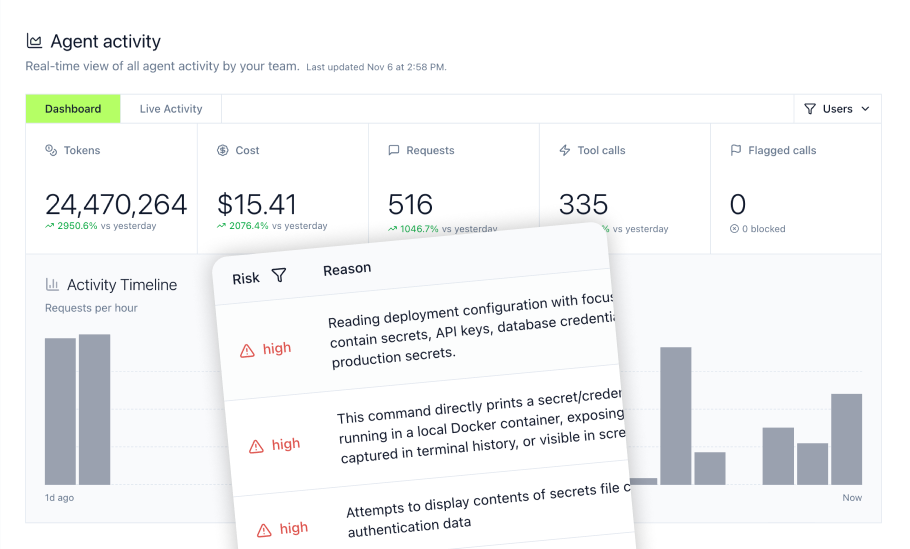
Tools like Mintive's Agent Monitor provide token spend tracking by model, user, agent, and session, enabling chargeback-grade visibility.
What Enterprise Teams Pay
Published pricing creates a misleading picture for enterprise buyers. The full cost picture includes procurement, rollout, and usage-based billing dynamics.
Beyond Subscription Fees
An illustrative Year 1 budget for a 100-seat Enterprise deployment using Claude Sonnet 5.5 includes:
Base costs:
- Enterprise seats (100 at $20): $2,000/month or $24,000/year
- Token consumption moderate (50M input, 10M output): $200/month or $2,400/year
- Token consumption high (200M input, 50M output): $900/month or $10,800/year
Total illustrative costs (excluding rollout):
- Moderate scenario: $2,200/month or $26,400/year
- High-usage scenario: $2,900/month or $34,800/year
Anthropic began transitioning Enterprise renewals to separate seat and usage billing in November 2025. Organizations renewing older seat-based agreements should compare their previous included usage allowances and negotiated rates with current API-rate billing.
Negotiating Enterprise Deals
Before signing, model your token consumption using historical data or a 90-day pilot. Ask Anthropic for a usage report template and negotiate prepaid token blocks at volume discounts. Enterprise contracts typically require annual commitments, so accurate forecasting prevents budget surprises.
Governance and Cost Visibility
Controlling AI costs at scale requires more than budget alerts. Organizations need visibility into what their agents are actually doing and the ability to enforce policies before costs spiral.
Preventing Cost Overruns
Without governance, automated workflows can generate unexpected API charges. Common failure modes include:
- Infinite loops where agents call themselves repeatedly
- Context window stuffing that passes unnecessary data
- Shadow AI usage where developers use personal API keys outside approved channels
Mintive's MCP Gateway centralizes authentication, tool access policies, and credentials for governed MCP connections. Usage and cost visibility can be extended through Agent Monitor.
Centralized Monitoring for Teams
For organizations running Claude Code alongside Cursor, ChatGPT, Copilot, and custom agents, cost attribution becomes a governance challenge. Each tool may have its own billing, making consolidated reporting difficult.
Combining governed MCP access with agent monitoring can provide usage and cost visibility across supported AI clients, enabling:
- Cross-platform token spend tracking
- User-level and project-level cost attribution
- Policy enforcement across different AI tools
Securing AI Coding Usage
Cost management and security intersect when unauthorized usage drives both risk and expense.
Security and Cost Intersection
Shadow AI, where developers use unapproved tools or personal API keys, creates blind spots in both security posture and budget tracking. Low adoption of sanctioned AI tools can create budget inefficiencies, while unauthorized AI usage introduces separate security and cost visibility challenges.
Effective governance requires:
- SSO integration ensuring only authorized users access AI tools
- Audit trails documenting every interaction for compliance
- Credential management preventing API keys from scattering across developer laptops
Anthropic maintains a SOC 2 Type II attestation and ISO 27001:2022 certification, with the scope of applicable controls and compliance documentation detailed in its Trust Center.
Preventing Unauthorized Access
Enterprise-tier features like SCIM provisioning automate identity synchronization. When an employee leaves, SCIM provisioning can automate access removal through the connected identity provider, reducing the need for manual deprovisioning.
For organizations managing AI agents alongside human users, agent identities provide first-class non-human principals with their own credentials, scoped permissions, and audit trails.
Attributing Costs to Projects and Agents
As AI usage scales, the question shifts from "what are we spending?" to "who is spending it and why?"
Granular Cost Tracking
Enterprise finance teams increasingly require chargeback models that attribute AI costs to specific business units, projects, or clients. This requires:
- Tagging mechanisms that pass project identifiers through to billing systems
- Session-level cost tracking that links specific work products to their compute costs
- Reports that break down spend by team, application, and time period
The usage and cost tracking capabilities in modern agent monitoring platforms enable this level of granularity.
Agent Identity and Attribution
Autonomous agents present unique attribution challenges. When a CI/CD pipeline runs Claude Code to generate tests, or a scheduled job processes documents overnight, who owns that cost?
Mintive's Agent Gateway assigns each autonomous agent its own identity with:
- Independent credentials that can be rotated or revoked
- Scoped permissions limiting which tools and data each agent can access
- Per-agent audit trails for governed MCP activity
This model helps organizations associate agent activity with specific identities, while supported usage monitoring and project-level tagging can help finance teams attribute costs to workflows and budgets.
Claude for Students
Students and individual learners face different economics than enterprise teams.
Academic Access Options
The Free tier provides chat access without Claude Code, suitable for conversational use but limiting for coding work. Students serious about AI-assisted development should evaluate:
- Pro at $17/month (annual): The most cost-effective path to Claude Code for individuals
- GitHub Student Developer Pack: Check whether educational discounts apply to Anthropic products
- Academic institution licenses: Some universities negotiate institutional access
For students learning about AI coding assistants and enterprise AI governance, understanding both the user experience and the administrative complexity helps prepare for professional environments.
Building Cost Visibility with Mintive
As organizations scale from a handful of AI tools to dozens of agents operating across departments, ad-hoc cost tracking breaks down. Enterprise teams need unified visibility into agent workforce costs alongside security and compliance controls.
Why unified agent governance matters:
The enterprise question is not "what does Claude cost?" but rather which agents exist, what permissions they have, what actions they've taken, and at what cost. This requires a system of record that spans AI vendors, not a collection of vendor-specific dashboards.
Mintive's approach to cost and governance:
Mintive treats cost visibility as part of the broader governance challenge. Agent Monitor captures usage and token costs alongside prompts, commands, and tool calls, creating a unified view that supports both security and finance requirements.
For teams evaluating Claude Code pricing, the question extends beyond Anthropic's rates to how those costs fit into the organization's total AI investment. Key capabilities include:
- Token spend tracking by model, user, agent, and session
- Real-time visibility into agent activity across supported clients
- Policy enforcement through governed MCP connections
- First-class agent identities with independent credentials and audit trails
A governed MCP gateway provides the infrastructure to answer cost questions across Claude, ChatGPT, Cursor, Copilot, and custom agents while maintaining security and compliance posture.
Frequently Asked Questions
How does Claude Code pricing compare to major AI coding assistants?
Claude Team and ChatGPT Business both price at $20/seat for team subscriptions. Supported Claude models offer context windows of up to 1 million tokens, while ChatGPT's context limits vary by model and configuration. For API pricing, Claude sits in the mid-to-premium range. Most enterprises find pricing similar enough that feature differences and governance requirements drive decisions more than raw cost.
Can enterprises get volume discounts for high Claude API usage?
Yes, though Anthropic does not publish volume discount schedules publicly. Enterprise contracts are negotiated individually, typically requiring annual commitments. Teams should model token consumption before negotiations using historical data or pilot programs. Prepaid token blocks at volume discounts are available for organizations committing to significant usage under negotiated terms.
What hidden costs come with deploying Claude Code in teams?
Beyond subscription fees, teams may encounter rollout, training, administration, and additional usage costs. Premium seats cost $100/month with annual Team billing compared with $20/month for Standard seats. Pro, Max, and Team subscribers may also incur additional charges when they enable paid usage beyond included limits.
What governance strategies help control Claude Code API expenses?
Start with centralized monitoring that tracks token spend by user, session, model, and project. Implement session hygiene practices like fresh sessions per task and summary-based context. Route simpler tasks to cheaper models. Enable prompt caching for repeated system prompts. Set spending caps with alerts before limits are reached. Use Batch API for 50% discounts on async processing.
Are there governance tools that work across Claude and other AI models?
Yes, enterprise AI governance platforms can provide cross-platform visibility and access controls. Mintive's MCP Gateway governs tool and data access through centralized authentication, permissions, and audit trails, while Agent Gateway extends that foundation to autonomous agent identities. Agent Monitor adds usage, cost, and activity visibility for supported clients, helping organizations govern Claude Code, Cursor, ChatGPT, Copilot, and custom agents.