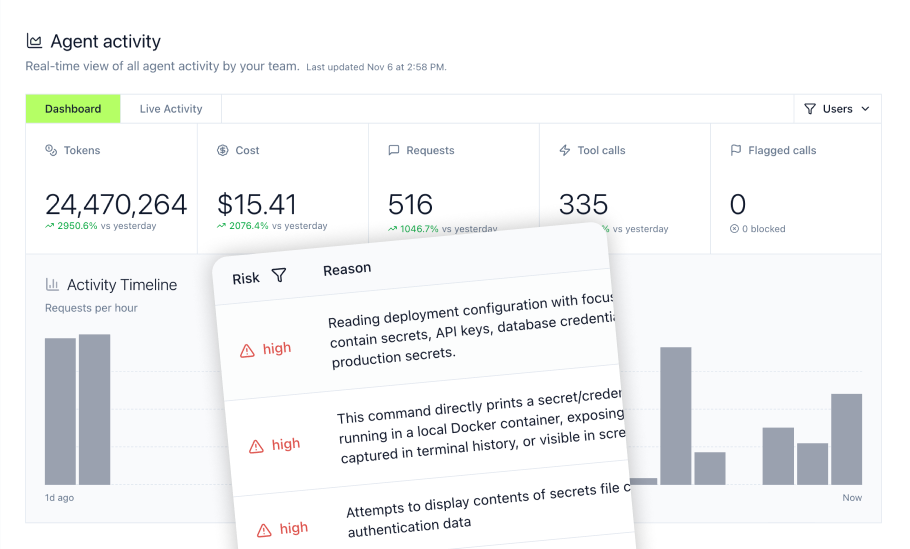
AI agents need secure, governed access to database operations without exposing credentials or allowing uncontrolled SQL execution. Prisma's Model Context Protocol servers—built directly into the Prisma CLI enable AI agents to manage databases, run migrations, and execute queries through natural language. This guide shows engineering teams how to deploy Prisma MCP servers through MintMCP's enterprise gateway for centralized authentication, audit trails, and access control.
Key takeaways
- Prisma provides two MCP servers: a local server for development workflows and a remote server for managing Prisma Postgres instances
- The local Prisma MCP server (built into Prisma CLI v6.6.0+) exposes migration tools, schema management, and query execution
- The remote server manages Prisma Postgres databases including provisioning, backups, and connection strings
- MintMCP's hosted connectors enable enterprise deployment with OAuth protection and audit logging
- Running
npx prisma mcpstarts the local server for development database workflows - Virtual MCP servers bundle Prisma tools with other capabilities while enforcing role-based permissions
- Enterprise deployments require centralized credential management that local MCP installations cannot provide
What are Prisma MCP servers
Prisma offers two distinct MCP servers that serve different purposes in database management workflows. Both servers ship with the Prisma CLI (version 6.6.0 and above) and expose database operations as MCP tools that AI agents can invoke.
The local Prisma MCP server runs on developer machines and provides access to Prisma CLI commands for schema management and migrations. This server enables AI agents to assist with database development workflows by running migrations, checking migration status, initializing new projects, and generating schemas.
The remote Prisma MCP server connects to Prisma's cloud infrastructure to manage Prisma Postgres databases. This server allows AI agents to provision new database instances, create and manage backups, handle connection strings, and perform database recovery operations.
Local Prisma MCP server capabilities
The local server, started with npx prisma mcp, exposes these Prisma CLI operations:
Migration Management
migrate-status: Check migration status and pending changesmigrate-dev: Create and apply development migrationsmigrate-deploy: Apply migrations to production databasesmigrate-reset: Reset database and reapply all migrations
Schema Operations
init: Initialize new Prisma projects with schema scaffoldingdb-pull: Introspect existing databases to generate schemasdb-push: Push schema changes without migration filesformat: Format and validate Prisma schema files
Query Execution
- Execute queries through Prisma Client
- Run seed scripts for test data
- Access Prisma Studio for visual database management
Remote Prisma MCP server capabilities
The remote server, accessed via npx mcp-remote https://mcp.prisma.io/mcp, provides:
Database Provisioning
CreateDatabaseTool: Provision new Prisma Postgres instancesDeleteDatabaseTool: Remove database instancesListDatabasesTool: View all databases in your account
Connection Management
CreateConnectionStringTool: Generate new connection stringsDeleteConnectionStringTool: Revoke connection stringsListConnectionStringsTool: View active connections
Backup and Recovery
CreateBackupTool: Create database backupsCreateRecoveryTool: Restore databases from backupsListBackupsTool: View available backup points
Why MintMCP for enterprise Prisma deployments
Running Prisma MCP servers locally on developer machines creates significant challenges for enterprise teams. Each developer must manage their own server installation, database credentials scatter across machines, and there's no visibility into which AI agents access production databases.
MintMCP's gateway architecture solves these problems by running Prisma MCP servers in managed infrastructure with enterprise security controls:
- Centralized Deployment: Configure Prisma MCP servers once, share across all team members
- Credential Management: Store database URLs securely in MintMCP, not on individual machines
- Audit Trails: Track every migration, query, and database operation with user attribution
- Access Control: Define which teams can run migrations versus read-only queries
- OAuth Protection: Authenticate users through SSO before database access
Gateway architecture benefits
MintMCP operates as an intelligent proxy between AI agents and Prisma MCP servers:
- Administrators deploy Prisma MCP servers as hosted connectors
- Database credentials and Prisma configuration stay centralized in MintMCP
- Virtual MCP servers bundle Prisma tools with appropriate permissions
- AI agents connect through Virtual MCP endpoints with OAuth authentication
- Every operation flows through MintMCP for audit and compliance
Step-by-Step: Deploying Prisma MCP with MintMCP
Prerequisites
Before deployment, ensure you have:
- MintMCP account with administrator access
- Prisma CLI version 6.6.0 or higher
- Database connection strings for your environments
- Clear requirements for which teams need migration versus query access
Deploying the local Prisma MCP server
For development database workflows, deploy the local Prisma MCP server:
- Add Hosted Connector
- Navigate to MCP Connectors in MintMCP console
- Click "Add Connector" → "Hosted Server"
- Name it "Prisma Local Development"
2. Configure Server Settings
{
  "mcpServers": {
    "prisma-local": {
      "command": "npx",
      "args": ["-y", "prisma", "mcp"]
    }
  }
}
3. Set Environment Variables
DATABASE_URL: Connection string for your development database- Set scope to "Per-User" if developers have individual databases
- Set to "Global" for shared development environments
4. Deploy and Test
- Save configuration to trigger deployment
- Monitor logs for successful initialization
- Test with sample migration commands
Deploying the remote Prisma MCP server
For Prisma Postgres management, deploy the remote server:
- Add Remote Connector
- Create new connector named "Prisma Postgres Management"
- Select "Remote Server" option
2. Configure Remote Server
{
  "mcpServers": {
    "prisma-remote": {
      "command": "npx",
      "args": ["-y", "mcp-remote", "https://mcp.prisma.io/mcp"]
    }
  }
}
3. Authentication Setup
- Configure Prisma API credentials
- Set authentication scope based on team requirements
- Enable OAuth flow for user-specific access
Creating virtual MCP servers for teams
Bundle Prisma tools into role-based Virtual MCP servers:
DevOps Team Server
Full access to migrations and database management:
- Create Virtual Server "Database Operations - DevOps"
- Add both local and remote Prisma connectors
- Enable all migration and provisioning tools
- Configure tool governance for production access
- Assign to DevOps team members
Development Team Server
Development migrations without production access:
- Create Virtual Server "Database Development"
- Add local Prisma connector only
- Enable development migration tools
- Restrict production database URLs
- Assign to development team
Analytics Team Server
Read-only query access:
- Create Virtual Server "Database Analytics"
- Add local Prisma connector
- Use tool customization to allow only query tools
- Remove migration and schema modification capabilities
- Assign to analytics team
Integrating AI agents with Prisma MCP
Claude desktop configuration
- Go to Settings → Connectors → Add custom connector
- Enter your Virtual MCP URL from MintMCP
- Complete authentication if required
- Start managing databases through natural language
Cursor and Windsurf integration
Configure in your MCP settings:
{
  "mcpServers": {
    "prisma-mintmcp": {
      "command": "curl",
      "args": ["<your-virtual-mcp-url>"]
    }
  }
}
ChatGPT custom actions
Create a Custom GPT with your Virtual MCP endpoint for database management through ChatGPT.
Common use cases and prompts
Development workflow automation
AI agents can handle routine database tasks:
Schema Evolution
- "Create a new User table with email and name fields"
- "Add a createdAt timestamp to all tables"
- "Generate and apply a migration for the latest schema changes"
Database Setup
- "Initialize a new Prisma project with PostgreSQL"
- "Pull the schema from the production database"
- "Set up a test database with seed data"
Migration Management
- "Check if there are pending migrations"
- "Apply all pending migrations to development"
- "Reset the database and reapply all migrations"
Prisma postgres operations
For teams using Prisma Postgres:
Instance Management
- "Create a new database in us-west region"
- "List all available databases"
- "Delete the staging database"
Backup Operations
- "Create a backup of the production database"
- "Restore yesterday's backup to a new instance"
- "Show all available backup points"
Security and governance
Credential management
MintMCP's authentication system provides secure credential handling:
- Database URLs stored encrypted in MintMCP
- No credentials on developer machines
- Automatic credential rotation support
- Integration with secrets management systems
Audit and compliance
Every Prisma operation generates comprehensive audit logs:
- User who initiated the migration
- Timestamp and duration of operations
- Schema changes applied
- Success or failure status
- Database instances affected
Access control patterns
Implement least-privilege access:
- Production Restrictions: Only DevOps can run production migrations
- Development Freedom: Developers have full access to development databases
- Read-Only Access: Analytics teams can query but not modify
- Approval Workflows: High-risk operations require manual approval
Monitoring and troubleshooting
Key metrics to track
Monitor Prisma MCP operations through MintMCP's activity log:
- Migration success rates
- Average migration duration
- Failed operations by type
- Database provisioning times
- Query execution patterns
Common issues and solutions
Issue: Migration Tools Not Available
Ensure Prisma CLI version 6.6.0+ is installed in the hosted connector environment.
Issue: Database Connection Failures
Verify DATABASE_URL is correctly set in connector environment variables and database is accessible from MintMCP infrastructure.
Issue: Permission Denied Errors
Check Virtual MCP server tool customization settings and ensure user has appropriate role assignments.
Best practices
Development workflow
- Use separate Virtual MCP servers for development and production
- Enable migration dry-runs before applying changes
- Maintain schema version control alongside code
- Test migrations in staging before production
Security hardening
- Rotate database credentials regularly
- Use read replicas for analytics queries
- Implement LLM proxy rules to block dangerous operations
- Monitor unusual migration patterns
Operational excellence
- Schedule automated backups before migrations
- Set up alerts for failed operations
- Document migration procedures
- Maintain rollback plans for schema changes
Frequently asked questions
Can Prisma MCP servers work with databases other than Prisma postgres?
Yes, the local Prisma MCP server works with any database supported by Prisma including PostgreSQL, MySQL, SQLite, and MongoDB. The remote server specifically manages Prisma Postgres instances. Through MintMCP, you can combine Prisma MCP with other database connectors in a single Virtual MCP server for comprehensive database management.
How do we prevent AI agents from running migrations on production databases?
MintMCP provides multiple protection layers. First, use Virtual MCP server configuration to create separate servers for production and development with different tool sets. Second, implement LLM proxy rules that block migration commands targeting production URLs. Third, use environment variable scoping to ensure production credentials are only available to authorized Virtual MCP servers. Finally, enable approval workflows for high-risk operations.
What happens if a migration fails midway through execution?
Prisma MCP servers report migration failures through standard MCP error responses that MintMCP captures in audit logs. The local server's migrate tools include rollback capabilities when transactions are supported by your database. For production deployments, configure automated backup creation before migrations through MintMCP's pre-execution hooks. Monitor migration status through the activity log and set up alerts for failed operations.
Can we use Prisma MCP servers without Prisma postgres?
Absolutely. The local Prisma MCP server works with any Prisma-compatible database and doesn't require Prisma Postgres. You only need the Prisma CLI (v6.6.0+) and a valid database connection. The remote server is specifically for Prisma Postgres management, but the local server handles migrations, schema management, and queries for any supported database through MintMCP's hosted connectors.
How does MintMCP handle Prisma CLI version updates?
MintMCP's hosted connectors can be configured to use specific Prisma CLI versions or automatically update to the latest stable release. When Prisma releases new MCP server features, update your connector configuration to use the new version. MintMCP maintains backward compatibility by supporting multiple Prisma versions simultaneously, allowing gradual migration across teams. Monitor the MintMCP blog for announcements about new Prisma MCP capabilities and integration improvements.