Selecting the right MCP gateway for enterprise AI deployment requires evaluating deployment speed, security controls, compliance posture, and governance capabilities. MintMCP Gateway positions itself as a specialized solution for organizations seeking rapid, governed MCP deployment, while TrueFoundry offers a broader AI platform approach and IBM ContextForge provides an open-source alternative. This comparison examines all three platforms to help engineering leaders determine which approach aligns with their enterprise requirements.
Key Takeaways
- MintMCP deploys STDIO-based MCP servers in minutes through one-click deployment, streamlining the infrastructure setup process
- MintMCP provides OAuth brokering for stdio and hosted MCP servers, reducing manual authentication configuration
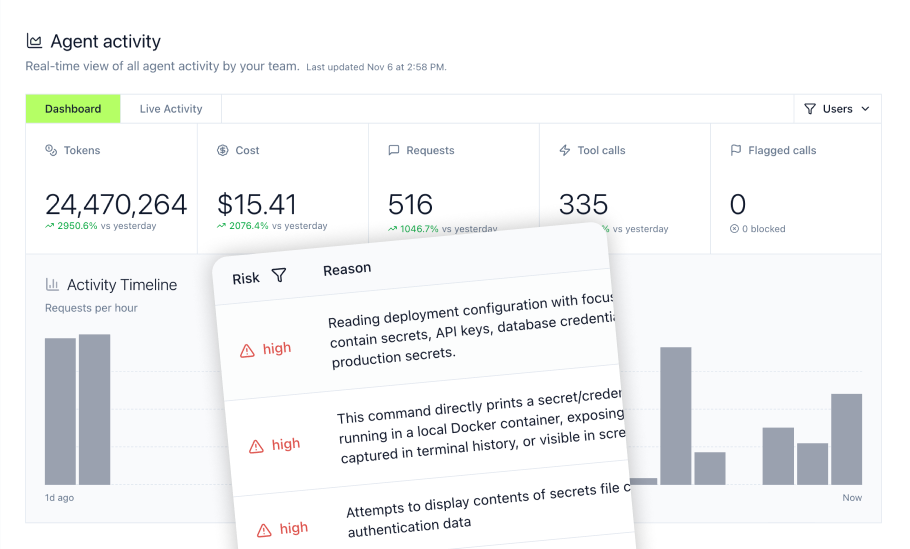
- MintMCP's Gateway and Agent Monitor provide two-layer governance across MCP traffic and local coding-agent activity, including tool calls, bash commands, and file access
- TrueFoundry provides a unified AI control plane combining LLM Gateway, MCP Gateway, and Agent Gateway with public references often citing best-case overhead around a few milliseconds, while actual latency depends on deployment configuration and workload
- IBM ContextForge offers Apache 2.0 open-source licensing with multi-gateway federation; teams should verify the latest release status and support options before production deployment
- MintMCP supports hundreds of prebuilt connectors, hosted MCP connectors run by MintMCP, and custom connectors deployable through Admin MCP or the hosted CLI
Understanding the Enterprise AI Infrastructure Landscape
The MCP (Model Context Protocol) gateway market has emerged as critical infrastructure for connecting AI assistants with enterprise data and tools. Organizations face a fundamental challenge: AI tools like Claude and ChatGPT need secure, governed access to internal systems without compromising security or compliance.
Three distinct approaches have developed to address this challenge:
- Managed MCP Gateway (MintMCP): Purpose-built for rapid, governed MCP deployment with authentication, tool-level access control, credential management, logging, and rule-based policy
- Unified AI Platform (TrueFoundry): Comprehensive infrastructure combining LLM routing, MCP access, and model serving
- Open-Source Framework (IBM ContextForge): Customizable foundation requiring self-hosted infrastructure management
Understanding these fundamental differences helps clarify which approach matches specific organizational priorities and technical capabilities.
Why MCP Infrastructure Matters for Enterprises
Without proper MCP governance, AI tools operate as black boxes with significant security risks:
- Zero Telemetry: No visibility into what data AI agents access
- No Request History: Cannot audit or review AI tool interactions
- Uncontrolled Access: No centralized authentication or permission controls
The difference between successful AI adoption and unmanaged risk often comes down to infrastructure choice.
Key Challenges in Enterprise AI Deployment
Engineering teams deploying MCP servers face several obstacles:
- STDIO Server Complexity: Many MCP servers use STDIO protocols that require local installation and manual configuration
- Authentication Gaps: Open-source MCP servers rarely include enterprise authentication out-of-box
- Compliance Requirements: SOC 2, GDPR, HIPAA standards, and industry regulations demand complete audit trails
- Operational Overhead: Self-hosted solutions require dedicated DevOps resources for maintenance
MintMCP addresses these challenges through a managed approach that transforms local MCP to enterprise deployment in minutes rather than months.
MintMCP's Approach to Enterprise MCP Deployment and Governance
MintMCP takes a specialized approach to MCP infrastructure, focusing on making enterprise MCP deployment fast, secure, and governed. Rather than building a broad AI platform, MintMCP concentrates on solving the specific challenges of MCP governance.
MintMCP Gateway: Bridging AI Assistants with Enterprise Data
The MintMCP Gateway provides centralized infrastructure for deploying and managing MCP servers at enterprise scale. Core capabilities include:
Deployment Features:
- One-click deployment of STDIO-based MCP servers with automatic hosting
- Central MCP registry with instant installation and configuration
- Virtual MCP Bundles with per-use-case endpoints, SCIM-driven membership, and curated tool access
- Hosted MCP connectors run by MintMCP, with custom connectors deployable through Admin MCP or the hosted CLI
Security and Governance:
- OAuth 2.0, SSO, and SCIM-driven RBAC for managed MCP deployments
- Complete audit trail of every MCP interaction and access request
- Centralized observability for server health, usage patterns, and security review
- Granular tool access control by role, including tool-level allowlisting and rule-based policy
- Credential management, JavaScript Gateway Middleware, and external DLP and guardrails integrations
This specialized focus enables deployment speeds that broader platforms cannot match. Organizations can transform local MCP servers into production-ready services with monitoring, logging, and compliance in a single step.
One-Click Deployment: From Local to Production
MintMCP's deployment approach eliminates the infrastructure complexity that slows enterprise MCP adoption:
- STDIO Server Hosting: Containerized servers become accessible to clients without local installations
- OAuth Brokering: Add SSO and OAuth to compatible stdio and hosted MCP servers
- Enterprise Monitoring: Transform local servers into production services with built-in observability
- Managed Deployment: Centralized hosting with enterprise access controls and observability
Traditional MCP deployment requires engineering teams to set up container infrastructure, configure authentication manually, build monitoring and logging systems, implement compliance controls, and manage ongoing operations. MintMCP can compress the technical deployment process into minutes through automation and pre-built infrastructure.
Security and Compliance Features
Enterprise MCP deployment demands robust security controls. MintMCP provides:
- SOC 2 Type II Audited: Third-party audited security controls
- Compliant with HIPAA Standards: HIPAA documentation and BAAs are available for customers handling protected health information
- Penetration Tested: Security testing to support enterprise review workflows
- Data Encrypted in Transit and at Rest: Encryption controls built into the platform
- Audit Trails: Logging that can support accountability, compliance, and review workflows
- Enterprise Access Controls: Manage authentication, permissions, and auditability across MCP deployments
- Data Residency Options and Uptime SLA: Enterprise deployment and reliability options for regulated teams
For teams navigating AI governance and compliance, MintMCP's built-in controls reduce the need to assemble authentication, audit, and access-control systems from scratch. Security teams can review MintMCP's posture in the Trust Center.
Securing AI Agents: MintMCP LLM Proxy's Role in Observability and Control
Coding agents like Cursor and Claude Code operate with extensive system access, reading files, executing commands, and accessing production systems through MCP tools. MintMCP's Gateway and Agent Monitor provide two-layer governance across MCP traffic and local non-MCP agent activity.
Monitoring Coding Agent Activities
The Agent Monitor covers local agent activity while the Gateway governs MCP traffic. This architecture enables:
- Tool Call Tracking: Monitor every MCP tool invocation from coding agents
- Bash Command Monitoring: Track terminal commands executed by AI agents
- File Access Logging: See what files agents access and when
- MCP Inventory: Visibility into installed MCPs and usage patterns across teams
- Cross-Client Governance: Govern Claude, Cursor, ChatGPT, Gemini, and Copilot activity through centralized controls where supported
MintMCP provides Cursor setup guidance for monitoring coding agent activities in real time.
Preventing Risky Operations
Without monitoring, organizations cannot see what coding agents access or control their actions. MintMCP addresses this through:
- Real-Time Blocking: Block risky operations before they execute
- Sensitive File Protection: Prevent access to .env files, SSH keys, and credentials
- Permission Controls: Configure MCP permissions at granular levels
- Policy Enforcement: Apply rule-based data access and usage policies
These controls help reduce scenarios where AI agents inadvertently expose credentials, execute destructive commands, or access unauthorized systems.
Comprehensive Audit Trails
Every governed operation generates audit records for:
- Complete command history for security review
- Tool call logs with timestamps and user attribution
- File access records for compliance reporting
- MCP usage analytics for cost and governance tracking
Teams managing enterprise AI infrastructure gain the observability needed to maintain security while enabling AI-powered development workflows.
MintMCP's Integrations: Connecting AI to Your Enterprise Ecosystem
MintMCP provides pre-built connectors for common enterprise systems, eliminating months of custom integration development. These connectors include authentication, audit logging, and governance controls.
Data Warehousing with Snowflake
The Snowflake MCP Server enables AI agents to query data warehouses through natural language:
Available Tools:
- Cortex Agent for combined structured and unstructured data querying
- Cortex Analyst for natural language to SQL conversion
- Run Snowflake Query for direct SQL execution
- Semantic view queries with dimensions, metrics, and facts
Use Cases:
- Product analytics and user behavior analysis through natural language queries
- Automated financial reporting and variance analysis
- Executive business intelligence without SQL expertise
Knowledge Base Search with Elasticsearch
The Elasticsearch MCP Server powers AI-driven search across enterprise knowledge:
Available Tools:
- Search using query DSL for flexible document retrieval
- ES|QL queries for advanced data analysis
- Index listing and mapping retrieval
- Shard allocation and health information
Use Cases:
- AI-powered knowledge base search from internal documentation
- Support ticket intelligence for faster issue resolution
- Log analysis and troubleshooting across application systems
Email Automation with Gmail
The Gmail MCP Server enables AI-driven email workflows with security oversight:
Available Tools:
- Advanced search with labels and filters
- Complete email retrieval including metadata and attachments
- Markdown-formatted draft creation
- Thread-aware reply generation
- Controlled draft dispatch
Use Cases:
- AI-driven customer response automation within approved workflows
- Product feedback aggregation with automated prioritization
- Executive communication analysis for operational intelligence
TrueFoundry's Platform Architecture
TrueFoundry takes a different approach, building a unified AI control plane that combines LLM routing, MCP gateway functionality, and model serving in a single platform. This breadth serves organizations seeking consolidated AI infrastructure.
Unified AI Control Plane
TrueFoundry operates as a Kubernetes-native platform offering:
- LLM Gateway: Access to multiple model providers through a single API with automatic failover
- MCP Gateway: Tool orchestration integrated with broader AI infrastructure
- Agent Gateway: Agent governance capabilities across development and production workflows
- Model Serving: vLLM, TGI, and Triton backends for self-hosted models
TrueFoundry was named as a Representative Vendor in the 2025 Gartner Market Guide for AI Gateways, reflecting its comprehensive platform approach.
Performance and Deployment Considerations
TrueFoundry reports low-latency gateway performance, with public references often citing best-case overhead around a few milliseconds. Actual latency and throughput depend on deployment configuration, model provider, routing, caching, and workload. The platform supports:
- VPC-native deployment within existing cloud infrastructure
- On-premises and air-gapped deployment options
- Per-team budget controls and cost allocation
- Prompt registry with versioning and playground testing
However, TrueFoundry's Kubernetes-native architecture requires existing container orchestration expertise. Organizations without dedicated DevOps teams may find this deployment model more complex than managed alternatives.
Platform Breadth vs. MCP Specialization
TrueFoundry's unified approach provides advantages for organizations needing:
- Consolidated billing across LLM providers and MCP tools
- Prompt management alongside tool orchestration
- Model fine-tuning capabilities integrated with deployment
- Single platform for entire AI infrastructure stack
For teams whose primary need is governed MCP access rather than LLM routing or model serving, MintMCP's specialized focus delivers faster deployment and MCP-specific governance primitives such as Virtual MCP Bundles, Agent Bundles, OAuth brokering, and tool-update policy.
IBM ContextForge's Open-Source Approach
IBM ContextForge represents the open-source approach to MCP gateway infrastructure, offering customization through Apache 2.0 licensing. This model serves organizations with specific requirements for code access and self-hosted control.
Building AI on IBM ContextForge
ContextForge provides foundational MCP gateway capabilities:
- Gateway Transport and Protocol Support: HTTP, JSON-RPC, SSE, STDIO, Streamable HTTP, and proxying or bridging patterns for related protocols
- Protocol Bridging: REST/gRPC to MCP conversion without code changes
- Multi-Database Support: PostgreSQL, MySQL, and SQLite backends
- Plugin Architecture: Extensible through plugins
The Apache 2.0 license allows source code modification and redistribution, enabling organizations to build custom MCP solutions on top of the framework.
Production Readiness and Support Options
Organizations evaluating ContextForge should consider:
- Release Status: Teams should verify the latest release status before production deployment
- Performance Profile: Latency depends on deployment architecture, transport path, database backend, and gateway configuration
- Setup Timeline: Variable depending on organizational infrastructure and requirements
- Authentication: Built-in authentication options with OAuth/OIDC-related capabilities, though enterprise identity configuration may require more hands-on setup than managed platforms
Teams should also verify current support options and version requirements before relying on ContextForge for production workloads.
Multi-Gateway Federation
ContextForge's strength lies in multi-gateway coordination:
- mDNS Auto-Discovery: Automatic discovery of gateway instances across networks
- Health Monitoring: Distributed health checks across federated gateways
- Load Distribution: Coordinate requests across multiple gateway deployments
This federation capability serves large organizations with distributed infrastructure requirements spanning multiple business units or geographic regions.
Choosing the Right AI Infrastructure for Your Enterprise
Platform selection depends on organizational priorities, technical capabilities, and specific use case requirements.
When MintMCP Fits Best
MintMCP serves organizations that need:
- Fastest Time-to-Production: Deploy MCP servers in minutes without infrastructure setup
- Secure and Compliant Deployment: SOC 2 Type II audited, compliant with HIPAA standards, penetration tested, and complete audit trails from day one
- MCP-Specific Focus: Deep features for MCP governance rather than broader AI platform capabilities
- Coding Agent Monitoring: Gateway and Agent Monitor coverage for development team governance
- Minimal DevOps Overhead: Managed SaaS-first infrastructure without dedicated operational resources
- Data-Permissions-First Governance: SSO, SCIM-driven RBAC, IdP groups, Virtual MCP Bundles, tool-level policy, and audit before agents are enabled
Teams whose primary need is governed MCP access will find MintMCP's specialization delivers faster deployment and deeper MCP-specific governance than broader platforms.
Evaluating Platform Alternatives
Organizations may consider alternatives when specific requirements include:
- Unified AI Platform Needs: Teams requiring LLM routing, model serving, and MCP access in a single platform may evaluate TrueFoundry's comprehensive approach
- Full Source Code Access: Organizations with requirements for complete code control may evaluate IBM ContextForge's Apache 2.0 licensed framework
- Multi-Gateway Federation: Large enterprises with distributed infrastructure spanning multiple regions may benefit from ContextForge's federation capabilities
Long-Term Platform Considerations
When evaluating MCP infrastructure, consider:
- Deployment Model: Managed SaaS-first with VPC or self-hosted options on request (MintMCP), hybrid managed SaaS and self-hosted control plane (TrueFoundry), or self-hosted open source framework (ContextForge)
- Governance Model: Data-permissions-first governance with SSO, SCIM-driven RBAC, tool-level policy, audit logs, and credential management can reduce the operational work required to secure AI-to-tool access
- Feature Roadmap: MintMCP's MCP-focused roadmap may appeal to teams prioritizing governance and deployment depth
- Support Model: Verify current support options and production requirements for each platform before deployment
Deploy Enterprise MCP Infrastructure with MintMCP
MintMCP transforms MCP deployment from a multi-month infrastructure project into a same-day production deployment. The platform's specialized focus on MCP governance delivers capabilities designed specifically for enterprise requirements:
Organizations implementing MintMCP gain access to one-click conversion of STDIO servers to production services with automatic hosting, reducing infrastructure configuration work. The platform's security layer adds OAuth, SSO, and SCIM-driven RBAC for managed MCP deployments, addressing a critical gap in many open-source MCP servers.
Complete visibility remains central to MintMCP's value proposition. MintMCP's Gateway and Agent Monitor track MCP traffic, tool calls, commands, and file access, providing the observability that enterprises need for both security and compliance. This transparency extends through SOC 2 Type II audited controls, complete audit trails, and compliance documentation available through the Trust Center.
Pre-built connectors for Snowflake, Elasticsearch, and Gmail deliver production-ready integrations that would otherwise require months of custom development. These connectors include the authentication, logging, and governance controls that enterprise deployments demand.
For engineering teams seeking to enable AI tools safely without infrastructure overhead, MintMCP provides a managed path from local MCP experimentation to enterprise deployment. The platform's focus on MCP-specific challenges means development resources stay concentrated on building AI-powered workflows rather than maintaining gateway infrastructure. Book a demo to see how MintMCP can accelerate your AI infrastructure deployment.
Frequently Asked Questions.
How does MintMCP's LLM Proxy ensure the security of coding agents?
MintMCP's Gateway and Agent Monitor provide two-layer governance for coding agents like Cursor and Claude Code. The Gateway governs MCP traffic, while Agent Monitor covers local activity such as bash commands, file reads and writes, and prompt submissions where supported. These controls help teams detect and block risky operations, protect sensitive files including .env files, SSH keys, and credentials, and maintain audit trails for security review. MintMCP provides Cursor setup guidance for enterprise coding agent governance.
Can MintMCP integrate with existing enterprise data sources?
Yes. MintMCP provides pre-built enterprise connectors including Snowflake MCP Server for data warehouse queries, Elasticsearch MCP Server for knowledge base search, and Gmail MCP Server for email automation. These connectors include authentication, audit logging, and governance controls. MintMCP also supports hosted MCP connectors run by MintMCP and custom connectors deployable through Admin MCP or the hosted CLI.
What support options exist for IBM ContextForge deployments?
IBM ContextForge is open-source under Apache 2.0 licensing with community resources through GitHub. Organizations should verify current support options, version requirements, and release status before relying on ContextForge for production workloads.
How does MintMCP enable rapid deployment of MCP servers?
MintMCP's one-click deployment automatically containerizes STDIO-based MCP servers, adds OAuth protection, and configures monitoring without manual infrastructure setup. Traditional MCP deployment requires engineering teams to configure containers, authentication, monitoring, and compliance controls separately. MintMCP can compress the technical deployment process into minutes through automation.
What deployment options are available for each platform?
MintMCP operates as a managed SaaS-first platform in the US and EU, with VPC or self-hosted deployment available on request. TrueFoundry deploys as Kubernetes-native infrastructure supporting managed SaaS and self-hosted control plane options. IBM ContextForge is an open-source framework that organizations self-host and maintain. MintMCP's managed model provides a rapid path to production for teams without dedicated platform engineering resources.