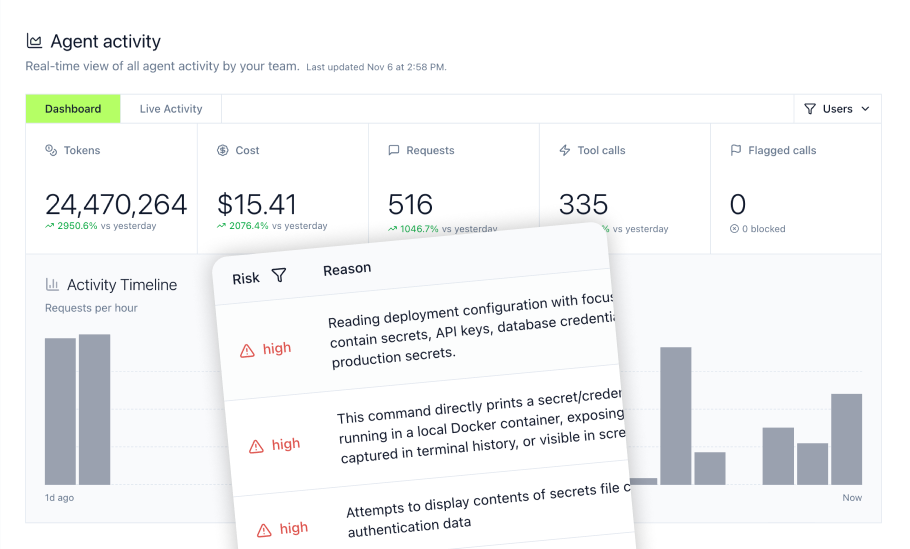
As AI agents become critical infrastructure across AWS, Azure, and GCP deployments, enterprises face a new challenge: governing tool access across distributed clouds without creating security silos. An MCP gateway centralizes authentication, audit logging, and rate control for all MCP connections, transforming scattered AI tools into managed enterprise infrastructure.
This analysis evaluates 12 enterprise MCP gateway solutions based on multi-cloud support (30%), enterprise features (25%), performance (20%), market presence (15%), and governance capabilities (10%). MintMCP Gateway stands out for SOC 2 Type II audited status, data-permissions-first governance, and rapid deployment, though the best choice depends on specific multi-cloud architecture and compliance requirements.
Key Takeaways
- Performance varies significantly: Public benchmark claims range from low-millisecond gateway overhead in some platforms to higher-latency self-hosted federation patterns, so teams should compare gateway overhead, tool-call latency, end-to-end latency, and throughput separately
- Multi-cloud is standard: 93% of enterprises operate multi-cloud environments, making cloud-agnostic gateways essential for unified governance
- Open-source options exist: Several solutions, including Bifrost, IBM ContextForge, Docker, and Obot, offer open-source deployment paths for teams requiring infrastructure sovereignty
- Market momentum is accelerating: Analyst coverage and vendor roadmaps suggest API gateway and AI infrastructure vendors are increasingly adding MCP capabilities
1. MintMCP Gateway: Enterprise-Grade Compliance and Rapid Deployment
MintMCP Gateway is a compliance-focused MCP gateway for multi-cloud enterprises, providing a SOC 2 Type II audited platform designed for governed employee and internal-agent access. The platform addresses the core challenge most organizations face: connecting AI agents to enterprise tools while preserving authentication, access control, credential management, observability, and audit.
What Makes MintMCP Different
MintMCP delivers one-click deployment for STDIO-based MCP servers with OAuth brokering for stdio and hosted MCP servers, reducing manual configuration work. The platform creates Virtual MCP Bundles: per-use-case endpoints with SCIM-driven membership, curated tools, and rule-based policy, enforcing least-privilege access without complex policy management. Hosted MCP connectors run by MintMCP, including enterprise connectors for Elasticsearch, Snowflake, and Gmail, integrate governance directly into data access workflows.
Enterprise Capabilities
- SOC 2 Type II audited, with audit-ready controls for enterprise security review
- Official Cursor Hooks Partners Program listing for coding-agent governance
- SSO and SCIM-driven RBAC with Virtual MCP Bundles for per-use-case tool access
- Tool-level allowlisting, rule-based policy, credential management, and centralized observability
- Gateway + Agent Monitor governance across Claude, Cursor, ChatGPT, Gemini, and Copilot
- Managed SaaS-first deployment in the US and EU, with VPC or self-hosted deployment available on request
Best For: Enterprises requiring audit-ready governance for regulated industries such as healthcare and finance, or those selling into enterprise customers who require documented security controls.
Pricing: Contact for enterprise pricing
2. TrueFoundry MCP Gateway
TrueFoundry combines performance-focused MCP gateway capabilities with unified AI infrastructure. Public references often cite best-case low-millisecond overhead, while actual latency depends on deployment configuration, authentication path, workload, and infrastructure. The platform extends beyond MCP to include LLMOps, model serving, and tracing in one control plane.
Performance Specifications
- Low-millisecond gateway overhead in best-case configurations
- Unified access to LLMs and MCP servers through single interface
- VPC, on-premises, air-gapped, and multi-cloud deployment options
- Federated SSO supporting Okta and Azure AD with OAuth 2.0
Market Recognition
TrueFoundry has been referenced in MCP gateway market coverage as one of the emerging solution providers shaping this category. The platform is used by enterprise AI and platform teams that need MCP gateway capabilities alongside broader model operations infrastructure.
Best For: High-volume AI workloads where latency directly impacts user experience or throughput requirements are central to platform design.
Pricing: Free tier available; contact for enterprise pricing
3. Bifrost by Maxim AI
Bifrost delivers high published performance benchmarks in the category, including about 11 microseconds of added overhead in benchmarked configurations and high-throughput routing for AI workloads. The platform is designed as an OSS-first, self-hosted-first Go gateway for developer, platform engineering, and AI/ML teams.
Performance Benchmarks
- Published benchmark comparisons against LiteLLM under load
- Lower memory usage claims in benchmarked configurations
- Drop-in replacement for OpenAI, Anthropic, Vercel AI SDK, and LangChain
- Built-in MCP gateway for unified tool management
Deployment Model
Apache 2.0 open-source licensing with optional enterprise edition. Self-hosted architecture provides maximum control and reduces dependency on managed gateway infrastructure.
Best For: Teams requiring high-performance routing with full infrastructure control, or organizations with existing Kubernetes deployments seeking to avoid managed service costs.
Pricing: Open-source (Apache 2.0); enterprise edition available
4. Lunar.dev MCPX
Lunar.dev MCPX provides production-grade access control with three-tier ACL: global, service-level, and tool-level permissions with consumer tags. The platform enables tool customization including description rewrites and parameter locking for safe LLM usage.
Governance Features
- Global, service-level, and tool-level permissions
- Immutable audit trails with Prometheus-compatible metrics
- Tool description customization for context-appropriate LLM interactions
- Hybrid deployment: managed service, private cloud, or on-premises
Enterprise Validation
The HiBob case study demonstrates enterprise adoption at scale, showing the platform can handle real-world governance requirements.
Best For: Organizations requiring granular tool-level permissions across teams, or those needing to customize how LLMs interact with specific tools.
Pricing: Free tier available; commercial plans for advanced features
5. Microsoft Azure MCP Solutions
Azure MCP Solutions provide native integration with the Azure ecosystem, offering dual deployment paths: open-source on Azure Kubernetes Service or managed via Azure API Management.
Azure-Native Features
- Native Entra ID (Azure AD) integration for authentication
- Azure Monitor and Application Insights observability
- Session-aware routing for stateful MCP interactions
- Azure Key Vault integration for secrets management
- Multi-cloud extension via Azure Arc infrastructure
Performance Consideration
Cloud-based deployment achieves 80-150ms latency, higher than dedicated MCP gateways but acceptable for many enterprise use cases.
Best For: Azure-centric enterprises with existing Entra ID deployments seeking seamless integration rather than introducing new authentication systems.
Pricing: Based on Azure API Management pricing tiers
6. Kong AI Gateway
Kong AI Gateway extends Kong's API gateway infrastructure with MCP support, enabling automatic generation of MCP servers from existing REST APIs without code changes.
Integration Capabilities
- Auto-generate MCP servers from existing REST endpoints
- OAuth 2.1 implementation with centralized policy enforcement
- LLM-as-a-Judge policy validation for output quality control
- MCP traffic observability with granular tool usage tracking
- Prompt/completion size monitoring and cost visibility
Strategic Value
Organizations with existing Kong deployments can add MCP capabilities without introducing separate infrastructure, leveraging established API governance policies.
Best For: Enterprises already using Kong for API management who want unified governance across REST APIs and MCP tools.
Pricing: Enterprise licensing required
7. Lasso Security MCP Gateway
Lasso Security provides a security-first approach with controls across AI, MCP, and API layers.
Security Capabilities
- Real-time threat detection for prompt injection and data exfiltration
- MCP server reputation scoring with automatic blocking
- PII masking and redaction via Presidio integration
- Threat intelligence integration for MCP security workflows
Performance Trade-off
Security processing may add overhead, resulting in higher latency than lightweight routing-focused gateways. That tradeoff may be acceptable for security-sensitive workloads where threat detection outweighs latency requirements.
Best For: Organizations handling sensitive data such as PII, financial records, or healthcare information that require real-time threat detection beyond standard access controls.
Pricing: Free under MIT license; enterprise edition available
8. IBM ContextForge
IBM ContextForge offers a federation architecture enabling multi-gateway coordination with automatic discovery via mDNS. The project has visible open-source community activity, but teams should verify current repository activity and deployment maturity during evaluation.
Federation Features
- Multiple gateway instances auto-discover and share tool registries
- Protocol bridging converts REST and gRPC to MCP without rewrites
- Multi-database support, including PostgreSQL, MySQL, and SQLite
- Full customization through open-source modification
Performance Consideration
100-300ms latency depending on configuration, higher than managed alternatives but acceptable for distributed architectures where federation matters more than raw speed.
Best For: Large distributed enterprises requiring multi-gateway coordination across regions or business units with independent infrastructure.
Pricing: Free, open-source under Apache 2.0
9. Docker MCP Gateway
Docker MCP Gateway brings container isolation principles to MCP server management, providing CPU and memory limits per server with signed images for supply chain security.
Container-Native Features
- Container isolation with resource limits per MCP server
- MCP Catalog with pre-built servers
- Docker Compose integration for familiar workflows
- Image signing for supply chain protection
Performance Range
50-200ms latency depending on container configuration and resource allocation.
Best For: Teams already using Docker for application deployment who want consistent container-based management for MCP servers.
Pricing: Free and open-source
10. Traefik Hub MCP Gateway
Traefik Hub extends existing Traefik API gateway deployments with MCP support, providing OpenTelemetry integration for unified observability across AI and traditional workloads.
Middleware Approach
- Extends existing Traefik deployments without separate infrastructure
- Security controls across AI, MCP, and API layers
- Kubernetes-native architecture for cloud-native deployments
- OpenTelemetry integration for unified observability
Best For: Organizations already running Traefik in multi-cloud Kubernetes environments seeking to avoid infrastructure duplication.
Pricing: Commercial licensing
11. Operant AI MCP Gateway
Operant AI highlights coverage across multiple AI security categories in 2025, positioning it as a security-forward option for MCP deployments.
Research-Based Features
- Shadow Escape attack detection for zero-click exploits
- 3D Runtime Defense: Discovery, Detection, Defense approach
- Real-time MCP discovery across environments
- Published research on emerging MCP attack vectors
Best For: Security teams requiring visibility into emerging threats and attack vectors, particularly those evaluating AI security architecture.
Pricing: Commercial, contact for pricing
12. Obot Platform
Obot delivers a complete open-source MCP platform including gateway, catalog, chat client, and orchestration through its Nanobot framework.
Platform Components
- Built-in MCP Catalog with auto-documentation and discovery
- Nanobot framework for advanced agent orchestration
- Enterprise IdP support, including Okta and Microsoft Entra
- Central IT control plane for policy management
- Kubernetes-native deployment
Best For: Organizations seeking a complete open-source platform rather than individual gateway components, particularly those with Kubernetes expertise.
Pricing: Free, open-source; enterprise edition available
Deploy Enterprise AI with Confidence
The Model Context Protocol has fundamentally changed how enterprises connect AI assistants to their data and tools. Deploying MCP at scale requires enterprise-grade security, governance, and monitoring that transforms experimental AI into production-ready infrastructure.
MintMCP Gateway stands out as a fast path from pilot to production, offering managed SaaS-first deployment, hosted MCP connectors, and governance primitives that reduce infrastructure work. With SOC 2 Type II audited status, pre-built connectors for enterprise data sources, and a Cursor Hooks Partners Program listing, MintMCP helps remove the technical barriers that keep organizations stuck in AI pilot purgatory.
Whether securing access to Snowflake data warehouses, Elasticsearch knowledge bases, or custom enterprise tools, MintMCP provides the infrastructure that makes AI deployment practical, auditable, and secure.
For a deeper understanding of MCP gateway architecture, see the guide to understanding MCP gateways.
Ready to transform AI infrastructure? Visit mintmcp.com to schedule a demo and see how MintMCP Gateway can accelerate enterprise AI deployment.
Frequently Asked Questions
What is an MCP Gateway and why is it essential for multi-cloud enterprises in 2026?
An MCP Gateway centralizes authentication, audit logging, and access control for AI agents connecting to enterprise tools and data sources. As 93% of enterprises operate multi-cloud environments, gateways prevent security fragmentation by providing unified governance across AWS, Azure, and GCP deployments. Without a gateway, each MCP server requires separate authentication, creating compliance gaps and operational overhead.
How do MCP Gateways help manage security and compliance across different cloud providers?
MCP Gateways enforce consistent policies across all connected MCP servers regardless of where they run. Features like complete audit trails track every tool invocation for security and compliance reviews. Role-based access control ensures teams access only approved tools, while OAuth and SSO integration connects to existing identity providers. MintMCP's SOC 2 Type II audited status provides documentation for enterprise security review.
Can MCP Gateways integrate with existing enterprise data sources like Snowflake or Elasticsearch?
Most enterprise gateways include pre-built connectors or support custom integrations. MintMCP provides native Snowflake integration for data warehouse access and Elasticsearch integration for enterprise search, both with built-in governance controls. These connectors enable AI agents to query enterprise data through natural language while enforcing access policies and maintaining audit trails.
What compliance certifications should an enterprise look for in a multi-cloud MCP Gateway solution?
SOC 2 Type II audited status provides assurance for enterprise deployments by showing that security controls have been independently reviewed over time. GDPR readiness, enterprise SSO, audit logs, encryption, and access-control evidence also matter for procurement and security review. MintMCP is a SOC 2 Type II audited option in the MCP gateway category, but enterprises should verify each vendor's current Trust Center and compliance documentation during evaluation.
How does a robust MCP Gateway address the challenge of 'shadow AI' in large organizations?
Shadow AI, unauthorized AI tool usage, grows when employees adopt tools faster than IT can approve them. MCP Gateways provide visibility into which tools teams use, track access patterns, and enable policy enforcement without blocking productivity. MintMCP's Gateway + Agent Monitor approach helps govern MCP traffic alongside local agent activity such as tool calls, bash commands, file operations, and prompt submissions, transforming unmanaged AI usage into governed infrastructure with complete audit trails.