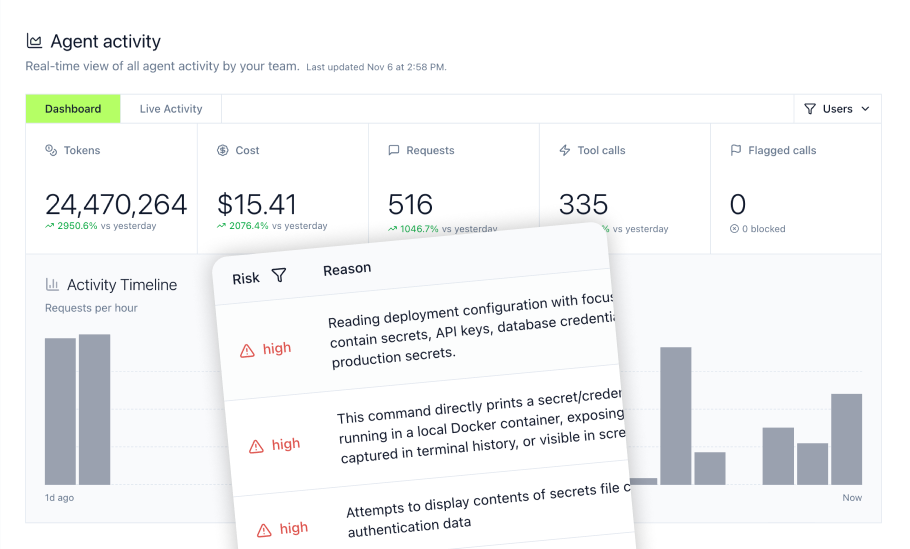
SaaS companies deploying AI agents in 2026 face a critical infrastructure decision: How do you connect agents to enterprise data sources securely, at scale, without creating integration chaos?
Model Context Protocol (MCP) has quickly become a leading open standard for AI-to-tool communication, introduced by Anthropic and now adopted across major AI ecosystems, including OpenAI and Microsoft. But the protocol alone doesn't solve production challenges. You need an MCP Gateway that handles authentication, permissions, audit trails, and the complexity that comes with enterprise deployments.
The stakes are high. 86% of enterprises report needing tech stack upgrades for AI agents, and 42% require eight or more data sources per agent deployment. Meanwhile, 62% express serious concern about security and compliance risks.
This guide analyzes 10 MCP gateways based on criteria that matter most for SaaS companies: multi-tenancy support, compliance posture, integration breadth, deployment speed, and security governance. For SaaS teams prioritizing compliance-driven requirements, rapid deployment, and enterprise readiness, MintMCP is a strong fit.
Key Takeaways
- MCP gateways solve three production challenges: Tool organization, protocol translation, and security control for AI agents connecting to enterprise data sources
- Compliance is non-negotiable: With major EU AI Act obligations applying in phases through August 2026, SaaS companies face penalties up to €35 million or 7% of worldwide annual turnover for prohibited-practice violations
- Shadow AI demands governance: Only 18% have enterprise-wide AI governance councils despite widespread generative AI usage
- Integration breadth varies dramatically: Choose gateway capabilities based on your specific integration requirements and enterprise data sources
- Performance matters for real-time applications: Latency considerations differ based on architecture and security depth requirements
- Open-source vs. managed is a strategic decision: Some gateways offer full control through open-source models; others deliver production-ready managed services
1. MintMCP Gateway – Compliance-First Enterprise Infrastructure
MintMCP is built for SaaS companies and regulated teams that need governed MCP access, offering SOC 2 Type II audited security controls, compliance with HIPAA standards, and BAA availability with managed deployment for production MCP infrastructure.
What Sets MintMCP Apart
MintMCP addresses the root cause of enterprise MCP deployment challenges: STDIO-based servers that are difficult to host, lack authentication, and scatter credentials across teams. The platform provides OAuth brokering, credential management, policy controls, and enterprise monitoring for MCP servers, reducing the operational work required to move from pilot to production.
Key Capabilities
- Managed STDIO Deployment: Deploy STDIO-based MCPs with hosted runtime, authentication, and lifecycle management
- Virtual MCP Bundles: Create per-use-case endpoints with SCIM-driven membership, curated tool lists, and access policy
- Agent Bundles: Govern agent identities with M2M auth, scoped tools, and an “act as agent” flow for connectors that require per-agent OAuth
- Hosted MCP Connectors: Use MintMCP-operated connectors for Snowflake, Elasticsearch, Gmail, and enterprise databases
- Complete Audit Trails: Centralize audit logs and observability for MCP activity, tool access, and policy enforcement
Enterprise Features
- SOC 2 Type II audited
- Compliant with HIPAA standards, with BAA availability
- SSO, SCIM-driven RBAC, and IdP group mapping
- Tool-level allowlisting and rule-based policy
- Credential management for MCP servers and connectors
- JavaScript Gateway Middleware in a JS sandbox for inline policy, DLP, and guardrails integrations
- Gateway + Agent Monitor governance for Claude, Cursor, ChatGPT, Gemini, and Copilot
- Managed SaaS-first deployment in the US and EU, with VPC/self-hosted deployment available on request
Product Fit
MintMCP is best for IT, Security, and AI Operations teams that need to govern internal employee and internal-agent access across MCP tools, hosted connectors, audit logs, and policy controls from one platform.
Best For
SaaS companies in healthcare, finance, and public sector requiring audit-ready compliance support and rapid deployment
2. Composio
Composio is a developer-focused option with SaaS connector coverage and unified authentication capabilities.
Core Approach
The platform provides pre-built connectors that handle OAuth, API keys, and authentication automatically, targeting teams that need rapid integration with third-party applications.
Key Capabilities
- Managed SaaS application connectors
- Unified authentication handling for OAuth and API keys
- Framework integration with LangChain, CrewAI, and LlamaIndex
- Production-oriented architecture for agentic app development
Developer Experience
- SDK and documentation for developer adoption
- Freemium model for initial adoption
- Developer-oriented integration workflow
Considerations
Composio is suitable for developer and AI engineering teams building external customer-facing AI products. SaaS teams that need internal employee governance, SCIM-driven RBAC, per-use-case tool bundles, and centralized audit may need additional governance layers.
Best For
SaaS startups and product teams focused on third-party app integration
3. TrueFoundry MCP Gateway
TrueFoundry delivers performance-oriented MCP gateway capabilities with unified LLM and tool management in a single control plane.
Performance Architecture
The platform emphasizes low-latency routing and consolidated infrastructure for teams with existing AI workloads.
Key Capabilities
- Performance-oriented architecture
- Unified AI infrastructure for LLM and MCP tool management
- Built-in observability with unified billing and cost tracking
- Enterprise integrations including Slack, Confluence, and Datadog
Deployment Options
Managed SaaS and self-hosted control plane options are available, including deployment in a customer's Kubernetes or cloud environment.
Considerations
TrueFoundry is well suited to platform engineering and ML platform teams. Teams prioritizing IT/security-led internal governance should evaluate whether they need MintMCP-style Virtual MCP Bundles, Agent Bundles, hosted MCP connectors, and SCIM-driven access policy as first-class governance primitives.
Best For
SaaS platforms with existing AI workloads seeking unified infrastructure management
4. Portkey
Portkey combines an open-source foundation with enterprise features, providing unified LLM and MCP observability for GenAI teams.
Observability Strength
The platform's core strength lies in end-to-end observability: unified traces that span LLM calls and MCP tool invocations, enabling debugging across the entire execution chain. Authentication options include OAuth 2.1, API Tokens, and Header Auth with JWT validation.
Key Capabilities
- Central registry with team-scoped access control
- End-to-end observability across LLM and MCP interactions
- Deployment flexibility: SaaS, private cloud, VPC, or self-hosted
- SOC 2 Type II and GDPR-oriented compliance support
Considerations
Portkey is strong for developer and platform engineering teams that want LLM observability alongside MCP visibility. SaaS teams focused on internal employee and internal-agent governance should also evaluate whether they need SCIM-driven Virtual MCP Bundles, Agent Bundles with M2M auth, hosted MCP connectors, and tool-update policy as native MCP governance controls.
Best For
SaaS companies wanting open-source flexibility with enterprise observability options
5. Lunar.dev MCPX
Lunar.dev MCPX provides granular governance controls with global, service-level, and tool-level access management capabilities.
Governance Focus
For SaaS companies needing fine-grained control over agent capabilities, the platform's tool customization features allow administrators to rewrite tool descriptions and lock parameters for safety, preventing agents from executing unintended actions.
Key Capabilities
- Granular role-based access control with consumer tags
- Tool customization for description rewrites and parameter locking
- Prometheus-compatible metrics for monitoring
- Integration with Lunar AI Gateway
Deployment Options
Self-hosted Docker/Kubernetes deployment with optional SaaS dashboards, supporting on-premises, cloud, or managed configurations
Considerations
Lunar.dev MCPX is a fit for teams that want control over MCP traffic and tool behavior. Teams looking for managed SaaS-first deployment, hosted MCP connector runtime, SCIM-driven Virtual MCP Bundles, and Agent Bundles should compare how much governance must be assembled or operated separately.
Best For
SaaS companies requiring fine-grained agent capability control across multiple environments
6. Workato Enterprise MCP
Workato delivers enterprise application connectivity with a large library of pre-built connectors, positioning itself as an enterprise MCP platform.
Integration Breadth
The platform provides substantial enterprise app coverage, converting existing workflow "recipes" into MCP servers, potentially leveraging prior integration work for organizations already using the Workato ecosystem.
Key Capabilities
- Extensive enterprise application library
- Recipe-to-MCP conversion for existing workflows
- Enterprise governance with verified user access
- Mature iPaaS foundation
Considerations
Workato can be useful for teams already standardized on its automation and iPaaS ecosystem. SaaS teams should evaluate whether recipe-to-MCP workflows provide the same MCP-specific primitives they need, such as Virtual MCP Bundles, Agent Bundles, stdio and hosted-server OAuth brokering, tool-update policy, and Agent Monitor visibility.
Best For
Existing Workato customers extending to agentic AI, or organizations prioritizing wide third-party app coverage
7. Docker MCP Gateway
Docker MCP Gateway brings container-first security to MCP deployments, leveraging familiar Docker tooling for DevOps teams.
Container-Native Approach
For SaaS companies with existing container infrastructure, Docker provides an open-source gateway with signed images and resource isolation. Each MCP runs in its own container with configurable CPU/memory limits.
Key Capabilities
- Container isolation per MCP server
- Supply-chain security through signed images
- MCP Catalog access to 200+ tools
- Familiar Docker workflows with standard CLI
Performance Consideration
Container-based architecture provides security isolation with moderate latency characteristics suitable for many use cases.
Considerations
Docker MCP Gateway is attractive for teams that already want to operate MCP infrastructure through containers. That model can require customers to manage connector runtimes, scaling, and governance workflows themselves. MintMCP addresses that gap with managed SaaS-first deployment, hosted MCP connectors, centralized audit, and policy controls.
Best For
Container-native SaaS companies with existing Docker infrastructure wanting full control
8. Lasso Security
Lasso Security focuses on real-time threat detection for prompt injection, command injection, and data exfiltration.
Security-First Architecture
The platform's plugin-based architecture enables multiple guardrail configurations, from basic token masking to Presidio-based PII detection, including credit card, SSN, email, and phone data, to AI safety scanning. The MCP Security Scanner provides reputation analysis before loading a server.
Key Capabilities
- Security protection across AI, MCP, and API layers
- PII detection with automatic masking
- Tool poisoning prevention through server pre-scanning
- Plugin architecture with multiple security options
Performance Trade-off
Security scanning capabilities add processing overhead suitable for sensitive data protection scenarios.
Considerations
Lasso Security is strongest as a security layer for threat detection and guardrails. SaaS teams should also evaluate whether they need gateway-native identity, SCIM-driven RBAC, per-use-case MCP bundles, credential management, audit logs, and agent identity governance.
Best For
SaaS companies handling sensitive customer data requiring security scanning depth
9. Zapier MCP
Zapier MCP brings the platform's no-code approach to AI agent integration, providing access to thousands of apps and actions without developer involvement.
No-Code Configuration
Non-technical users can configure MCP endpoints in minutes using Zapier's familiar interface, enabling business users to experiment with AI agents without engineering bottlenecks.
Key Capabilities
- 8,000+ app library access
- No-code configuration generating secure MCP URLs
- Built-in authentication for connected apps
- AI client support for Claude, ChatGPT, Cursor, and Windsurf
Considerations
Zapier MCP is useful for rapid prototyping and business-user automation. SaaS teams moving into governed production deployments should evaluate whether they need IT/security controls such as SCIM-driven RBAC, tool-level allowlisting, centralized audit, credential management, and internal-agent governance.
Best For
SMB-focused SaaS companies or teams doing rapid prototyping before production infrastructure commitment
10. Obot Platform
Obot provides an open-source MCP platform that includes gateway, catalog, hosting, and chat client capabilities in one package.
Complete Platform Approach
For SaaS companies wanting full control, Obot provides a Kubernetes-native platform configurable via UI or GitOps workflows. Recent releases have added API keys, model access policies, and Azure OpenAI support.
Key Capabilities
- Complete platform: gateway, catalog, hosting, and chat client
- MCP catalog with searchable directory and trust levels
- Identity provider integration: Google, GitHub, Okta, Entra
- GitOps-ready configuration options
Considerations
Obot is a fit for teams with Kubernetes-fluent infrastructure teams that want self-hosted control. SaaS teams that prefer managed SaaS-first deployment, hosted MCP connectors, and less customer-operated runtime infrastructure may find MintMCP a better operational fit.
Best For
SaaS companies with strong DevOps teams wanting complete control and minimal vendor dependencies
Essential Selection Considerations
Compliance Timeline Matters: With major EU AI Act provisions applying in phases through August 2026, SaaS companies can face penalties up to €35 million or 7% of worldwide annual turnover for prohibited-practice violations. If you're serving European customers, prioritize gateways with SOC 2 Type II audited security controls, clear access controls, and comprehensive audit trails. MintMCP provides production-ready compliance infrastructure designed for regulated industries.
Integration Strategy Drives Selection: Consider whether you need breadth or depth in your integration approach. The average enterprise needs 8+ data sources per agent deployment. MintMCP's hosted connectors provide integration with Snowflake, Elasticsearch, and other critical data infrastructure, while its Virtual MCP Bundles help expose only the tools each role or agent needs.
Performance Requirements Vary: Real-time conversational AI demands low overhead. Batch processing and async workflows can tolerate higher latency. Match your latency requirements to your specific use case.
Open-Source vs. Managed Trade-offs: Open-source options provide full control and reduce vendor lock-in but require infrastructure expertise. Managed platforms deliver production-ready services with compliance support, support paths, and faster time-to-production. For teams requiring rapid deployment with compliance controls from day one, managed solutions reduce operational burden.
For teams evaluating MCP infrastructure, the MintMCP Gateway documentation provides detailed architecture guides and quickstart tutorials. Those focused on monitoring coding agents should also consider LLM Proxy solutions for visibility into tool calls and bash commands.
Deploy Enterprise AI with MintMCP
The Model Context Protocol has become an important standard for connecting AI agents to enterprise data sources. But as this analysis demonstrates, deploying MCP at scale requires more than protocol support. It demands enterprise-grade security, governance, and monitoring that transforms experimental AI into production infrastructure.
MintMCP Gateway delivers a fast path from pilot to production, offering managed deployment with SOC 2 Type II audited security controls, compliance with HIPAA standards, and BAA availability. The platform reduces the technical barriers that keep organizations stuck in AI pilot mode, providing hosted connectors for enterprise data sources and comprehensive audit trails for compliance.
Whether you're securing access to Snowflake data warehouses, Elasticsearch knowledge bases, or custom enterprise tools, MintMCP provides the infrastructure that makes AI deployment practical, compliant, and secure.
For a deeper understanding of MCP gateway architecture, see our guide to understanding MCP gateways.
Ready to transform your AI infrastructure? Visit mintmcp.com to schedule a demo and see how MintMCP Gateway can accelerate your enterprise AI deployment.
Frequently Asked Questions
What exactly is an MCP Gateway, and why do SaaS companies need one?
An MCP Gateway sits between your AI agents, including Claude, ChatGPT, Cursor, Gemini, and Copilot, and your internal tools, handling authentication, permissions, and audit logging. Without a gateway, MCP servers can operate as black boxes with limited telemetry, request history, and access control. For SaaS companies, gateways enable turning shadow AI into sanctioned AI while maintaining controls for SOC 2, GDPR, and internal security requirements.
How do MCP Gateways help with compliance requirements like SOC 2 and GDPR?
Enterprise MCP gateways provide audit trails of tool calls, data access, and configuration changes. MintMCP, for example, centralizes audit logs and observability across MCP activity, tool access, and policy enforcement. Key compliance features include OAuth/SSO enforcement, SCIM-driven RBAC, role-based access control, credential management, and tamper-resistant logging. With major EU AI Act obligations applying in phases through August 2026, these capabilities are becoming essential.
Can MCP Gateways integrate with existing SaaS applications and databases?
Yes, integration capabilities vary significantly across gateways. For database integrations, MintMCP provides hosted connectors for Snowflake, Elasticsearch, PostgreSQL, and other enterprise data sources with built-in credential management. The platform handles authentication complexity while maintaining security controls.
What's the performance impact of adding an MCP Gateway?
Performance overhead varies based on architecture and security depth. Different gateways optimize for different use cases: some prioritize minimal latency through in-memory authentication, while others add processing time for security scanning. Choose based on your latency tolerance and security requirements for your specific application needs.
Should we use open-source or managed MCP Gateway solutions?
This depends on your team's capabilities and compliance requirements. Open-source options provide control and lower licensing costs, but require infrastructure expertise. Managed platforms deliver production-ready services with compliance support, support paths, and faster time-to-production. Many SaaS companies in regulated industries choose managed solutions like MintMCP for compliance controls and reduced operational burden.