Connecting MongoDB databases securely to ChatGPT Custom GPTs remains a critical challenge for compliance-conscious organizations. The Model Context Protocol provides a standardized approach to connect ChatGPT with MongoDB through tools like GenAI Toolbox, enabling natural language database queries, automated aggregation pipelines, and intelligent data analysis—but these integrations must satisfy strict security and compliance requirements. This guide shows data teams and compliance officers how to implement MongoDB MCP connections for ChatGPT Custom GPTs using MintMCP's enterprise gateway that meet SOC2 and GDPR regulations while maintaining the audit trails and access controls enterprise environments demand.
Key takeaways
- MCP enables ChatGPT Custom GPTs to query and analyze MongoDB databases through standardized integrations using GenAI Toolbox, but local deployments create unacceptable security risks
- GenAI Toolbox provides flexible MongoDB connectivity through user-defined tools.yaml configurations for document operations, aggregation pipelines, and schema analysis
- SOC2 Type II requires comprehensive logging of database access events, while GDPR mandates consent management and data protection capabilities for MongoDB collections containing PII
- ChatGPT Custom GPTs need governed access to development, staging, and production MongoDB instances without exposing connection strings
- MintMCP's gateway architecture provides enterprise-grade MongoDB MCP deployment with automatic OAuth enforcement, centralized audit trails, and compliance-ready infrastructure
- Tool capabilities depend entirely on what users define in their tools.yaml configuration file, providing flexibility for specific MongoDB operations
- MongoDB MCP integrations transform ChatGPT from a conversational interface into a powerful database assistant while maintaining complete visibility for regulatory audits
What is MCP and why MongoDB integration matters for ChatGPT custom GPTs
The Model Context Protocol is an open standard that enables secure, bidirectional connections between AI systems and external data sources. For organizations using MongoDB, MCP represents the bridge between ChatGPT's natural language processing and document database operations. The opportunity lies in AI-powered data exploration that can generate complex aggregation pipelines, analyze document structures, and provide instant insights while maintaining detailed audit trails. The risk emerges from uncontrolled ChatGPT access to production MongoDB clusters without proper governance.
Traditional MongoDB integrations with ChatGPT require custom API development. When different teams need ChatGPT access to MongoDB for analytics, customer support, and development, you build separate integrations with different authentication methods, varying security controls, and no unified audit trail. Each integration becomes a potential security vulnerability.
MCP standardizes these connections. ChatGPT Custom GPTs communicate with MongoDB through consistent tool interfaces regardless of which team or use case drives the request. This standardization enables centralized security controls, unified audit logging, and consistent compliance policies across all AI interactions with MongoDB resources.
GenAI Toolbox: Flexible MongoDB tool creation
GenAI Toolbox represents a different approach to MongoDB MCP connectivity. Rather than providing pre-built tools for specific operations, it enables organizations to define their own MongoDB tools through configuration. This flexibility means organizations can create exactly the tools they need while maintaining security controls.
The toolbox works through a tools.yaml configuration file where you define:
Custom MongoDB Query Tools
- Specific find operations for document retrieval
- Parameterized queries with type validation
- Complex aggregation pipelines with controlled access
- Map-reduce operations for analytics
Database Operations
- Read-only queries for analysis
- Controlled insert/update operations
- Collection inspection tools
- Index management capabilities
Security-Controlled Access
- Tools limited to specific collections
- Read-only connections for sensitive data
- Parameterized queries to prevent injection
- Result set limitations
The key advantage: organizations define exactly what ChatGPT can do with MongoDB, rather than granting broad access and trying to restrict it later.
Why local MongoDB MCP deployments fail enterprise requirements
MCP prioritizes developer flexibility over enterprise security. The protocol supports various authentication methods, but implementation is optional and frequently bypassed for convenience. This design philosophy creates fundamental security problems for organizations using MongoDB with ChatGPT.
Running MongoDB MCP servers locally for ChatGPT introduces these critical risks:
- Credential Exposure: MongoDB connection strings embedded in GPT configurations with no encryption or rotation capability
- Audit Blind Spots: Zero visibility into which MongoDB collections ChatGPT accessed, what queries were executed, or who initiated the operations
- Access Control Vacuum: No mechanism to enforce role-based permissions or prevent unauthorized MongoDB access across different Custom GPTs
- Compliance Failures: Inability to demonstrate SOC2 or GDPR compliance without comprehensive logging, monitoring, and access governance
Enterprise security frameworks explicitly require centralized authentication, comprehensive audit trails, and granular access controls—capabilities that local MCP servers fundamentally cannot provide without additional infrastructure.
MintMCP gateway architecture for MongoDB connectivity
MintMCP's enterprise gateway transforms MongoDB MCP from an experimental feature into compliance-ready infrastructure. Rather than managing individual server installations, teams configure MongoDB MCP connectors once and provide governed access through Virtual MCP servers with built-in security controls.
How the gateway provides security controls
The gateway operates as a proxy layer between ChatGPT Custom GPTs and MongoDB databases, enforcing security policies at every interaction:
- Centralized Connection Management: Administrators configure MongoDB connections at the connector level, eliminating distributed credential sprawl
- Virtual Server Provisioning: Connectors are bundled into Virtual MCP servers with role-appropriate MongoDB access
- Unified Identity Management: Users authenticate once with enterprise SSO and receive governed access to approved MongoDB clusters
- Request Interception: Every ChatGPT query flows through the gateway for policy enforcement and logging
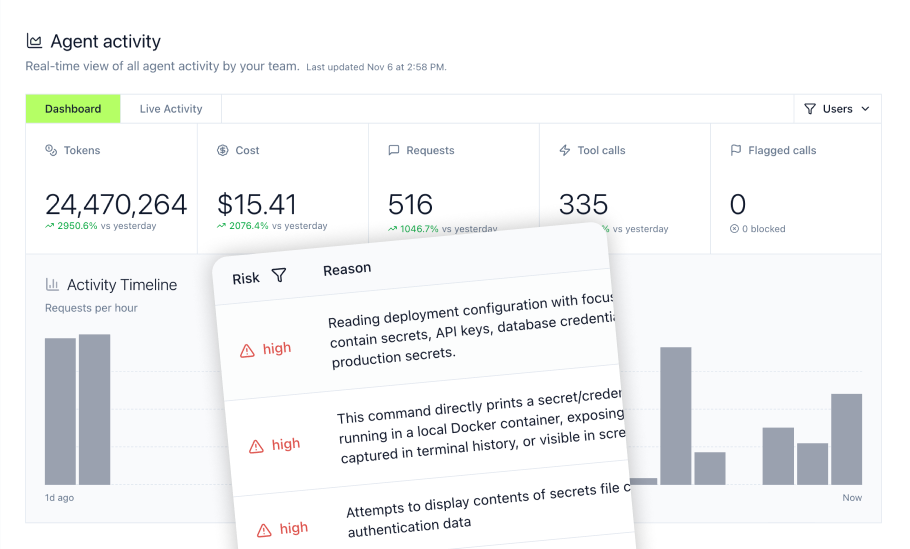
- Comprehensive Audit Trails: Complete observability for security reviews and compliance audits
This architecture delivers capabilities essential for secure ChatGPT operations:
- Deploy Once, Access Everywhere: Configure MongoDB connectors centrally and share across Custom GPTs with consistent policies
- Centralized Secret Management: Store MongoDB credentials in encrypted, SOC2-certified infrastructure
- Complete Visibility: Monitor query patterns, track ChatGPT operations, and generate security reports
- Enterprise Security: SOC2 Type II certified infrastructure with encryption, access controls, and incident response
Setting up MongoDB with GenAI Toolbox in MintMCP
Deploying MongoDB connectivity through GenAI Toolbox requires configuring both the tool definitions and the MCP connector within MintMCP's managed infrastructure.
Prerequisites for MongoDB integration
Before configuring MongoDB tools for ChatGPT, ensure you have:
- MintMCP account with administrator privileges
- MongoDB cluster (Atlas, self-hosted, or enterprise deployment)
- MongoDB connection string with appropriate credentials
- Understanding of which collections and operations to expose
- ChatGPT Plus or Team subscription for Custom GPT creation
Creating MongoDB connection strings
Your MongoDB MCP connector requires a properly formatted connection string. The format varies based on your deployment type:
MongoDB Atlas
mongodb+srv://username:password@cluster.mongodb.net/database?retryWrites=true&w=majority
Self-Hosted MongoDB
mongodb://username:password@host1:27017,host2:27017/database?replicaSet=rs0
MongoDB with TLS/SSL
mongodb://username:password@host:27017/database?ssl=true&authSource=admin
For production deployments, use connection strings with:
- Read preference settings for load distribution
- Connection pool configuration for optimal performance
- Retry logic for network resilience
- Appropriate authentication mechanisms (SCRAM, X.509, or LDAP)
Configuring tools.YAML for MongoDB operations
Create a tools.yaml file that defines the MongoDB operations ChatGPT can perform:
sources:
  mongodb:
    kind: mongodb
    uri: ${MONGODB_CONNECTION_STRING}

tools:
  find_customers:
    kind: mongodb-find
    source: mongodb
    description: Find customers by criteria
    database: ${MONGODB_DATABASE}
    collection: customers
    limit: 100
    filterPayload: |
      { "status": {{json .status}} }
    filterParams:
      - name: status
        type: string
        description: Customer status filter

  aggregate_revenue:
    kind: mongodb-aggregate
    source: mongodb
    description: Calculate revenue metrics
    database: ${MONGODB_DATABASE}
    collection: orders
    pipelinePayload: |
      [
        { "$match": { "date": { "$gte": {{json .start_date}} } } },
        { "$group": {
          "_id": "$category",
          "revenue": { "$sum": "$amount" },
          "orders": { "$sum": 1 }
        }},
        { "$sort": { "revenue": -1 } }
      ]
    pipelineParams:
      - name: start_date
        type: string
        description: Start date for filtering
This configuration defines:
- Connection to MongoDB using environment variables
- Specific tools for querying customers and calculating revenue
- Parameterized queries to prevent injection attacks
- Result limitations to control data exposure
Deploying the MongoDB connector in MintMCP
Navigate to the MintMCP console and follow these deployment steps:
- Add GenAI Toolbox Connector
- Go to MCP Connectors section
- Click "Add Connector"
- Select "Hosted Server" for managed deployment
- Configure Connection Settings
- Set Security Scopes
MONGODB_CONNECTION_STRING: Set to "Global" for organization-wide access or "Per-User" for individual authenticationMONGODB_DATABASE: Configure the default database name- Configure allowed operations through Virtual MCP servers
- Deploy and Validate
- Click "Save" to initiate deployment
- Monitor deployment logs for connection verification
- Confirm available tools match your tools.yaml definitions
The deployment completes within 30-60 seconds. Check logs for connection errors or authentication issues if the server fails to start.
Creating virtual MCP servers for ChatGPT access
Virtual MCP servers bundle MongoDB tools for specific ChatGPT Custom GPTs and use cases. This approach implements role-based access control at the tool level, preventing unauthorized database operations.
Analytics team virtual server
Create a read-only Virtual MCP server for analytics ChatGPT:
- Navigate to Virtual MCP Servers in MintMCP console
- Create new server named "MongoDB - Analytics ChatGPT"
- Add your GenAI Toolbox connector
- Use tool customization to expose only:
- Find operations for analytics collections
- Aggregation pipeline tools
- Collection statistics tools
- Generate OpenAPI specification for ChatGPT
Customer support virtual server
Configure support team access for ChatGPT:
- Create Virtual Server "MongoDB - Support ChatGPT"
- Add GenAI Toolbox connector with limited tools:
- Customer lookup by ID or email
- Order history queries
- Read-only operations only
- Enable audit logging for compliance
- Generate OpenAPI specification
Development team virtual server
Set up comprehensive access for development ChatGPT:
- Create "MongoDB - Development ChatGPT"
- Include all read operations
- Add controlled write operations for test databases
- Enable schema inspection tools
- Generate OpenAPI specification with all capabilities
Connecting ChatGPT custom GPT to MongoDB
With Virtual MCP servers configured, create ChatGPT Custom GPTs that interact with MongoDB through natural language. The ChatGPT setup process requires generating an OpenAPI specification and configuring authentication.
Generating the OpenAPI specification
MintMCP automatically generates OpenAPI specifications from Virtual MCP endpoints:
- Access your Virtual MCP server details in MintMCP console
- Click "Generate OpenAPI Spec" button
- Copy the generated specification
- The spec includes all MongoDB tools defined in your tools.yaml
Creating the custom GPT
Configure your MongoDB-connected Custom GPT in ChatGPT:
- Navigate to GPT Builder
- Open ChatGPT and go to "Explore GPTs"
- Click "Create a GPT"
- Choose "Configure" tab for manual setup
- Configure Basic Settings
- Name: "MongoDB Assistant" or use-case specific name
- Description: Explain the GPT's MongoDB capabilities
- Instructions: Define how the GPT should interact with users
- Add Custom Actions
- Click "Add actions" in the configuration
- Paste the OpenAPI specification from MintMCP
- Configure authentication as OAuth 2.0
- Add MintMCP OAuth endpoints
- Set Authentication Parameters
- Client ID: From MintMCP Virtual Server settings
- Client Secret: Generated in MintMCP console
- Authorization URL:
https://app.mintmcp.com/oauth/authorize - Token URL:
https://app.mintmcp.com/oauth/token - Scope: Match your Virtual MCP server configuration
- Test the Integration
- Save and publish the GPT
- Test basic queries like "Show collection statistics"
- Verify authentication flow completes successfully
- Confirm data operations execute as expected
Writing effective GPT instructions
Optimize your Custom GPT's behavior with MongoDB-specific instructions:
You are a MongoDB database assistant with secure access to organizational data. When users ask questions:
1. Translate natural language to appropriate MongoDB tools from the available operations
2. Use aggregation tools for complex analytical queries
3. Explain query results in business terms
4. Suggest query optimizations when appropriate
5. Never expose raw connection strings or credentials
6. Maintain data privacy by summarizing results appropriately
7. Provide insights based on data patterns
Available tools include find operations, aggregation pipelines, and collection statistics. Always use the most appropriate tool for the user's request.
Security best practices for MongoDB ChatGPT integration
Implementing proper security controls ensures your MongoDB data remains protected while enabling ChatGPT access.
Connection string security
- Never embed credentials directly in GPT instructions or tools.yaml
- Use MintMCP's encrypted environment variables for connection strings
- Rotate credentials regularly through your MongoDB provider
- Implement IP allowlisting for MongoDB Atlas
- Use TLS/SSL for all connections
Tool definition security
Configure MongoDB tools with security in mind:
- Limit each tool to specific collections
- Use parameterized queries exclusively
- Implement result set limitations
- Avoid tools that modify critical collections
- Separate read and write tools
Access control implementation
Configure MongoDB access controls aligned with MCP permissions:
- Create dedicated MongoDB users for MCP connections
- Assign minimum required privileges per Virtual MCP server
- Use MongoDB's built-in role-based access control
- Implement database-level and collection-level restrictions
- Enable MongoDB's audit logging for compliance
Query governance
MintMCP's LLM proxy rules enable query-level security:
- Block operations on sensitive collections
- Prevent mass delete operations
- Limit query result sizes to prevent data exfiltration
- Require approval workflows for write operations
- Flag anomalous query patterns for review
Data privacy considerations
Protect sensitive information through multiple layers:
- Exclude PII fields from tool result sets
- Implement field-level encryption for sensitive data
- Use MongoDB's client-side field level encryption
- Configure data masking in tools.yaml
- Maintain compliance with data residency requirements
Monitoring and observability for MongoDB ChatGPT operations
MintMCP's observability features provide comprehensive visibility into all MongoDB operations initiated by ChatGPT Custom GPTs.
Activity log analysis
Every MongoDB operation through ChatGPT generates detailed audit entries containing:
- User Identity: Who initiated the ChatGPT conversation
- Tool Invocation: Which specific tool from tools.yaml was called
- Parameters Used: Complete parameter values passed to tools
- Execution Time: Duration and timestamp of operations
- Result Metrics: Success/failure status and document counts
- ChatGPT Context: The natural language query that triggered the operation
This comprehensive logging enables:
- Security audit responses with complete access history
- Incident investigation with full operation reconstruction
- Usage pattern analysis for optimization
- Compliance reporting demonstrating policy enforcement
Performance and security metrics
Monitor these key metrics to maintain secure and reliable MongoDB ChatGPT operations:
Security Metrics
- Failed authentication attempts by user
- Blocked tool invocations due to permissions
- After-hours MongoDB access attempts
- Unusual query patterns or data volumes
- Tool usage outside normal patterns
Operational Metrics
- Query response times by collection
- Error rates by database and tool
- Connection pool utilization
- Concurrent ChatGPT users per Virtual MCP server
- Aggregation pipeline performance
Alerting for security violations
Configure proactive monitoring through MintMCP's alerting system to detect security issues in real-time:
Critical Security Alerts
- Multiple failed authentications from same user
- Production MongoDB access outside business hours
- High-volume document retrieval exceeding thresholds
- Attempted use of undefined or blocked tools
Compliance Alerts
- Access to PII-containing collections without justification
- Missing audit log entries indicating failures
- Configuration changes to Virtual MCP servers
- Unusual geographic access patterns
Configure alerts through LLM proxy rules to notify security teams through email, Slack, or incident management systems.
Why MintMCP provides superior MongoDB MCP security for ChatGPT
While GenAI Toolbox provides flexible MongoDB connectivity, MintMCP delivers the enterprise infrastructure required for secure ChatGPT Custom GPT deployments.
One-Click deployment with security controls
Unlike manual local installations requiring complex configuration, MintMCP provides instant hosted deployment with automatic OAuth protection. Teams deploy MongoDB MCP connectors in minutes instead of days, without managing authentication complexity or distributing credentials.
Unified governance across all custom GPTs
MintMCP's Virtual MCP architecture eliminates the complexity of individual tool management across different Custom GPTs. Monitor MongoDB access across analytics, support, and development GPTs from a single security dashboard with complete visibility into database operations regardless of which GPT users choose.
Pre-Built compliance infrastructure
SOC2 Type II certification with complete audit trails eliminates months of compliance preparation work. MintMCP provides pre-configured controls for SOC2 and GDPR requirements, enabling organizations to focus on ChatGPT productivity rather than building security infrastructure from scratch.
Tool-Level security policy enforcement
Control exactly what MongoDB operations ChatGPT can perform through tool definitions and Virtual MCP configurations. Create security rules that apply consistently across all Virtual MCP servers, preventing security incidents before they occur rather than detecting violations after database damage.
For teams responsible for ChatGPT Custom GPTs, MintMCP transforms MongoDB MCP from experimental technology into audit-ready infrastructure with enterprise security, comprehensive logging, and compliance certifications built in.
Frequently asked questions
What MongoDB features does GenAI Toolbox support for ChatGPT?
GenAI Toolbox supports comprehensive MongoDB operations including find, insert, update, delete, and aggregation pipelines through its flexible configuration system. The toolbox connects to MongoDB Atlas, self-hosted clusters, and enterprise deployments using standard connection strings. You define the specific operations in your tools.yaml configuration file, including complex aggregation pipelines, map-reduce operations, and index management. MintMCP handles the secure deployment and access control regardless of which MongoDB features you expose to ChatGPT, providing the same enterprise security controls across all operations.
How do we control what MongoDB queries ChatGPT can execute?
Control query execution through precise tool definitions in your tools.yaml configuration file. Each tool you define specifies exactly one MongoDB operation with parameterized inputs, preventing ChatGPT from executing arbitrary queries. For example, you might create a "find_active_customers" tool that only retrieves documents from the customers collection where status equals "active", with the query hardcoded in the tool definition. Virtual MCP servers then control which tools are available to which Custom GPTs, providing an additional layer of access control. This approach ensures ChatGPT can only execute pre-approved MongoDB operations that you've explicitly defined and tested.
Can we use existing MongoDB atlas credentials with MintMCP?
Yes, MintMCP supports using your existing MongoDB Atlas credentials through secure environment variable configuration. When setting up your GenAI Toolbox connector, configure the MongoDB connection string as an environment variable in the MintMCP console. These credentials are encrypted at rest and in transit, never exposed to ChatGPT users, and can be rotated according to your security policies. For enhanced security, use dedicated read-only MongoDB users for ChatGPT access, separate from your application credentials. MintMCP's authentication models support various credential management approaches including connection strings, X.509 certificates, and AWS IAM authentication for MongoDB Atlas.
How do tool definitions in tools.YAML affect ChatGPT security?
Tool definitions in tools.yaml act as your primary security control mechanism for ChatGPT's MongoDB access. Each tool explicitly defines what collection can be accessed, what operation can be performed, and what data is returned. This design prevents NoSQL injection attacks since queries are predefined and only accept typed parameters. Tools can be designed to limit data exposure through projections, filters, and document limits built into the query definition. By controlling tool availability through Virtual MCP servers, you ensure ChatGPT users only access MongoDB collections appropriate for their use case. The combination of well-designed tools and Virtual MCP access controls provides defense-in-depth security.
What happens if ChatGPT tries to execute a dangerous MongoDB operation?
Multiple security layers prevent dangerous MongoDB operations from ChatGPT. First, since GenAI Toolbox only executes predefined tools from your tools.yaml configuration, ChatGPT cannot create arbitrary queries or operations like dropping collections. If a tool doesn't exist for a dangerous operation like db.dropDatabase(), it simply cannot be executed. Second, Virtual MCP servers control which tools are available to which Custom GPTs, so production-impacting tools can be restricted. Third, MintMCP's LLM proxy rules can block tool invocations based on patterns or parameters. Finally, all attempts are logged in the activity log, enabling security teams to investigate any suspicious patterns and adjust controls accordingly.