Selecting the right MCP gateway for enterprise AI deployment requires evaluating deployment speed, security posture, compliance readiness, and integration capabilities. As organizations scale AI agent usage, the Model Context Protocol (MCP) has emerged as a widely adopted standard for connecting AI clients to enterprise data and tools. MintMCP Gateway delivers one-click deployment in minutes with SOC 2 Type II audited security controls and Virtual MCP Bundles for governed access. RunLayer focuses on MCP-specific security, observability, and access controls for internal employee and agent governance. Airia MCP Gateway positions itself around pre-configured enterprise integrations. This comparison examines all three platforms to help determine which approach aligns with your enterprise requirements.
Key Takeaways
- MintMCP offers one-click deployment in minutes for hosted MCP connectors and stdio servers
- MintMCP's Virtual MCP Bundles enable per-use-case endpoints with SCIM-driven membership, curated tool sets, and tool-level policy
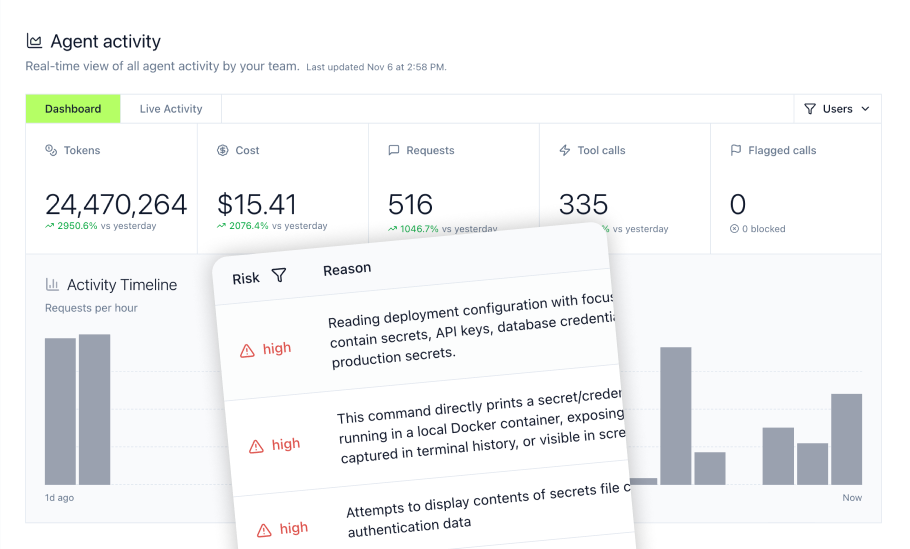
- MintMCP includes Gateway + Agent Monitor governance, covering MCP traffic as well as local non-MCP agent activity such as bash commands, file reads/writes, and prompt submissions
- MintMCP and RunLayer are enterprise-oriented platforms, while Airia publishes Free, Individual, and Team tiers alongside Enterprise options
Understanding Model Context Protocol Gateways
MCP is a widely adopted standard for connecting AI clients to enterprise systems, supported by major AI providers. However, deploying MCP servers at scale introduces challenges around authentication, permissions, audit trails, and governance that raw MCP implementations do not address.
MCP gateways solve three specific problems:
- Tool Organization: Centralizing access to multiple MCP servers through a single management plane
- Protocol Translation: Connecting existing REST, SOAP, and database systems to MCP-compatible endpoints
- Security Control: Enforcing authentication, authorization, and audit logging across all AI tool interactions
Without proper governance, AI tools operate as black boxes with significant security risks: zero telemetry, no request history, and uncontrolled access to sensitive data.
Why Enterprises Need MCP Gateways
The shift from developer-side MCP experimentation to organization-wide deployment creates fundamental infrastructure requirements. As AI agent adoption expands, organizations need governance frameworks that can control tool access, enforce least privilege, and preserve audit trails across human and agent activity.
MintMCP bridges this gap by handling authentication, permissions, and audit trails so enterprises can deploy MCP tools with pre-configured policies without slowing developers.
MintMCP: One-Click Deployment and Enterprise Security
MintMCP focuses on transforming local MCP servers into production-ready services with monitoring, logging, and compliance controls. The platform is designed for rapid, governed deployment across internal employee and internal-agent use cases.
Deployment Speed That Compounds
Most MCP servers are STDIO-based and difficult to deploy. They require local installations, manual OAuth configuration, and significant infrastructure expertise. MintMCP eliminates this friction with one-click deployment that transforms STDIO servers into hosted, OAuth-protected endpoints in minutes.
This speed advantage compounds across organizations deploying dozens or hundreds of MCP servers. What takes weeks with traditional approaches can happen much faster with MintMCP’s managed SaaS-first approach.
Virtual MCP Bundles: Role-Based Tool Access
MintMCP's Virtual MCP Bundles represent a differentiated approach to tool governance by exposing curated tool sets per team or use case. Virtual MCP Bundles expose only the minimum required tools per role, not entire MCP servers.
Practical applications include:
- Sales teams access CRM tools without visibility into HR systems
- Finance teams run reports without production write access
- Support teams query customer data without accessing payment information
This principle of least privilege operates at the gateway level, with SSO, SCIM-driven RBAC, IdP groups, tool-level policy, and audit controls.
Agent Monitor for Coding Agent Governance
Coding agents like Cursor and Claude Code operate with extensive system access, reading files, executing commands, and accessing production systems through MCP tools. MintMCP's Agent Monitor provides visibility and control over local non-MCP agent activity:
- Tool Call Tracking: Monitor MCP tool invocations and bash commands
- MCP Inventory: Complete visibility into installed MCPs and their permissions
- Security Guardrails: Block dangerous commands in real time
- Sensitive File Protection: Help prevent access to .env files, SSH keys, and credentials
- Command History: Complete audit trail for security review
This dedicated layer addresses a critical blind spot: without monitoring, organizations cannot see what coding agents access or control their actions.
RunLayer
RunLayer focuses on MCP-specific security, governance, observability, and access controls. The platform is positioned for internal employee and agent governance, with hybrid deployment across managed SaaS and self-hosted customer infrastructure.
Shadow MCP Detection
RunLayer's Watch product offers shadow MCP detection by integrating with MDM tools like Rippling, Jamf, Intune, and Kandji. This capability identifies unmanaged MCP installations across the organization, making it a strong fit for teams prioritizing shadow AI discovery.
Threat Detection Performance
RunLayer says its MCP-specific threat detection models are designed to identify risky agent behavior with low-latency scanning. Treat specific benchmark and patent claims as vendor-reported unless validated during procurement.
Skills Registry and Agents Factory
RunLayer provides a no-code Skills/Plugins Registry for creating reusable AI capabilities with GitHub sync. The Agents Factory enables autonomous agent deployment with managed identities. These features support teams creating and deploying AI tools.
Tradeoffs to consider
RunLayer’s security-oriented approach can be a strong fit for shadow MCP discovery and threat detection. Buyers should also evaluate whether they need MintMCP-specific governance primitives such as Virtual MCP Bundles with SCIM-driven membership, Agent Bundles with M2M auth and “act as agent” flow, hosted MCP connectors run by MintMCP, tool-update policy, and Gateway + Agent Monitor coverage.
Airia MCP Gateway
Airia positions itself around integration breadth with pre-configured enterprise integrations. This catalog includes connections to GitHub, Atlassian, Slack, Microsoft, Twilio, Stripe, HubSpot, MongoDB, Notion, and Salesforce.
MCP Apps Support
Airia provides enterprise support for MCP Apps, enabling interactive dashboards, forms, and visualizations within AI conversations. This capability transforms text-based AI interactions into rich visual experiences.
Integration Approach
Airia integrations include pre-built authentication flows, credential storage, and access controls. For organizations prioritizing out-of-the-box connectivity over custom development, this breadth offers value.
However, Airia's public materials reference enterprise compliance and SOC 2 Type II-related operations, so buyers should verify report scope, coverage, and applicability during procurement. Public named customer case studies remain limited.
Tradeoffs to consider
Airia’s integration catalog can be useful for teams prioritizing broad pre-configured connectivity. Buyers evaluating internal employee and internal-agent governance should also assess whether they need MintMCP’s data-permissions-first architecture, SCIM-driven RBAC, Virtual MCP Bundles, Agent Bundles, centralized audit logs, hosted MCP connectors, and Agent Monitor coverage for local coding-agent activity.
Integration Ecosystem Comparison
Connecting AI agents to enterprise data requires robust integration capabilities. Each platform takes a different approach to building and maintaining these connections.
Catalog Size and Coverage
- MintMCP: Hosted MCP connectors run by MintMCP, with pre-built connectors for enterprise systems including Snowflake, Elasticsearch, Gmail, and databases
- RunLayer: MCP server and connector coverage focused on security-scanned MCP access, governance, and observability
- Airia: Pre-configured enterprise integrations including Salesforce, MongoDB, Stripe, and HubSpot
Catalog size alone does not determine enterprise value. Integration quality, security posture, and deployment speed significantly impact production readiness.
MintMCP's Integration Approach
MintMCP's protocol translation capability connects REST, SOAP, and legacy database systems to MCP without modifying existing systems. Legacy ERP systems become accessible through natural language interfaces.
Pre-built connectors include enterprise-grade options for data analysis, customer support, and development workflows:
- Snowflake MCP Server: Natural language to SQL conversion, semantic views, Cortex Agent integration
- Elasticsearch MCP Server: Query DSL searches, ES|QL queries, index management
- Gmail MCP Server: Search, draft, and send emails with security oversight
AI Client Compatibility
MintMCP supports governance across Claude, Cursor, ChatGPT, Gemini, and Copilot. MintMCP also maintains a Cursor Hooks Partners Program listing, providing validated architecture for enterprise coding workflows.
Pricing and Value Comparison
MintMCP and RunLayer do not publish transparent pricing tiers and require custom enterprise quotes based on organization size, usage patterns, and deployment requirements. Airia publishes Free, Individual, and Team tiers, with custom pricing for Enterprise deployments.
Pricing Models
- MintMCP: Custom enterprise contracts with enterprise SLAs
- RunLayer: Enterprise-oriented pricing and support
- Airia: Public Free, Individual, and Team tiers; custom Enterprise pricing with monthly self-serve tiers plus Enterprise quote options; enterprise-grade support on Enterprise tier
Time-to-Value Comparison
The true cost of an MCP gateway includes implementation time, not just subscription fees.
MintMCP enables minutes to first deployment with one-click hosting. No Kubernetes expertise required. For organizations deploying multiple MCP servers, this deployment speed advantage compounds significantly across the implementation timeline.
RunLayer provides managed SaaS plus self-hosted deployment options for teams that need hybrid control.
Airia positions its platform as transforming days of engineering into point-and-click configuration.
Use Case Mapping: Which Platform Fits Your Needs
Different organizational priorities align with different platform strengths.
Choose MintMCP When You Need:
- Fastest deployment: One-click STDIO-to-production in minutes
- Role-based tool access: Virtual MCP Bundles for principle of least privilege
- Coding agent oversight: Agent Monitor for Cursor and Claude Code monitoring
- Security review support: SOC 2 Type II audited controls, complete audit trails, and compliance documentation through the Trust Center
- Protocol translation: Connect legacy REST, SOAP, and database systems to MCP
Enterprise Performance and Reliability
Production MCP deployment requires enterprise-grade infrastructure with high availability and automatic failover.
Infrastructure Capabilities
- MintMCP: Managed SaaS-first deployment in the US and EU, VPC/self-hosted on request, hosted MCP connectors run by MintMCP, and enterprise SLAs
- RunLayer: Hybrid managed SaaS plus self-hosted deployment on customer infrastructure
- Airia: Public materials reference enterprise architecture on Enterprise tier
MintMCP provides enterprise SLAs with automatic failover, redundancy, and VPC/self-hosted deployment options on request.
Why MintMCP Delivers the Fastest Path to Production
For enterprises moving from AI pilot projects to production deployment, MintMCP provides the combination of deployment speed, security governance, and operational visibility needed to scale safely.
One-click deployment eliminates weeks of infrastructure setup, transforming STDIO-based MCP servers into hosted, OAuth-protected endpoints in minutes. This speed advantage compounds across organizations deploying dozens of MCP servers, turning longer implementation timelines into faster deployments. Virtual MCP Bundles implement the principle of least privilege at the gateway level, enabling role-based tool access without modifying underlying servers. Sales teams access CRM tools without HR system visibility. Finance teams run reports without production write access. Support teams query customer data without payment information access.
The Gateway + Agent Monitor approach addresses both MCP traffic and coding agent governance, providing visibility into Cursor and Claude Code behavior. Track tool calls, bash commands, and file operations. Block dangerous commands in real time. Help prevent access to .env files, SSH keys, and credentials. Without this monitoring layer, organizations cannot see what coding agents access or control their actions.
SOC 2 Type II audited controls, continuous compliance monitoring, complete audit trails, and Trust Center documentation reduce vendor security review work for procurement teams. MintMCP is compliant with HIPAA standards and signs BAAs for customers handling protected health information. Complete audit trails of every MCP interaction, access request, and configuration change support compliance requirements. Protocol translation capabilities connect legacy REST, SOAP, and database systems to MCP without system modifications.
MintMCP transforms local MCP servers into production-ready services with monitoring, logging, and compliance built in. For organizations ready to move from pilot to production, book a demo to see how MintMCP delivers enterprise MCP infrastructure in minutes.
Frequently Asked Questions
What is Model Context Protocol and why need MCP gateways?
The Model Context Protocol is a widely adopted standard for connecting AI clients like Claude, ChatGPT, Cursor, Gemini, and Copilot to enterprise data and tools. MCP gateways solve three problems that raw MCP implementations do not address: tool organization across multiple servers, protocol translation for legacy systems, and security control through authentication and audit logging. Without an MCP gateway, enterprises face zero telemetry, no request history, and uncontrolled access to sensitive data. The NIST AI Risk Management Framework emphasizes the importance of governance controls for AI systems accessing enterprise data.
How does MintMCP support SOC 2 Type II audited security controls?
MintMCP is SOC 2 Type II audited, with continuous compliance monitoring via Drata, enterprise SSO, complete audit trails, PII detection, and role-based access control built into the platform. Every tool call, bash command, and file access can be logged for security review. Customers handling protected health information can request HIPAA documentation, and MintMCP signs BAAs. The Trust Center provides security posture and compliance documentation.
Can MintMCP integrate with Snowflake and Elasticsearch?
Yes. MintMCP provides pre-built connectors for enterprise systems including Snowflake, Elasticsearch, Gmail, Google Calendar, Outlook, and databases. The Snowflake MCP Server enables natural language to SQL conversion, semantic view queries, and Cortex Agent integration. The Elasticsearch MCP Server supports query DSL searches and ES|QL queries. MintMCP's protocol translation capability also converts existing REST, SOAP, and legacy database connections to MCP without system modifications.
How does MintMCP compare to RunLayer for speed?
MintMCP offers one-click deployment that transforms STDIO-based MCP servers into hosted, OAuth-protected endpoints in minutes. RunLayer is positioned as a hybrid managed SaaS plus self-hosted platform for MCP security, governance, observability, and access controls. MintMCP’s managed SaaS-first approach is especially useful for teams that want hosted MCP connectors and rapid deployment without operating Kubernetes infrastructure.
What distinguishes MintMCP's security approach for AI agents?
MintMCP's Virtual MCP Bundles provide role-based tool access at the gateway level by exposing curated tool sets per team or use case. Virtual MCP Bundles expose only the minimum required tools per role, implementing the principle of least privilege without modifying underlying servers. Combined with OAuth brokering for stdio and hosted MCP servers, tool-level allowlisting, rule-based policy, credential management, and Agent Bundles with M2M auth and “act as agent” flow, MintMCP provides governance coverage across both human users and internal agents.