Selecting the right MCP gateway for enterprise AI deployment requires evaluating security posture, deployment speed, governance capabilities, and integration options. Both MintMCP and Composio serve organizations deploying AI agents at scale, but they approach the challenge differently. MintMCP specializes in enterprise-grade governance with its MCP Gateway, providing SOC 2 Type II audited, compliance with HIPAA standards, and one-click deployment for STDIO-based servers. Composio operates as a developer-first integration platform with a broad catalog of pre-built toolkits. This comparison examines both platforms to help determine which approach aligns with your organization's priorities.
Key Takeaways
- MintMCP provides exportable audit trails, and compliance with HIPAA standards, making it well-suited for organizations with strict security and governance needs
- MintMCP enables one-click deployment of STDIO-based MCP servers in minutes, while some infrastructure-first alternatives require more customer-managed infrastructure work
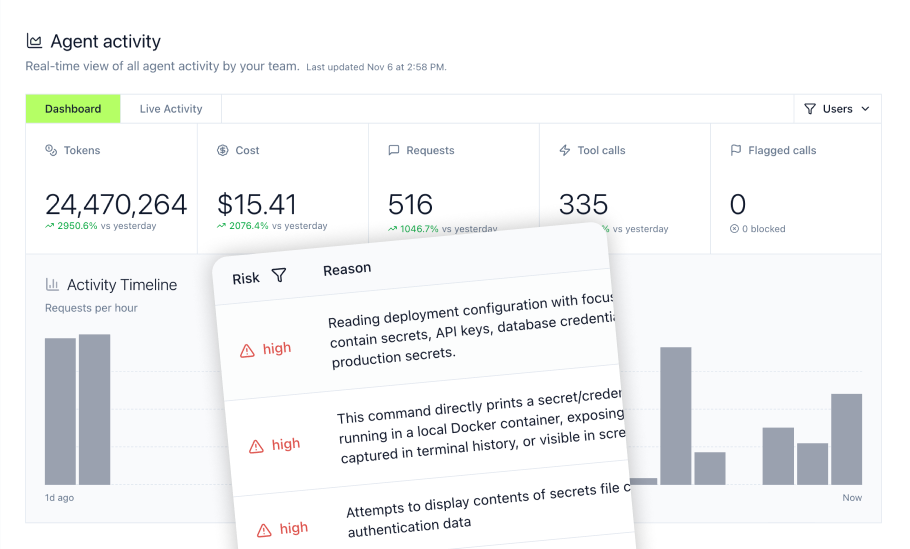
- MintMCP's Agent Monitor covers coding agents like Cursor and Claude Code, tracking tool calls, bash commands, and file operations with real-time security guardrails
- Composio offers 500+ managed integrations across SaaS applications, providing broad coverage for multi-tool agent development
- MintMCP supports OAuth brokering for STDIO and hosted MCP servers, transforming local servers into production-ready services with enterprise authentication
- MintMCP maintains a Cursor Hooks Partners Program listing for validated coding agent governance
- Gartner's 2025 Software Engineering Survey projects that 75% of API gateway vendors will add MCP features by 2026
Understanding the Core: What is an MCP Tool?
The Model Context Protocol (MCP) defines how AI agents interact with external data sources, APIs, and enterprise systems. Think of MCP as a standardized language that lets AI assistants like Claude, ChatGPT, and coding agents communicate with your databases, CRMs, and internal tools securely.
Defining MCPs in the Enterprise AI Landscape
MCP tools function as the connectors between large language models and your organization's data infrastructure. When an AI agent needs to query a database, send an email, or access customer records, it does so through MCP servers that handle authentication, data formatting, and response processing.
The protocol has gained industry-wide adoption, with support from Anthropic, OpenAI, Google, and Microsoft. This standardization means organizations can build once and deploy across multiple AI clients without rewriting integrations.
The Role of MCPs in LLM Operations
MCP servers handle several critical functions:
- Authentication management: Secure credential handling between AI agents and enterprise systems
- Data access control: Granular permissions determining what data AI agents can read or modify
- Request logging: Complete audit trails of every AI-to-system interaction
- Protocol translation: Converting AI requests into API calls your systems understand
Without proper MCP infrastructure, organizations face what MintMCP calls "shadow AI," where employees use AI tools with uncontrolled access to sensitive data and systems.
Challenges of Managing MCPs at Scale
Enterprise MCP deployment introduces complexity that single-user setups avoid. Teams must address:
- Credential sprawl: Managing API keys and tokens across dozens of MCP servers
- Compliance requirements: Meeting SOC 2 controls, HIPAA standards, and GDPR obligations for AI data access
- Deployment overhead: Running and maintaining STDIO-based servers requires infrastructure expertise
- Visibility gaps: Understanding which AI tools access what data, and when
These challenges drive the need for MCP gateway platforms that centralize governance while maintaining deployment speed.
Bridging the Gap: The Role of Integration Platforms
Integration platforms connect AI agents to enterprise systems through managed infrastructure. Rather than building and maintaining individual connections, organizations use these platforms to handle authentication, monitoring, and compliance at scale.
Why Enterprise Integration Platforms Are Crucial for AI
As organizations move from experimental AI deployments to production workloads, integration platforms address the gap between AI capability and enterprise requirements by providing:
- Centralized authentication: Single sign-on and OAuth enforcement across all AI tool access
- Unified monitoring: Real-time dashboards showing which AI agents access what systems
- Policy enforcement: Automatic application of data access rules and usage limits
- Compliance automation: Built-in audit trails and reporting for regulatory requirements
Key Features of Effective Integration Platforms
Enterprise-ready integration platforms share common capabilities that distinguish them from developer tools:
- Role-based access control: Defining permissions by team, role, or individual user
- Production SLAs: Guaranteed uptime with automatic failover and redundancy
- Observability: Complete visibility into AI agent behavior and system interactions
The Synergy Between Integration Platforms and MCPs
MCP provides the protocol; integration platforms provide the infrastructure. This combination enables organizations to:
- Deploy AI agents that access internal data without custom integration work
- Maintain security and compliance standards automatically
- Scale from pilot projects to enterprise-wide deployment
- Monitor and control AI behavior across all tools and teams
MintMCP's approach combines MCP gateway capabilities with enterprise governance features, delivering both integration flexibility and production-grade security.
Data Integration Platforms: Fueling AI with Internal Data
AI agents become valuable when they access your organization's actual data: customer records, sales pipelines, product information, and operational metrics. Data integration platforms make this connection secure and manageable.
Connecting AI to Your Enterprise's Data
Effective AI deployment requires bridging AI assistants with existing data infrastructure. This includes:
- Databases: PostgreSQL, MySQL, MongoDB, and other operational datastores
- Data warehouses: Snowflake, BigQuery, and Databricks for analytical workloads
- Search systems: Elasticsearch and similar platforms for knowledge base access
- SaaS applications: CRM, ERP, and productivity tools containing business data
MintMCP provides pre-built connectors for enterprise data sources including Snowflake, Elasticsearch, and Gmail, each with built-in authentication and access controls.
Securely Accessing and Utilizing Internal Databases
Data access introduces security considerations that require careful handling:
- Credential management: Storing and rotating database credentials securely
- Query restrictions: Limiting AI agents to read-only operations or specific tables
- Data masking: Protecting sensitive fields like SSNs or financial data
- Access logging: Recording every query for compliance and troubleshooting
MintMCP addresses these requirements through Virtual MCP Bundles, which expose only minimum required tools to each team, role, or agent rather than granting access to entire MCP servers.
Examples of AI-Driven Data Integration
Organizations use MCP-connected AI agents for practical business applications:
HR teams build AI-accessible knowledge bases from company documentation and policies stored in Elasticsearch, enabling instant employee assistance.
Finance teams automate financial reporting and variance analysis with AI agents accessing Snowflake data warehouses through natural language queries.
Support teams empower AI assistants to search historical tickets and resolution patterns for faster customer issue resolution.
Product teams enable AI-powered customer-facing documentation search using Elasticsearch product knowledge bases.
MintMCP: Enterprise-Grade Governance for MCP Deployment
MintMCP focuses on making enterprise MCP deployment fast, secure, and governed. The platform addresses the governance requirements that regulated industries demand.
Ensuring Compliance in AI Deployments with MintMCP
MintMCP is SOC 2 Type II audited, compliant with HIPAA standards, penetration tested, and provides exportable audit trails. Customers handling protected health information can request HIPAA documentation, and MintMCP signs BAAs. For organizations in healthcare, finance, and government, this security posture can support procurement and vendor assessment workflows.
The platform's compliance features include:
- Complete audit trails: Every MCP interaction, access request, and configuration change logged
- Role-based access control: Granular permissions defining who can use which tools
- Policy enforcement: Automatic application of security rules across all MCP connections
MintMCP's Approach to Data Security and Access Control
Security at MintMCP operates at multiple layers:
Authentication layer: OAuth 2.0, SAML, SSO, and SCIM-driven RBAC wrap MCP access through existing enterprise identity systems. Organizations connect their existing identity providers without custom development.
Authorization layer: Virtual MCP Bundles expose curated tool sets to specific teams, roles, and agents. An HR team sees only HR-relevant tools; the finance team accesses financial systems exclusively.
Monitoring layer: Centralized observability shows server health, usage patterns, audit logs, and security alerts. Administrators identify anomalies before they become incidents.
Protection layer: Agent Monitor covers local non-MCP agent activity, including Bash commands, file reads and writes, and prompt submissions through Claude Code and Cursor hooks.
From Shadow AI to Sanctioned AI: MintMCP's Governance Model
Organizations face a challenge: employees already use AI tools, often without IT visibility or approval. MintMCP transforms this "shadow AI" into governed, sanctioned AI deployment.
The approach involves:
- Visibility first: Understanding which AI tools teams use and what data they access
- Policy implementation: Defining and enforcing access rules without blocking productivity
- Gradual rollout: Enabling self-service access with pre-configured security policies
- Continuous monitoring: Maintaining compliance as AI usage grows
This model lets organizations "turn shadow AI into sanctioned AI" while maintaining the speed that employees expect.
Composio
Composio positions itself as a developer-first platform for building AI agents with external tool access. The platform emphasizes speed to production and breadth of integrations.
Composio's Approach to AI Automation and Integration
Composio offers 500+ managed integrations spanning SaaS applications, productivity tools, and developer services.
The platform provides:
- Pre-built integrations: Connections to Slack, GitHub, Jira, Gmail, HubSpot, Salesforce, and other common tools
- Managed authentication: Unified auth handling across integrations
- Framework SDKs: Native support for LangChain, CrewAI, LlamaIndex, and other agent frameworks
- Session-level controls: Per-user authentication for multi-tenant applications
Tradeoffs to consider
Composio’s developer-first integration model is useful for teams building external customer-facing agentic products, but enterprise IT and security teams should also evaluate whether they need MCP-specific governance primitives such as SCIM-driven RBAC, Virtual MCP Bundles, Agent Bundles with M2M auth and an "act as agent" flow, tool-level allowlisting, rule-based policy, and centralized audit logs. MintMCP is designed around those internal employee and internal-agent governance needs.
Streamlining Operations: Workflow Automation for AI
AI agents deliver business value when they automate actual workflows: processing documents, responding to customers, analyzing data, and coordinating tasks across systems.
How AI Enhances Enterprise Workflow Automation
Organizations can use MCP-connected AI agents to support:
- Customer response automation: AI assistants that search, draft, and reply to communications within approved workflows
- Data analysis: Agents that query databases, generate reports, and answer business questions using real-time data
- Document processing: Automated extraction, classification, and routing of business documents
- Knowledge management: AI-powered search across internal documentation and historical records
Implementing Automated Workflows with MCP Tools
MintMCP's Gmail MCP Server demonstrates practical workflow automation:
- Search capabilities: AI agents find relevant emails using advanced query syntax
- Draft generation: Markdown-formatted email drafts created with AI assistance
- Reply handling: Threaded responses maintaining conversation integrity
- Controlled sending: Dispatch through approved command flows with audit logging
Similar patterns apply across MintMCP's connector ecosystem, enabling AI automation for calendar management, issue tracking, data analysis, and communication workflows.
Measuring the Impact of AI Automation on Business Processes
The impact of MCP-connected workflow automation depends on the process, the quality of connected systems, and the controls around each agent. Teams commonly evaluate:
- Response time for customer and employee requests
- Deflection rates for standard queries
- Manual processing time for document-heavy workflows
- Error rates in repetitive handoffs and data entry
These metrics illustrate why workflow automation through MCP-connected AI agents has become a priority for enterprise technology teams.
Deployment and Management: Ease of Use and Scalability
Deployment speed determines how quickly organizations realize value from MCP investments. The difference between minutes and weeks translates directly to business impact.
Deploying MCPs in Minutes, Not Days: MintMCP's Promise
MintMCP's one-click deployment model transforms STDIO-based MCP servers into production services with:
- Automatic hosting: Containerized servers accessible to clients without local installations
- OAuth brokering: Enterprise authentication added to STDIO and hosted MCP servers
- Monitoring integration: Real-time dashboards activated immediately
- Policy application: Pre-configured security rules enforced from first deployment
This approach contrasts with infrastructure-first alternatives that require customer teams to manage more of the hosting, runtime, and scaling layer before deploying MCP servers.
Scalability and Reliability for Enterprise AI
Enterprise deployments require infrastructure that scales with usage:
- High availability: Automatic failover and redundancy for production SLAs
- Performance monitoring: Real-time metrics for response times, error rates, and usage patterns
- Capacity management: Automatic scaling based on demand
MintMCP provides enterprise SLAs with these capabilities built into the managed service.
Simplifying Management for AI Agents and Integrations
Day-two operations matter as much as initial deployment. MintMCP simplifies ongoing management through:
- Centralized credentials: All API keys and tokens managed in one place
- User provisioning: Team-based access controls with SSO and SCIM integration
- Usage analytics: Cost and performance tracking per team, project, and tool
- Self-service access: Developers request and receive tool access without IT bottlenecks
Security and Compliance: A Deeper Dive into MintMCP's Strengths
Security differentiates enterprise platforms from developer tools. MintMCP's approach addresses the specific requirements of regulated industries.
MintMCP's Commitment to Enterprise Security
MintMCP's security architecture operates across multiple dimensions:
Authentication and identity: OAuth 2.0, SAML, SSO, and SCIM integration with existing identity providers. Support for both shared service accounts and per-user OAuth flows.
Tool governance: Granular access control at the tool level. Configure permissions by role, enabling read-only operations while excluding write tools for specific teams.
Audit and observability: Complete logs of every MCP interaction for SOC 2, HIPAA, and GDPR review workflows. Real-time monitoring for anomaly detection and SLA tracking.
Prompt security: Protection against injection attacks and unauthorized data access through prompt-level guardrails.
Meeting Regulatory Requirements with MintMCP
For healthcare organizations handling protected health information, MintMCP provides:
- HIPAA support: Compliance with HIPAA standards, HIPAA documentation available on request, and BAA support
- Access logging: Complete audit trails required for security review and access monitoring
- Encryption: Data protection in transit and at rest
For organizations subject to GDPR, MintMCP delivers:
- Data residency options: Options that should be reviewed during procurement for regional requirements
- Audit trails: Complete records supporting data subject access requests
- Consent management: Controls for AI access to personal data
Protecting Sensitive Data in AI Workflows
Agent Monitor specifically addresses coding agent security:
- Sensitive file protection: Preventing access to .env files, SSH keys, and credentials
- Command blocking: Real-time interception of dangerous bash commands
- MCP inventory: Complete visibility into installed MCPs and their permissions
- Command history: Audit trails of every tool call and file operation
This capability is particularly relevant as coding agents like Cursor and Claude Code operate with extensive system access.
Real-World Applications: Use Cases for MintMCP
Enterprise value comes from specific applications that solve business problems. MintMCP's architecture supports diverse use cases across organizational functions.
AI-Powered Solutions for Every Department
HR teams deploy AI assistants that access company documentation, policies, and training materials. Employees receive instant answers to common questions without HR staff involvement.
Support teams enable AI agents to search historical support tickets, resolution patterns, and help articles. Faster diagnosis leads to improved customer satisfaction and reduced handle times.
Product teams build customer-facing documentation search and contextual help systems. AI agents surface relevant information based on user context and questions.
Finance teams automate financial reporting, variance analysis, and forecasting. AI agents access Snowflake data warehouses through natural language queries, eliminating SQL expertise requirements.
Executive teams generate real-time business intelligence dashboards and strategic insights from governed data sources without technical dependencies.
Transforming Business Operations with MintMCP
Development workflows benefit from MCP-connected AI assistance:
- Repository access: AI coding assistants connect to version control systems securely
- Issue tracking: Agents create, update, and query project management tools
- CI/CD integration: Automated checks and deployments triggered by AI agents
- Documentation: AI-generated docs from code analysis and system telemetry
Customer support operations scale with AI assistance:
- CRM integration: Agents access customer history and account information
- Knowledge retrieval: Real-time search across support documentation
- Response generation: AI-drafted replies reviewed and sent by human agents
- Escalation routing: Intelligent triage based on issue complexity and customer value
Maximizing Efficiency Across the Enterprise
Organizations using MintMCP can pursue efficiency gains from:
- Reduced context switching: Agents surface relevant information without manual searches
- Faster onboarding: New employees access institutional knowledge immediately
- Consistent responses: AI supports policy-compliant communications
- Scalable expertise: Subject matter knowledge available across the organization
Pricing, Performance, and Customer Support: A Comparative Look
Understanding total cost of ownership requires evaluating pricing models, performance characteristics, and support structures.
Understanding the Value of MintMCP and Composio
MintMCP uses custom pricing based on organization size and requirements. The platform provides enterprise SLAs with dedicated support, making it suitable for organizations where compliance and governance are priorities.
Composio pricing information should be verified directly on their website for current tiers and capabilities.
Performance Benchmarks for Enterprise AI Solutions
Performance varies by deployment model and use case. MintMCP prioritizes deployment speed and governance over raw latency optimization, offering:
- Minutes to deployment: One-click setup versus weeks of infrastructure configuration
- Production readiness: Immediate access to monitoring, logging, and compliance features
- Automatic scaling: Infrastructure that grows with usage demands
For organizations prioritizing lower latency over governance features, specialized infrastructure platforms may be more suitable.
Evaluating Support and Service Offerings
MintMCP provides:
- Enterprise SLAs: Guaranteed uptime with automatic failover
- Dedicated support: Account management for enterprise customers
- Documentation: Comprehensive guides for setup, administration, and troubleshooting
- Migration assistance: Structured support for transitioning from other platforms
Composio offers community support, documentation, and tiered support options that should be verified directly with the vendor.
Why MintMCP Is the Right Choice for Enterprise MCP Deployment
Organizations evaluating MCP gateway platforms face a fundamental decision: prioritize internal governance and deployment speed, or maximize pre-built integration breadth. MintMCP serves organizations where compliance, security, and production readiness define success.
MintMCP delivers enterprise-grade infrastructure from day one. SOC 2 Type II audited status, HIPAA standards support, exportable audit trails, and penetration testing support security reviews during procurement. One-click deployment transforms local MCP servers into production services in minutes rather than weeks.
The platform's capabilities address challenges that integration-first solutions may not prioritize. Agent Monitor covers coding agents that operate with extensive system access, blocking dangerous commands and protecting sensitive files in real time. Virtual MCP Bundles expose only minimum required tools to each team, role, or agent, implementing least-privilege access. Agent Bundles provide per-agent identity with M2M auth and an "act as agent" flow. The Cursor Hooks Partners Program listing validates MintMCP's approach to coding agent governance.
For IT, security, and AI operations leaders responsible for AI tool adoption, MintMCP provides the visibility and control that enterprise deployments require. Track every tool call across Claude, Cursor, ChatGPT, Gemini, and Copilot. Enforce policies automatically without slowing developers. Meet compliance requirements with built-in audit trails.
From local MCP to enterprise deployment, MintMCP delivers the security, governance, and ease-of-use that regulated industries demand. Book a demo to see how MintMCP transforms AI infrastructure.
Frequently Asked Questions
What is the primary difference in governance between MintMCP and Composio?
MintMCP provides enterprise-grade governance with SOC 2 Type II audited status, compliance with HIPAA standards, and exportable audit trails built into the platform. The Virtual MCP Bundle architecture enables granular tool-level access control, exposing only minimum required capabilities to each team, role, or agent. MintMCP also offers Agent Monitor for coding agents, blocking dangerous commands and protecting sensitive files in real time. Composio provides session-level authentication controls suited for multi-tenant applications, with governance features oriented toward developer workflows.
Can MintMCP integrate with existing enterprise data sources like Snowflake and Elasticsearch?
Yes. MintMCP provides pre-built connectors for Snowflake, Elasticsearch, and other enterprise data platforms. The Snowflake MCP Server supports natural language queries through Cortex Analyst, semantic search through Cortex Search, and direct SQL execution with DML/DDL operations. The Elasticsearch MCP Server enables query DSL searches, ES|QL queries, index management, and mapping retrieval. Both connectors include built-in authentication, access controls, and audit logging for compliance requirements.
How does MintMCP address shadow AI concerns within an organization?
MintMCP transforms uncontrolled AI tool usage into governed enterprise deployment through visibility and policy enforcement. The platform provides real-time dashboards showing which AI tools teams use and what data they access. Administrators define and enforce access rules through Virtual MCP Bundles that expose curated tool sets to specific teams, roles, and agents. Agent Monitor covers coding agents, maintaining complete audit trails of tool calls, bash commands, and file operations. This approach lets organizations enable AI tools safely without blocking developer productivity.
What AI clients are compatible with MintMCP's MCP Gateway and Agent Monitor?
MintMCP supports major AI clients including Claude, Cursor, ChatGPT, Gemini, and Copilot, along with custom MCP-compatible agents. The MCP Gateway provides OAuth brokering for STDIO and hosted MCP servers, while Agent Monitor covers local non-MCP agent activity such as Bash commands, file reads and writes, and prompt submissions through Claude Code and Cursor hooks.
How does MintMCP ensure audit trails for compliance standards like SOC 2, HIPAA, and GDPR?
MintMCP maintains complete audit trails of every MCP interaction, access request, and configuration change. The platform logs tool calls with timestamps, user identities, data accessed, and operation outcomes. For SOC 2 review workflows, these logs demonstrate access controls and system monitoring. For HIPAA-related requirements, the audit trails support security review and access logging around protected health information workflows. For GDPR-related obligations, the logs support access reviews and processing activity documentation. The security documentation provides detailed information on audit capabilities and compliance features.