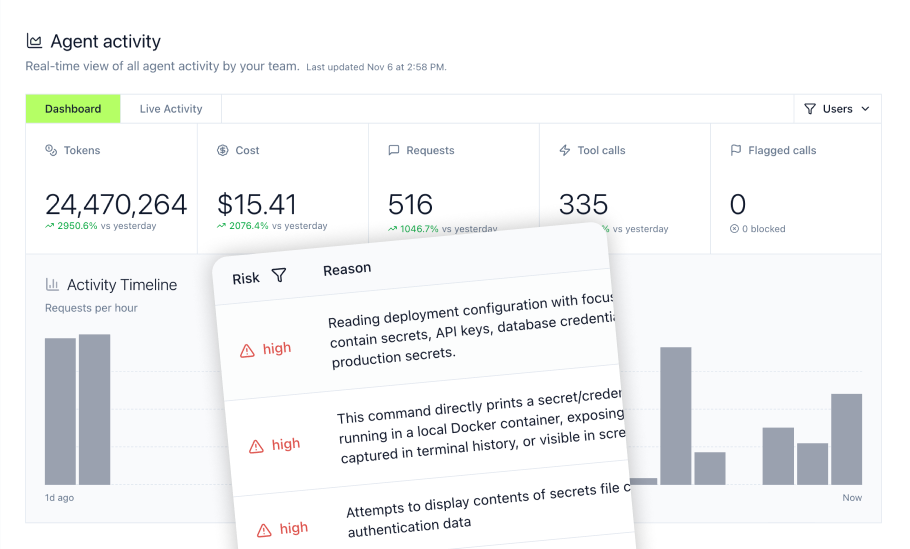
Deploying AI agents at scale presents a familiar challenge for DevOps teams: the gap between what works locally and what runs in production. The Model Context Protocol (MCP) standardizes how AI agents access tools and data sources, but enterprises require more than connectivity, they need authentication, observability, and governance layers that production environments demand. An MCP Gateway bridges this gap by providing the enterprise-grade infrastructure necessary for secure, compliant AI agent deployments.
MCP gateways solve three critical problems for DevOps teams: tool organization across distributed environments, protocol translation between AI agents and enterprise systems, and security control for production AI deployments. As organizations move from pilot projects to production-scale AI implementations, gateway selection determines whether teams can deploy safely and compliantly or remain stuck in experimental mode indefinitely.
This guide evaluates 10 production-ready MCP gateways based on performance metrics, DevOps integration capabilities, security features, and deployment readiness.
Key Takeaways
- MCP gateways provide production-ready infrastructure that transforms local MCP servers into enterprise-grade services with authentication, audit trails, and governance controls
- Performance characteristics vary significantly: Gateway architectures deliver latency ranging from microsecond-level gateway overhead to several hundred milliseconds depending on feature sets and deployment models
- Container-native deployment dominates: Production-ready gateways offer Docker and Kubernetes deployment paths that integrate with existing DevOps toolchains
- Security research validates gateway necessity: Academic analysis has highlighted common MCP server risk patterns, including command injection and data exposure classes, reinforcing the need for strong authentication, isolation, and monitoring
1. MintMCP – Enterprise Compliance Leader
MintMCP is a SOC 2 Type II audited MCP platform, addressing compliance requirements that block AI agent deployment in regulated industries. The platform transforms STDIO-based MCP servers into production-ready services with one-click deployment, OAuth brokering, credential management, and complete audit trails, capabilities that typically require weeks of manual configuration.
What Makes MintMCP Different
The platform's Virtual MCP Bundles create per-use-case endpoints with SCIM-driven membership, curated tool lists, and role-based access policies. This architecture allows administrators to create governed toolsets for different teams without exposing unnecessary capabilities. MintMCP also supports Agent Bundles with M2M authentication and “act as agent” flows, helping DevOps teams govern both internal employees and internal agents from the same control plane. MintMCP’s inclusion in Cursor’s Hooks partner ecosystem supports its governance approach.
Core Capabilities
- One-click STDIO deployment with OAuth brokering, SSO, and SCIM-driven RBAC
- SOC 2 Type II audited, compliant with HIPAA standards, penetration tested, and supported by complete audit trails
- Real-time monitoring dashboards for usage patterns and security alerts
- Tool governance controls with tool-level allowlisting and rule-based policy
- Credential management and hosted MCP connectors run by MintMCP
- Agent Bundles with M2M authentication and “act as agent” flow
- Gateway + Agent Monitor governance across Claude, Cursor, ChatGPT, Gemini, and Copilot
Deployment Model
Managed SaaS-first in the US and EU, with VPC/self-hosted deployment available on request
Best For
DevOps teams in mid-market and enterprise organizations, especially regulated industries, requiring governed MCP access before AI agent deployment
Pricing
Contact for enterprise pricing
Getting Started
Visit mintmcp.com to book a demo
2. Bifrost (Maxim AI)
Bifrost represents high-performance MCP gateway architecture, built in Go to deliver low-latency request processing for enterprise workloads. The gateway's dual MCP client/server architecture enables it to act as both a consumer and provider of MCP services.
What Makes Bifrost Different
Zero-configuration deployment enables teams to start quickly without extensive setup procedures. The stateless security model gives clients control over tool execution, reducing attack surface while maintaining performance. Apache 2.0 open-source codebase provides transparency for security-conscious organizations.
Core Capabilities
- Go architecture optimized for container environments
- OAuth and SSO authentication support
- About 11µs gateway overhead in published benchmarks
- Open-source with enterprise tier available
- Docker deployment options
Tradeoffs to consider
Bifrost is OSS-first and self-hosted-first, which can fit platform teams that want to operate gateway infrastructure directly. DevOps teams that want MintMCP-style managed SaaS-first deployment, hosted MCP connectors, SCIM-driven Virtual MCP Bundles, and per-agent identity governance should account for the additional operational work required to run and govern the connector layer themselves.
Deployment Model
Self-hosted-first through an Apache 2.0 Go binary or Docker, with enterprise tier available
Best For
High-throughput AI agent workloads where gateway overhead directly impacts user experience
Pricing
Free open-source option; enterprise tier available
3. TrueFoundry MCP Gateway
TrueFoundry takes a unified approach, combining LLM gateway and MCP gateway functionality in a single control plane. This integration reduces infrastructure fragmentation when DevOps teams manage separate systems for model serving and tool access.
What Makes TrueFoundry Different
In-memory policy enforcement maintains governance controls while delivering responsive performance under load. The platform's OAuth 2.0 Identity Injection supports On-Behalf-Of authentication, ensuring AI agents operate with appropriate user permissions rather than service accounts.
Core Capabilities
- Unified LLM management and MCP control interface
- OAuth 2.0 Identity Injection for delegated authorization
- Integrated tracing and LLMOps tooling
- Kubernetes-native deployment architecture
- In-memory policy enforcement
Tradeoffs to consider
TrueFoundry is well aligned with platform engineering and ML platform teams that want MCP governance alongside broader AI infrastructure. DevOps teams should compare that model with MintMCP’s data-permissions-first architecture, including SSO and SCIM-driven RBAC, Virtual MCP Bundles, Agent Bundles, hosted MCP connectors, and centralized governance for employees and internal agents.
Deployment Model
Hybrid managed SaaS and self-hosted control plane options
Best For
Organizations managing AI infrastructure who want to consolidate LLM and MCP governance
Pricing
Contact for pricing; free trial available
4. Docker MCP Gateway
Docker MCP Gateway leverages familiar container tooling to provide security through isolation. Each MCP server runs in its own container with resource limits, preventing runaway processes from affecting other workloads.
What Makes Docker Different
Cryptographically signed container images address supply chain security concerns for AI systems integration. Docker Compose integration enables teams to define MCP infrastructure as code using familiar tools. Container isolation helps mitigate command injection vulnerabilities identified in MCP ecosystem tooling. For example, CVE-2025-6514 affected the mcp-remote client when connecting to untrusted MCP servers and was patched in mcp-remote v0.1.16.
Core Capabilities
- Container isolation with resource limits
- Docker Compose orchestration for multi-server deployments
- Signed images for supply chain verification
- Native Kubernetes integration
- Open-source deployment model
Tradeoffs to consider
Docker MCP Gateway is a natural fit for container-first teams that want infrastructure-as-code control. Teams that need managed SaaS-first operations, hosted connector runtimes, SSO and SCIM-driven RBAC, centralized audit logs, and policy primitives like Virtual MCP Bundles and Agent Bundles should evaluate how much of that governance layer they will need to build or operate separately.
Deployment Model
Self-hosted Docker/Kubernetes
Best For
Container-first DevOps teams with existing Docker expertise
Pricing
Free open-source option; infrastructure costs apply
5. Lunar.dev MCPX
Lunar.dev MCPX delivers governance for production MCP deployments. The platform supports both STDIO and remote HTTP/SSE MCP servers, providing flexibility for hybrid deployment environments.
What Makes Lunar.dev Different
Granular RBAC operates at the tool level rather than server level, enabling administrators to allow read-only operations while blocking write tools. Immutable audit logs provide compliance evidence for regulated industries requiring complete access history.
Core Capabilities
- Tool-level access control with granular RBAC
- Immutable audit logs
- Full observability including latency and token tracking
- Hybrid deployment options
- STDIO and HTTP/SSE support
Tradeoffs to consider
Lunar.dev MCPX aligns with teams prioritizing MCP governance and observability. DevOps teams should compare its governance model with MintMCP’s broader data-permissions-first approach, including SCIM-driven Virtual MCP Bundles, Agent Bundles with M2M auth, hosted MCP connectors, OAuth brokering for stdio and hosted servers, and Gateway + Agent Monitor coverage.
Deployment Model
Docker/Kubernetes with optional SaaS dashboards
Best For
Multi-tenant environments requiring strict governance
Pricing
Contact for pricing
6. Lasso Security Gateway
Lasso Security approaches MCP gateways from a threat detection perspective, implementing security controls that protect AI, MCP, and API layers.
What Makes Lasso Different
Real-time prompt injection detection blocks attacks before they reach MCP servers. PII masking automatically redacts sensitive data from requests and responses. Tool reputation analysis scans servers before loading, helping reduce supply chain risk.
Core Capabilities
- Prompt injection detection
- PII redaction capabilities
- Tool reputation scanning
- Plugin-based architecture
- Open-source with enterprise options
Tradeoffs to consider
Lasso’s security-first approach is useful for teams prioritizing threat detection and data protection. DevOps teams should also evaluate whether they need MintMCP-style MCP governance primitives, including SSO and SCIM-driven RBAC, Virtual MCP Bundles, Agent Bundles, hosted MCP connectors, credential management, and centralized audit logs across AI clients.
Deployment Model
Self-hosted with commercial options available
Best For
High-security environments prioritizing threat detection
Pricing
Open-source; enterprise version available
7. Obot Platform
Obot combines MCP gateway functionality with agent orchestration capabilities, operating as a Kubernetes-native platform for teams building custom AI agent infrastructure. The Nanobot framework enables complex agent workflows beyond simple tool routing.
What Makes Obot Different
Hub-and-spoke architecture eliminates N-to-N complexity when connecting multiple agents to multiple MCP servers. Enterprise IdP support includes Okta and Microsoft Entra integration, ensuring AI agents operate within existing identity governance frameworks.
Core Capabilities
- Kubernetes-native gateway orchestration
- Nanobot framework
- Enterprise IdP support
- Hub-and-spoke architecture
- Self-hosted deployment control
Tradeoffs to consider
Obot is OSS-first and self-hosted, with Docker for development and Kubernetes for production. That model gives platform teams control, but it can require teams to operate the infrastructure themselves. MintMCP addresses a different DevOps need with managed SaaS-first deployment, hosted MCP connectors, SCIM-driven Virtual MCP Bundles, Agent Bundles, and centralized audit and policy controls.
Deployment Model
Self-hosted, with Docker for development and Kubernetes for production
Best For
Platform engineering teams building custom AI agent platforms
Pricing
Free open-source option; commercial support available
8. IBM ContextForge
IBM ContextForge addresses multi-region, multi-team deployments through federation architecture. Auto-discovery enables ContextForge instances to find and merge capabilities automatically for distributed engineering teams.
What Makes ContextForge Different
Protocol bridging wraps existing REST and gRPC APIs as MCP tools, enabling AI agents to access legacy systems without API changes. Virtual MCP server composition combines multiple servers into single endpoints, simplifying agent configuration.
Core Capabilities
- Federation with auto-discovery
- Protocol bridging support
- Multi-database support
- HTTP, SSE, and stdio transport support
- Apache 2.0 open-source license
Tradeoffs to consider
ContextForge can fit teams that want self-hosted federation and protocol bridging. DevOps teams should compare that approach with MintMCP’s managed SaaS-first deployment, hosted connector operations, SSO and SCIM-driven RBAC, Virtual MCP Bundles with per-use-case access policies, and Agent Bundles for per-agent identity governance.
Deployment Model
Self-hosted
Best For
Large organizations with distributed teams requiring federated infrastructure
Pricing
Free open-source option under Apache 2.0
Important Note
Verify support expectations directly before production deployment, since project status and support models can change over time.
9. Traefik Hub MCP Gateway
Traefik Hub adds MCP capabilities to existing Traefik deployments through middleware-based request filtering. For organizations standardized on Traefik for API management, this approach reduces infrastructure sprawl.
What Makes Traefik Hub Different
Middleware-based architecture applies security policies using familiar Traefik concepts. OpenTelemetry integration provides MCP-specific metrics and traces alongside existing API observability.
Core Capabilities
- Middleware-based MCP filtering
- OpenTelemetry metrics
- On-Behalf-Of Authentication
- Extends existing Traefik infrastructure
- Cloud-native architecture
Tradeoffs to consider
Traefik Hub can be efficient for teams already standardized on Traefik. DevOps teams should evaluate whether an API gateway extension provides the MCP-specific primitives they need, such as MintMCP’s Virtual MCP Bundles, Agent Bundles, hosted MCP connectors, OAuth brokering for stdio and hosted servers, tool-update policy, and Gateway + Agent Monitor coverage.
Deployment Model
Commercial SaaS with self-hosted options
Best For
Organizations using Traefik seeking unified gateway infrastructure
Pricing
Commercial, contact for pricing
10. Microsoft MCP Gateway
Microsoft MCP Gateway provides Azure ecosystem integration, leveraging Azure AD (Entra ID) for authentication and Azure API Management for policy enforcement. The Kubernetes-native architecture deploys to AKS without additional configuration.
What Makes Microsoft Different
Dual deployment options include an open-source Kubernetes gateway and a managed Azure API Management approach. Azure Monitor integration provides observability without additional tooling, and Container Apps support simplifies serverless deployments.
Core Capabilities
- Native Azure AD integration
- Kubernetes-native AKS deployment
- Azure API Management enforcement
- OAuth 2.0 and RBAC
- GitHub-hosted open-source
Tradeoffs to consider
Microsoft’s approach fits Azure-standardized teams that want MCP governance inside the Azure ecosystem. DevOps teams using multiple AI clients, clouds, or connector types should compare it with MintMCP’s vendor-neutral governance model, including Claude, Cursor, ChatGPT, Gemini, and Copilot governance, hosted MCP connectors, Virtual MCP Bundles, Agent Bundles, and centralized audit logs.
Deployment Model
Self-hosted AKS or managed Azure APIM
Best For
Azure-exclusive organizations seeking native cloud integration
Pricing
Free open-source option; Azure infrastructure costs apply
Essential Considerations for Gateway Selection
Compliance Requirements Drive Selection: For DevOps teams in regulated industries, SOC 2 Type II audited platforms help address the security and audit requirements necessary for production deployment. MintMCP is SOC 2 Type II audited, compliant with HIPAA standards, penetration tested, and supported by complete audit trails. Organizations can explore enterprise MCP deployment strategies to understand implementation paths.
Performance and Governance Balance: Gateway architectures make different trade-offs between raw performance and governance capabilities. Organizations should evaluate whether their workloads require microsecond-level gateway overhead or whether additional governance overhead provides acceptable performance for enterprise requirements.
Infrastructure Integration Matters: Teams already running Traefik, Azure, or Kubernetes have natural integration points with specific gateway options. The Docker MCP Gateway suits container-first teams, while platform engineering groups building custom infrastructure may benefit from orchestration-focused solutions.
Observability Depth Requirements: DevOps teams should evaluate whether they need request-level or interaction-level observability for their compliance and security requirements. MintMCP’s Gateway + Agent Monitor model covers MCP traffic through the gateway and local non-MCP agent activity such as Bash, file reads/writes, and prompt submissions through Claude Code and Cursor hooks.
Deploy Enterprise AI with Confidence
The Model Context Protocol has become the standard for connecting AI agents to enterprise tools and data sources. But deploying MCP at scale requires more than protocol support, it demands enterprise-grade security, governance, and monitoring that transforms experimental AI into production-ready infrastructure.
MintMCP Gateway provides a fast path from pilot to production, offering managed SaaS-first deployment that reduces manual configuration. MintMCP is SOC 2 Type II audited, compliant with HIPAA standards, supports hosted MCP connectors, and provides a Cursor Hooks partner program integration that helps organizations govern AI agents at scale.
Whether you're securing access to Snowflake data, Elasticsearch knowledge bases, or custom enterprise tools, MintMCP provides the infrastructure that makes AI deployment practical, compliant, and secure.
For deeper understanding of gateway architecture, see our guide to understanding MCP gateways.
Ready to transform your AI infrastructure? Visit mintmcp.com to schedule a demo and see how MintMCP Gateway can accelerate your enterprise AI deployment.
Frequently Asked Questions
What is an MCP Gateway and why do DevOps teams need one?
An MCP Gateway sits between AI agents and MCP servers, providing authentication, authorization, and observability. While MCP standardizes how agents access tools, the protocol itself doesn't address production requirements like audit trails, rate limiting, or compliance controls. DevOps teams need gateways because they provide the enterprise-grade layer necessary for secure, compliant AI deployments at scale.
How do MCP Gateways handle compliance like SOC 2 and GDPR?
Compliance-focused gateways provide audit trails of MCP interactions, access requests, and configuration changes. SOC 2 Type II audits validate security controls through third-party review, while privacy programs commonly rely on encryption, access logging, and controlled data handling. MintMCP is SOC 2 Type II audited, with continuous compliance monitoring via Drata, enterprise SSO, complete audit trails, PII detection, and role-based access control built into the platform.
Can MCP Gateways integrate with AI clients like Claude and Cursor?
Yes, production gateways support major AI clients including Claude Desktop and Web, ChatGPT via Custom GPTs, Microsoft Copilot, Cursor, and custom MCP-compatible agents. The gateway acts as an intermediary, so clients connect to the gateway rather than directly to MCP servers. This enables centralized governance regardless of client choice. See MCP gateway architecture for integration patterns.
What latency overhead should teams expect from MCP Gateways?
Latency varies by gateway architecture and features. Performance-optimized gateways can add minimal overhead while governance-focused options prioritize security controls. Most production deployments find governance overhead acceptable for the enterprise benefits provided, including authentication, audit trails, and policy enforcement that enable compliant AI deployment.
How do teams monitor AI tool usage across MCP Gateways?
Enterprise gateways provide real-time dashboards tracking usage patterns, performance metrics, and cost allocation. MintMCP's observability features track every tool call across Claude Code, Cursor, and other clients. For coding agents specifically, MintMCP’s Agent Monitor covers local non-MCP activity, including bash commands, file operations, and prompt submissions, providing the visibility DevOps teams need.