Cloudflare Workers provide a serverless execution environment that runs at the edge of Cloudflare's global network. When combined with the Model Context Protocol (MCP), enterprises can deploy AI-powered integrations at scale with minimal latency and maximum reliability. This guide shows enterprise architects and developers how to implement Cloudflare Worker MCP servers that meet production requirements while enabling AI agents to interact with edge computing resources, APIs, and distributed data sources.
Key Takeaways
- Cloudflare Workers execute MCP servers at the edge across 300+ locations globally, reducing latency for AI agent interactions
- MintMCP's gateway architecture enables direct integration with Cloudflare Worker MCP servers through remote connectors
- Enterprise deployments require centralized authentication, monitoring, and governance that standalone Workers cannot provide
- Cloudflare's 10ms CPU limit per request necessitates careful MCP tool design and potential use of Durable Objects for stateful operations
- Workers KV and R2 storage integrate seamlessly with MCP servers for caching and persistent data requirements
- Virtual MCP servers bundle multiple Worker-based connectors into unified endpoints with role-based access
- Production deployments benefit from Cloudflare's automatic scaling, DDoS protection, and global load balancing
What Is MCP and Why Cloudflare Workers Matter
The Model Context Protocol standardizes how AI applications interact with external data sources and APIs. For enterprises running distributed infrastructure, this means AI agents can access edge computing resources, query databases, and execute business logic without custom integrations for each AI tool.
Cloudflare Workers transform this capability by executing MCP servers at the network edge. Traditional MCP deployments run on centralized servers, introducing latency for globally distributed teams. Workers eliminate this bottleneck by running code within milliseconds of users at any of Cloudflare's data centers worldwide.
The combination addresses critical enterprise requirements:
- Global Performance: Sub-50ms response times for AI agents anywhere in the world
- Automatic Scaling: Handle millions of MCP requests without capacity planning
- Security by Default: Built-in DDoS protection, SSL/TLS encryption, and Web Application Firewall
- Cost Efficiency: Pay-per-request model eliminates idle infrastructure costs
Cloudflare Worker MCP Server Capabilities
Worker-based MCP servers expose edge computing capabilities to AI systems:
API Gateway Functions
- Route requests to internal APIs with authentication
- Transform data formats between AI agents and backend systems
- Aggregate responses from multiple microservices
- Cache frequently accessed data at the edge
Data Processing Tools
- Execute business logic without hitting origin servers
- Process and filter large datasets before returning to agents
- Perform real-time calculations and transformations
- Validate inputs and sanitize outputs for security
Integration Services
- Connect to third-party APIs with rate limiting
- Manage OAuth flows for external services
- Queue asynchronous tasks for background processing
- Coordinate multi-step workflows across systems
Edge Storage Operations
- Query Workers KV for configuration and metadata
- Store and retrieve files from R2 object storage
- Maintain session state with Durable Objects
- Cache AI agent responses for performance
Why Enterprises Need Managed MCP Infrastructure
While Cloudflare Workers excel at edge execution, enterprise MCP deployments require additional infrastructure for governance and compliance. Running MCP servers directly on Workers creates challenges:
- No Centralized Authentication: Each Worker manages its own auth, creating credential sprawl
- Limited Observability: Worker analytics don't provide MCP-specific insights
- Access Control Gaps: No native role-based permissions for AI tool access
- Compliance Challenges: Audit requirements exceed Worker logging capabilities
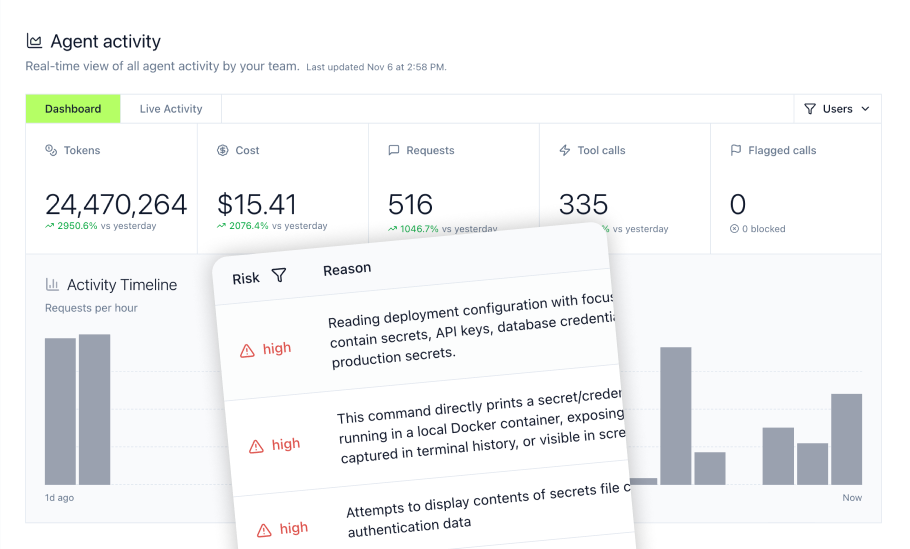
MintMCP bridges this gap by providing enterprise infrastructure that integrates with Cloudflare Workers while adding necessary governance layers.
Cloudflare Worker Architecture for MCP Servers
Implementing MCP on Cloudflare Workers requires careful architectural decisions to work within platform constraints while maximizing performance benefits.
Request Handling Model
Cloudflare Workers operate on a request/response model with specific limitations:
CPU Time Constraints
- 10ms CPU time on free tier (Workers Free)
- Up to 5 minutes (300,000ms) on paid plans (Workers Paid)
- CPU time is configurable via wrangler.toml using limits.cpu_ms
MCP servers must design tools accordingly:
- Break complex operations into multiple tool calls
- Leverage async I/O for external API calls
- Use streaming responses for large datasets
- Implement pagination for data-heavy operations
Memory Limitations
- 128MB memory limit per Worker instance
- No persistent in-memory state between requests
- Garbage collection happens after each request
This impacts MCP server design:
- Store state in KV, R2, or Durable Objects
- Minimize response payload sizes
- Stream large responses rather than buffering
- Cache computed results aggressively
Storage Options for MCP Data
Cloudflare provides multiple storage mechanisms for MCP servers:
Workers KV Best for:
- Configuration data and feature flags
- User preferences and settings
- Cached API responses
- Session tokens and temporary data
Characteristics:
- Eventually consistent globally (60 seconds)
- Optimized for read-heavy workloads
- 25MB value size limit
- Unlimited keys per namespace
R2 Object Storage Best for:
- File storage and retrieval
- Large datasets and documents
- Backup and archive data
- Media files accessed by AI agents
Characteristics:
- Strong consistency
- S3-compatible API
- No egress fees
- 5TB maximum object size
Durable Objects Best for:
- Stateful MCP operations
- Real-time collaboration features
- Distributed coordination
- WebSocket connections for streaming
Characteristics:
- Strong consistency with transactional storage
- Single-threaded JavaScript execution
- Automatic geographic migration
- Built-in WebSocket support
Security Considerations
Worker-based MCP servers require multiple security layers:
Authentication Methods
- API keys stored in Worker environment variables
- JWT validation for user-specific access
- mTLS for service-to-service communication
- OAuth 2.0 flows for third-party integrations
Request Validation
- Input sanitization before processing
- Rate limiting per client or API key
- Request signing for integrity verification
- CORS configuration for browser-based agents
Data Protection
- Encryption at rest for sensitive data in KV/R2
- TLS 1.3 for all network communications
- Secrets management through Worker environment
- PII redaction in logs and responses
Step-by-Step: Deploying Cloudflare Worker MCP with MintMCP
This section walks through deploying a production-ready Cloudflare Worker MCP server integrated with MintMCP's gateway for enterprise governance.
Prerequisites
Before starting, ensure you have:
- Cloudflare account with Workers enabled
- MintMCP account with administrator privileges
- Node.js 18+ for local development
- Wrangler CLI installed (
npm install -g wrangler) - Understanding of MCP protocol basics
Creating the Cloudflare Worker MCP Server
First, create a basic MCP server that runs on Cloudflare Workers:
- Initialize the Worker Project
npm create cloudflare@latest mcp-worker
cd mcp-worker
npm install @modelcontextprotocol/sdk
2. Implement MCP Server Logic
import { McpAgent } from "agents/mcp";
  import { McpServer } from
  "@modelcontextprotocol/sdk/server/mcp.js";
  import { z } from "zod";

  export class MyMCP extends McpAgent {
    server = new McpServer({
      name: "mcp-worker",
      version: "1.0.0",
    });

    async init() {
      this.server.tool(
        "query_edge_data",
        { key: z.string() },
        async ({ key }) => {
          const value = await this.env.MCP_CACHE.get(key);
          return {
            content: [{ type: "text", text: value || "Not found" }],
          };
        }
      );
    }
  }

  export default MyMCP.mount("/mcp");
3. Configure Worker Settings
Update wrangler.toml:
name = "mcp-worker"
main = "src/index.js"
compatibility_date = "2024-01-01"

[env.production]
vars = { ENVIRONMENT = "production" }

[[kv_namespaces]]
binding = "MCP_CACHE"
id = "your-kv-namespace-id"

[[r2_buckets]]
binding = "MCP_STORAGE"
bucket_name = "mcp-data"
4. Deploy to Cloudflare
wrangler deploy --env production
This creates a Worker URL like https://mcp-worker.your-account.workers.dev.
Configuring MintMCP Remote Connector
With the Worker deployed, configure it as a remote MCP connector in MintMCP:
- Navigate to MintMCP Console
- Go to MintMCP console
- Select "MCP Connectors" section
- Click "Add Connector"
- Configure Remote Connector
- Select "Remote Server" option
- Enter Worker URL:
https://mcp-worker.your-account.workers.dev/mcp - Set authentication method (API key or OAuth)
- Configure environment variables if needed
- Set Security Policies
- Enable request signing for integrity
- Configure allowed origins
- Set rate limiting thresholds
- Define IP allowlists if required
- Test Connection
- Click "Test Connection" to verify Worker responds
- Review available tools discovered from Worker
- Check authentication flow completion
Creating Virtual MCP Servers
Bundle the Cloudflare Worker connector with other services using Virtual MCP servers:
Production Virtual Server
- Create Virtual MCP server named "Edge API Gateway"
- Add Cloudflare Worker connector
- Include additional connectors for databases or APIs
- Configure tool permissions for production access
- Set team assignments for DevOps and platform teams
Development Virtual Server
- Create Virtual MCP server named "Edge Dev Environment"
- Add same Worker connector with dev environment variables
- Enable debug logging and verbose responses
- Restrict to development team members only
This pattern allows reusing the same Worker across multiple environments with different configurations.
Implementing Authentication Flow
Secure the Worker MCP server with proper authentication:
API Key Authentication
async function authenticate(request, env) {
  const apiKey = request.headers.get('X-API-Key');

  if (!apiKey) {
    return { error: 'Missing API key' };
  }

  // Verify against KV store
  const validKey = await env.MCP_CACHE.get(`api_key:${apiKey}`);

  if (!validKey) {
    return { error: 'Invalid API key' };
  }

  return { success: true, user: validKey };
}
OAuth 2.0 Integration
For production deployments, implement OAuth:
async function handleOAuth(request, env) {
  const token = request.headers.get('Authorization')?.replace('Bearer ', '');

  if (!token) {
    return { error: 'Missing OAuth token' };
  }

  // Validate with identity provider
  const response = await fetch('https://oauth.provider.com/validate', {
    headers: { 'Authorization': `Bearer ${token}` }
  });

  if (!response.ok) {
    return { error: 'Invalid token' };
  }

  const user = await response.json();
  return { success: true, user };
}
MintMCP handles OAuth flows centrally, passing validated tokens to your Worker.
Optimizing Cloudflare Worker MCP Performance
Worker MCP servers require optimization to handle enterprise workloads efficiently within platform constraints.
Caching Strategies
Implement multi-layer caching to reduce latency and API calls:
Edge Cache with Cache API
async function getCachedResponse(request, env) {
  const cache = caches.default;
  const cacheKey = new Request(request.url, request);

  // Check cache first
  let response = await cache.match(cacheKey);

  if (!response) {
    // Generate response
    response = await generateResponse(request, env);

    // Cache for 5 minutes
    response = new Response(response.body, response);
    response.headers.append('Cache-Control', 's-maxage=300');

    ctx.waitUntil(cache.put(cacheKey, response.clone()));
  }

  return response;
 }
KV Cache for Computed Results
async function getComputedData(key, env) {
  // Check KV cache
  const cached = await env.MCP_CACHE.get(key);

  if (cached) {
    return JSON.parse(cached);
  }

  // Compute expensive operation
  const result = await performExpensiveOperation(key);

  // Store with TTL
  await env.MCP_CACHE.put(key, JSON.stringify(result), {
    expirationTtl: 3600 // 1 hour
  });

  return result;
}
Handling Large Responses
Stream responses to avoid memory limits and improve time-to-first-byte:
async function streamLargeDataset(request, env) {
  const { readable, writable } = new TransformStream();
  const writer = writable.getWriter();

  // Start streaming response immediately
  ctx.waitUntil(
    (async () => {
      const encoder = new TextEncoder();

      // Stream header
      await writer.write(encoder.encode('{"results":['));

      // Stream data chunks
      for (let i = 0; i < 1000; i++) {
        const chunk = await fetchDataChunk(i, env);
        const json = JSON.stringify(chunk);
        await writer.write(encoder.encode(
          i > 0 ? `,${json}` : json
        ));
      }

      // Stream footer
      await writer.write(encoder.encode(']}'));
      await writer.close();
    })()
  );

  return new Response(readable, {
    headers: { 'Content-Type': 'application/json' }
  });
}
Durable Objects for Stateful Operations
Use Durable Objects when MCP tools require persistent state:
export class MCPSessionState {
  constructor(state, env) {
    this.state = state;
    this.env = env;
  }

  async fetch(request) {
    const url = new URL(request.url);

    if (url.pathname === '/session/create') {
      const sessionId = crypto.randomUUID();
      await this.state.storage.put(sessionId, {
        created: Date.now(),
        data: {}
      });
      return new Response(JSON.stringify({ sessionId }));
    }

    if (url.pathname === '/session/update') {
      const { sessionId, data } = await request.json();
      const session = await this.state.storage.get(sessionId);

      if (session) {
        session.data = { ...session.data, ...data };
        await this.state.storage.put(sessionId, session);
        return new Response('Updated');
      }

      return new Response('Session not found', { status: 404 });
    }
  }
}
Integrating with Enterprise Systems
Cloudflare Worker MCP servers excel at bridging AI agents with enterprise infrastructure through edge computing capabilities.
API Gateway Pattern
Workers act as intelligent API gateways for MCP requests:
Request Routing
async function routeToBackend(toolName, params, env) {
  const routing = {
    'query_customer': 'https://crm.internal.com/api',
    'update_inventory': 'https://erp.internal.com/api',
    'analyze_metrics': 'https://analytics.internal.com/api'
  };

  const endpoint = routing[toolName];

  if (!endpoint) {
    return { error: 'Unknown tool' };
  }

  // Add authentication headers
  const response = await fetch(`${endpoint}/${toolName}`, {
    method: 'POST',
    headers: {
      'Authorization': `Bearer ${env.BACKEND_TOKEN}`,
      'Content-Type': 'application/json'
    },
    body: JSON.stringify(params)
  });

  return await response.json();
}
Response Transformation
Transform backend responses into MCP-compatible formats:
async function transformResponse(backendResponse, toolName) {
  switch (toolName) {
    case 'query_customer':
      // Transform CRM response to AI-friendly format
      return {
        customer: {
          id: backendResponse.cust_id,
          name: backendResponse.full_name,
          status: backendResponse.account_status,
          summary: `Customer ${backendResponse.full_name} has ${backendResponse.open_tickets} open tickets`
        }
      };

    case 'analyze_metrics':
      // Simplify analytics data for AI consumption
      return {
        metrics: backendResponse.data.map(metric => ({
          name: metric.metric_name,
          value: metric.current_value,
          trend: metric.week_over_week_change > 0 ? 'increasing' : 'decreasing'
        }))
      };

    default:
      return backendResponse;
  }
}
Database Connection Pooling
Connect to databases efficiently from Workers using Cloudflare's database connectors:
import { Client } from '@neondatabase/serverless';

async function queryDatabase(sql, params, env) {
  const client = new Client(env.DATABASE_URL);

  try {
    await client.connect();
    const result = await client.query(sql, params);
    return result.rows;
  } finally {
    await client.end();
  }
}

// MCP tool implementation
async function executeDatabaseTool(params, env) {
  const { query, values } = params;

  // Validate query (prevent SQL injection)
  if (!isQueryAllowed(query)) {
    return { error: 'Query not permitted' };
  }

  const results = await queryDatabase(query, values, env);

  return {
    success: true,
    rows: results,
    count: results.length
  };
}
Queue Integration for Async Processing
Use Cloudflare Queues for operations exceeding CPU limits:
async function handleAsyncTool(params, env) {
  const jobId = crypto.randomUUID();

  // Queue the job
  await env.MCP_QUEUE.send({
    jobId,
    tool: params.tool,
    arguments: params.arguments,
    timestamp: Date.now()
  });

  // Store job status
  await env.MCP_CACHE.put(`job:${jobId}`, JSON.stringify({
    status: 'queued',
    created: Date.now()
  }));

  // Return immediately with job ID
  return {
    jobId,
    status: 'queued',
    message: 'Job queued for processing',
    checkStatusUrl: `/status/${jobId}`
  };
}

// Queue consumer (separate Worker)
export async function queue(batch, env) {
  for (const message of batch.messages) {
    const { jobId, tool, arguments } = message.body;

    try {
      // Process the job
      const result = await processLongRunningTask(tool, arguments, env);

      // Update job status
      await env.MCP_CACHE.put(`job:${jobId}`, JSON.stringify({
        status: 'completed',
        result,
        completed: Date.now()
      }));

      message.ack();
    } catch (error) {
      message.retry();
    }
  }
}
Monitoring and Observability
Production Cloudflare Worker MCP deployments require comprehensive monitoring across multiple layers.
Cloudflare Analytics Integration
Monitor Worker performance through Cloudflare's analytics:
Key Metrics to Track
- Request count and success rate
- CPU time utilization (approaching 10ms/30ms limits)
- Response times by percentile (p50, p95, p99)
- Error rates and types
- Geographic distribution of requests
- Cache hit ratios
Custom Analytics with Workers Analytics Engine
async function trackMCPMetrics(request, response, env) {
  const metrics = {
    tool: request.tool,
    duration: response.duration,
    success: response.error ? 0 : 1,
    cacheHit: response.cached ? 1 : 0,
    timestamp: Date.now()
  };

  // Send to Analytics Engine
  env.ANALYTICS.writeDataPoint({
    indexes: [request.tool],
    blobs: [JSON.stringify(metrics)]
  });
}
MintMCP Activity Monitoring
MintMCP's activity log provides MCP-specific insights:
- Tool invocation patterns across users
- Failed authentication attempts
- Rate limit violations
- Latency by Virtual MCP server
- Usage trends over time
Configure alerts for anomalies:
- Sudden spike in failed requests
- Unusual tool access patterns
- Authentication failures exceeding threshold
- Response times degrading
Error Tracking and Debugging
Implement comprehensive error handling:
async function handleMCPRequestWithLogging(request, env, ctx) {
  const requestId = crypto.randomUUID();
  const startTime = Date.now();

  try {
    // Log incoming request
    console.log(`[${requestId}] MCP Request:`, {
      method: request.method,
      tool: request.tool,
      user: request.user
    });

    const response = await processRequest(request, env);

    // Log successful response
    console.log(`[${requestId}] MCP Response:`, {
      duration: Date.now() - startTime,
      success: true
    });

    return response;

  } catch (error) {
    // Log error details
    console.error(`[${requestId}] MCP Error:`, {
      duration: Date.now() - startTime,
      error: error.message,
      stack: error.stack,
      request: request
    });

    // Track error in KV for analysis
    await env.MCP_CACHE.put(
      `error:${requestId}`,
      JSON.stringify({
        timestamp: Date.now(),
        error: error.message,
        request: request
      }),
      { expirationTtl: 86400 } // Keep for 24 hours
    );

    // Return error response
    return {
      error: 'Internal server error',
      requestId,
      message: 'The operation failed. Reference ID: ' + requestId
    };
  }
}
Security Best Practices
Securing Cloudflare Worker MCP servers requires defense-in-depth strategies across multiple attack vectors.
Input Validation and Sanitization
Protect against injection attacks and malformed inputs:
function validateMCPInput(request) {
  // Validate request structure
  if (!request.method || !request.id) {
    throw new Error('Invalid MCP request structure');
  }

  // Sanitize tool parameters
  if (request.params) {
    for (const [key, value] of Object.entries(request.params)) {
      // Check for SQL injection patterns
      if (typeof value === 'string' && /(\b(DELETE|DROP|EXEC|INSERT|SELECT|UNION|UPDATE)\b)/i.test(value)) {
        throw new Error('Potentially malicious input detected');
      }

      // Limit string lengths
      if (typeof value === 'string' && value.length > 1000) {
        throw new Error('Input exceeds maximum length');
      }

      // Validate against expected schemas
      if (!isValidParameter(key, value)) {
        throw new Error(`Invalid parameter: ${key}`);
      }
    }
  }

  return true;
}
Rate Limiting Implementation
Prevent abuse with multi-tier rate limiting:
async function checkRateLimit(request, env) {
  const clientId = request.headers.get('X-Client-ID') || request.cf?.connecting_ip;
  const key = `rate_limit:${clientId}`;

  // Get current count
  const current = await env.MCP_CACHE.get(key);
  const count = current ? parseInt(current) : 0;

  // Check limit (100 requests per minute)
  if (count >= 100) {
    return {
      allowed: false,
      retryAfter: 60
    };
  }

  // Increment counter with TTL
  await env.MCP_CACHE.put(key, String(count + 1), {
    expirationTtl: 60
  });

  return { allowed: true };
}
Secrets Management
Properly handle sensitive configuration:
Environment Variables
- Store API keys and tokens in Worker environment
- Rotate credentials regularly
- Use different credentials per environment
- Never log sensitive values
Runtime Secret Validation
async function validateSecrets(env) {
  const required = ['API_KEY', 'DATABASE_URL', 'OAUTH_SECRET'];
  const missing = [];

  for (const secret of required) {
    if (!env[secret]) {
      missing.push(secret);
    }
  }

  if (missing.length > 0) {
    throw new Error(`Missing required secrets: ${missing.join(', ')}`);
  }

  // Validate secret formats
  if (env.API_KEY && env.API_KEY.length < 32) {
    throw new Error('API key appears invalid');
  }

  return true;
}
Troubleshooting Common Issues
Worker CPU Time Limits
Issue: "Worker exceeded CPU time limit"
Symptoms: 1102 errors, requests failing after 10-30ms
Solutions:
- Break operations into smaller chunks
- Move heavy computation to Durable Objects
- Use streaming for large responses
- Implement pagination for data queries
- Cache computed results aggressively
Example optimization:
// Before - exceeds CPU limit
async function processLargeDataset(data) {
  return data.map(item => complexTransformation(item));
}

// After - within CPU limit
async function* processLargeDatasetStreaming(data) {
  for (const chunk of chunkArray(data, 100)) {
    yield chunk.map(item => complexTransformation(item));
  }
}
KV Eventual Consistency Issues
Issue: "Stale data from Workers KV"
Symptoms: Old values returned, updates not immediately visible
Solutions:
- Use cache API for strong consistency needs
- Implement versioning for critical data
- Use Durable Objects for consistency requirements
- Add cache busting for updates
CORS and Authentication Failures
Issue: "CORS errors when connecting from browser-based agents"
Solutions:
export default {
  async fetch(request, env, ctx) {
    // Handle preflight requests
    if (request.method === 'OPTIONS') {
      return new Response(null, {
        headers: {
          'Access-Control-Allow-Origin': '*',
          'Access-Control-Allow-Methods': 'POST, GET, OPTIONS',
          'Access-Control-Allow-Headers': 'Content-Type, Authorization, X-API-Key',
          'Access-Control-Max-Age': '86400',
        }
      });
    }

    // Add CORS headers to all responses
    const response = await handleRequest(request, env, ctx);
    response.headers.set('Access-Control-Allow-Origin', '*');
    return response;
  }
};
Frequently Asked Questions
Can Cloudflare Workers handle real-time MCP connections like WebSockets?
Yes, Cloudflare Workers support WebSocket connections, enabling real-time bidirectional communication for MCP servers. Durable Objects provide the ideal environment for managing WebSocket connections with persistent state. You can maintain long-lived connections for streaming MCP responses, real-time tool execution updates, and collaborative AI agent sessions. However, WebSocket connections count against your Worker's concurrent connection limits, so implement connection pooling and automatic reconnection logic. For production deployments, combine WebSockets with MintMCP's Virtual MCP servers to manage authentication and access control centrally while maintaining real-time capabilities.
How do Worker MCP servers compare to traditional server deployments in terms of cost?
Cloudflare Workers offer significant cost advantages for MCP deployments through their pay-per-request model. Unlike traditional servers that incur costs regardless of usage, Workers charge only for actual requests processed. The free tier includes 100,000 requests per day, sufficient for development and testing. Paid plans start at $5/month for 10 million requests. For enterprise MCP deployments processing millions of daily requests, Workers typically cost 60-80% less than equivalent EC2 or container infrastructure. Additionally, you eliminate costs for load balancers, auto-scaling groups, and geographic distribution since these are built into the Workers platform.
What's the best way to handle database connections from Cloudflare Workers?
Since Workers are stateless and short-lived, traditional connection pooling doesn't work. Instead, use database providers that support HTTP-based connections or edge-compatible drivers. Neon, PlanetScale, and Cloudflare D1 provide Worker-optimized database access. For existing databases, implement a connection proxy using Cloudflare Tunnel or deploy a separate API layer that maintains connection pools. Cache frequently accessed data in Workers KV or R2 to reduce database load. When using MintMCP's platform, you can combine Worker-based MCP servers with database connectors running in traditional infrastructure, getting the best of both architectures.
How can I test Cloudflare Worker MCP servers locally before deployment?
Wrangler provides excellent local development capabilities for Worker MCP servers. Run wrangler dev to start a local development server that simulates the Workers environment, including KV namespaces, R2 buckets, and Durable Objects. For MCP-specific testing, use the MCP SDK's test utilities to simulate tool calls and validate responses. Create integration tests that verify your Worker handles MCP protocol correctly, implements proper authentication, and returns expected responses. Use Miniflare for unit testing Worker code in isolation. Before production deployment, test the Worker in Cloudflare's preview environment using wrangler deploy --dry-run, then integrate with MintMCP's gateway in a development Virtual MCP server for end-to-end validation.
Can Worker MCP servers access private network resources behind a firewall?
Yes, Cloudflare Tunnel (formerly Argo Tunnel) enables Workers to securely access private network resources without exposing them to the public internet. Install the cloudflared daemon on a server within your private network to establish an outbound-only tunnel to Cloudflare's edge. Workers can then access internal services through this tunnel using private hostnames. This approach maintains security while enabling MCP tools to query internal databases, call private APIs, and integrate with on-premise systems. Configure tunnel access policies to restrict which Workers can use specific tunnels, and combine with MintMCP's security features for comprehensive access control and audit logging across your hybrid infrastructure.