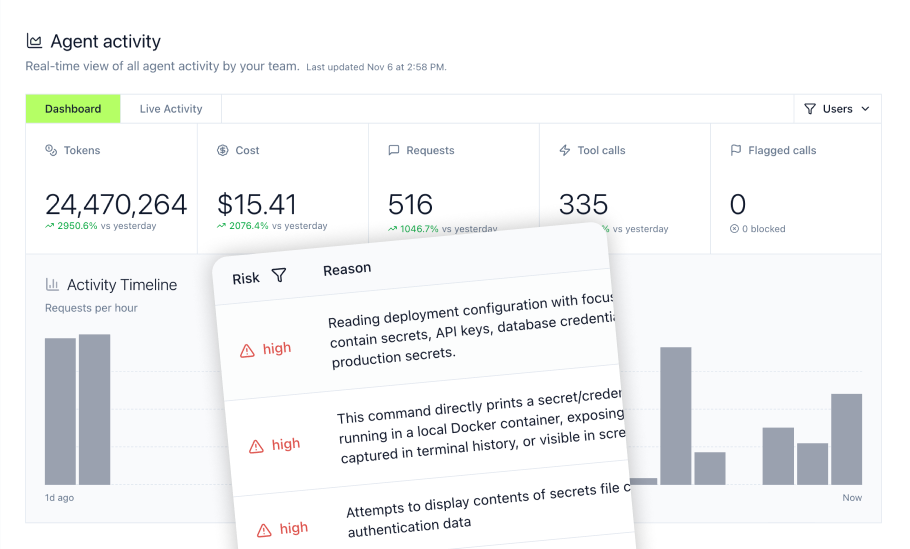
As enterprises deploy AI agents across engineering, sales, and operations teams, the infrastructure connecting those agents to internal tools and data sources becomes the critical control point. Agent gateways solve the "last mile problem" in enterprise AI by centralizing authentication, policy enforcement, and observability for every tool call an AI agent makes.
The MCP Gateway category has matured rapidly since the Model Context Protocol reached 97 million monthly SDK downloads and became a founding project of the Agentic AI Foundation under the Linux Foundation in December 2025. MCP now has first-class support across major AI platforms and developer tools, including ChatGPT, Claude, Cursor, Gemini, Copilot, and VS Code, making gateway selection a strategic infrastructure decision rather than an experimental add-on.
This guide covers 12 agent gateway and adjacent AI gateway options evaluated across performance, security architecture, MCP feature depth, and deployment fit. Whether your priority is raw throughput, compliance documentation, or open-source flexibility, understanding the tradeoffs helps you deploy AI agents without the credential sprawl and visibility gaps that block production rollouts.
Key Takeaways
- MintMCP combines an MCP Gateway for governed data and tool connections with an Agent Gateway for agent identities, permissions, memory, and monitoring, built on a data-permissions-first architecture
- Performance-optimized gateways report sub-millisecond overhead at high request rates with Apache 2.0 licensing
- Unified AI platforms combine LLM, MCP, and agent gateways in a single control plane with analyst recognition
- Broad model coverage across multiple providers with open-source cores enables multi-model flexibility
- Widely adopted open-source gateways provide community-supported infrastructure for self-hosted deployments
- Battle-tested API platforms now extend to A2A protocol support and MCP Registry capabilities
1. MintMCP: governed MCP access and agent control
MintMCP Gateway provides governed data and tool connections through authentication, tool-level access control, credential management, logging, and rule-based policy. MintMCP's Agent Gateway builds on that MCP Gateway foundation with identities, permissions, memory, and monitoring for agents. The platform takes a data-permissions-first approach: governance is the foundation, and agents are enabled on top.
Unlike traditional approaches requiring weeks of infrastructure setup, MintMCP helps teams turn MCP servers and hosted connectors into governed production services with centralized observability and enterprise authentication.
What makes MintMCP different
MintMCP solves the fundamental challenge organizations face when connecting AI agents to multiple data sources. The platform wraps stdio, hosted, HTTP-streamable, and SSE MCP servers behind SSO-fronted remote MCP endpoints with OAuth brokering, SCIM-driven membership, and rule-based policy. This architecture eliminates fragmented security policies and visibility gaps that create operational friction when managing point-to-point connections between AI agents and tools.
Core capabilities
- Hosted MCP Connectors: MintMCP runs connector instances with auto-scaling and sandboxed execution per connector, reducing infrastructure overhead
- OAuth Brokering for stdio and hosted servers: Add enterprise authentication to local and hosted MCP servers, including OAuth 2.x, bearer tokens, headers, and SSO-fronted access
- Real-Time Monitoring: Live dashboards showing server health, usage patterns, tool call tracking, and security alerts across all MCP connections
- Granular Access Control: Configure tool access by role with read-only operations for analysts while restricting write tools to authorized administrators
- Virtual MCP Bundles: Create team-specific, per-use-case endpoints that expose only the minimum required tools with SCIM-driven membership and curated tool lists
- Agent Bundles: Give internal agents first-class identities with M2M auth, scoped tools, independent rotation and revocation
- Custom Gateway Middleware: Runs customer-authored middleware in a JS sandbox with external DLP and guardrails integrations for masking, blocking, and policy enforcement
Security architecture
MintMCP implements defense-in-depth security through centralized governance, SSO enforcement, SCIM-driven RBAC, tool-level policy, credential management, and observability controls.
Enterprise integrations
- Snowflake data warehouse access with natural language queries
- Elasticsearch knowledge base search for documentation and log analysis
- Gmail integration for AI-driven customer response automation
- Custom MCP server deployment for internal tools and APIs
- Claude, Cursor, ChatGPT, Gemini, and Copilot governance through centralized gateway and Agent Monitor coverage
Compliance
- SOC 2 Type II audited
- Compliant with HIPAA standards (BAA available)
- Penetration tested
- Data encrypted in transit and at rest
Deployment
Managed SaaS-first delivery with US and EU availability. VPC and self-hosted deployment available on request.
Pricing
Contact for enterprise demonstration and pricing.
Visit mintmcp.com/mcp-gateway for the deployment guide.
2. Bifrost (Maxim AI)
Bifrost is an open-source AI gateway with a performance-optimized architecture. The platform reports low gateway overhead in vendor benchmarks, positioning it for high-throughput production workloads.
Primary focus
Built for teams running mission-critical AI workloads where latency overhead directly impacts user experience. The Apache 2.0 license provides source transparency without vendor lock-in.
Core features
- Deny-by-default tool filtering with three stacking levels (client config, headers, virtual key)
- Per-user OAuth 2.0 authentication for MCP servers
- Code Mode reduces input-token usage and estimated cost in vendor benchmarks of large MCP deployments
- Support for 1,000+ models across 23+ providers
Where Bifrost fits
Organizations prioritizing raw performance and self-hosted infrastructure control. Teams with DevOps capacity to operate gateway infrastructure benefit from the open-source model.
Deployment
Self-hosted via Apache 2.0 open source. Enterprise tier available by quote with 14-day trial.
3. TrueFoundry AI Gateway
TrueFoundry provides a unified AI platform combining LLM, MCP, and agent gateways in a single control plane. The platform was named a Representative Vendor in Gartner's 2025 Market Guide for AI Gateways, published in October 2025.
Primary focus
Full-stack AI infrastructure for organizations needing more than gateway functionality. The platform combines gateway, ML platform, and model serving capabilities.
Core features
- Unified control plane across LLM routing, MCP governance, and agent orchestration
- Documented air-gapped Kubernetes deployment for regulated environments
- OAuth 2.0 Identity Injection for On-Behalf-Of authentication
- Low-millisecond gateway latency with high per-vCPU throughput in vendor-published benchmarks
Where TrueFoundry fits
Platform engineering teams building comprehensive AI infrastructure. Organizations needing MLOps capabilities alongside gateway functionality benefit from the unified approach.
Deployment
Free developer tier available. Managed SaaS plus self-hosted control plane in customer Kubernetes. Air-gapped deployment supported.
4. Portkey
Portkey provides AI gateway and LLM-ops capabilities with broad multi-model coverage. The platform has an open-source core under the MIT License.
Primary focus
Model flexibility and observability for teams working across multiple LLM providers. The platform provides analytics for cost, latency, token usage, errors, traces, and performance tracking.
Core features
- MIT-licensed open-source gateway
- MCP Gateway introduced before its Agent Gateway capabilities, which were announced in April 2026
- Deployment flexibility from SaaS to hybrid to fully air-gapped
- Token-level usage tracking and cost attribution
Where Portkey fits
Teams requiring multi-model access with detailed cost tracking. The open-source core appeals to organizations wanting source visibility with optional enterprise features.
Deployment
Free developer tier. Pro tier at $49/month. Enterprise tier by quote. Self-hosted and air-gapped options available.
5. LiteLLM
LiteLLM is a widely used open-source LLM gateway with an active developer community. The MIT-licensed project provides unified API access to 100+ LLM providers.
Primary focus
Open-source standardization for teams wanting full infrastructure control without vendor lock-in. Active community development with weekly stable releases.
Core features
- MCP Gateway with OAuth 2.0 including On-Behalf-Of authentication
- Budgets per organization, team, project, and key with real-time tracking
- Rust migration announced for sub-1ms overhead targeting
- Server registry for MCP discovery and management
Where LiteLLM fits
The active open-source community makes LiteLLM suitable for teams that can operate and govern the gateway themselves.
Deployment
MIT-licensed open-source core. Self-hosted. Enterprise tier available by quote with a 30-day trial.
6. Kong AI Gateway
Kong extends its API gateway platform with AI-specific capabilities. Kong AI Gateway 3.14, released in April 2026, added native A2A traffic management. Kong introduced its MCP Registry separately in Konnect in February 2026.
Primary focus
Organizations with existing Kong API infrastructure seeking unified API and agent governance. The core gateway is available under the Apache 2.0 License.
Core features
- Coverage across LLM, MCP, and A2A protocols in one runtime
- MCP Registry in Konnect for cataloging approved MCP servers
- Per-tool ACLs with OAuth 2.0 and RFC 8693 token exchange
- Mature plugin ecosystem for extensibility
Where Kong fits
API platform teams adding agent traffic to existing Kong deployments. Organizations needing A2A protocol support benefit from Kong's dedicated observability for agent-to-agent traffic.
Deployment
Apache 2.0 open-source core. Konnect SaaS control plane with self-hosted data plane. Fully self-hosted option available.
7. agentgateway (Solo.io)
agentgateway entered Linux Foundation governance in August 2025 and joined the Agentic AI Foundation in June 2026. The project has contributions from AWS, Microsoft, Red Hat, IBM, and Cisco.
Primary focus
Vendor-neutral, foundation-governed infrastructure for organizations avoiding single-vendor control. The Rust-based data plane provides performance optimization for cloud-native environments.
Core features
- Native MCP and A2A protocol support with tool federation
- Rust data plane purpose-built for Kubernetes-native deployments
- Multi-vendor governance ensures neutral development direction
- Active open-source development under Linux Foundation governance
Where agentgateway fits
Infrastructure teams wanting foundation-governed open source rather than commercial vendor control. The foundation governance model may appeal to teams seeking vendor-neutral development.
Deployment
Apache 2.0 open source. Self-hosted via Docker or Kubernetes. Gloo Gateway 2.0 and Solo Enterprise tiers available by quote.
8. Zuplo AI Gateway
Zuplo provides a developer-first edge AI gateway with TypeScript-native configuration. The platform offers three purpose-built project types for API, AI, and MCP use cases.
Primary focus
Developer experience and rapid deployment for teams prioritizing speed over infrastructure complexity. Sub-minute global deployment to 300+ edge locations.
Core features
- TypeScript programmability with full IDE support
- Dedicated AI Gateway plus MCP Gateway project types
- Edge-native semantic caching and rate limiting
- Builder pricing starts at $25/month, while Enterprise pricing is custom
Where Zuplo fits
Development teams wanting fast iteration with minimal infrastructure setup. The edge-native architecture suits globally distributed applications.
Deployment
Edge SaaS. Free tier (100K requests/month). Builder tier at $25/month. Enterprise tier with custom pricing.
9. Cloudflare AI Gateway and MCP governance
Cloudflare AI Gateway is primarily an LLM traffic gateway for model requests rather than a standalone MCP tool gateway. Cloudflare handles MCP tool hosting and governance through its Agents platform, MCP Server Portal, and Cloudflare Access, while AI Gateway covers model routing, caching, rate limiting, and analytics.
Primary focus
Low barrier to entry for teams starting their AI gateway journey. Core features available free on all Cloudflare plans.
Core features
- Free caching, rate limiting, routing, and analytics
- Dynamic routing with percentage splits and fallback chains
- Unified REST API launched May 2026
- Global edge infrastructure with documented scale
Where Cloudflare fits
Teams that need low-friction model traffic controls at the edge and are comfortable combining AI Gateway with Cloudflare's separate MCP and Access capabilities for tool governance.
Deployment
Edge SaaS only. Core features free. Usage-based charges for advanced features.
10. Azure API Management (AI Gateway)
Azure API Management extends Microsoft's API platform with AI gateway capabilities and deep Azure service integration.
Primary focus
Azure-native path for organizations standardized on Microsoft cloud. Integration with Azure OpenAI, Managed Identity, and Azure Monitor reduces configuration overhead.
Core features
- Expose existing REST APIs as MCP servers through API Management
- Token-level quotas per subscription key with hourly-to-yearly limits
- Priority load balancing with PTU-first spill-over to pay-as-you-go
- Managed identity and Application Insights integration
Where Azure APIM fits
Enterprises committed to Azure cloud seeking to add AI gateway capabilities without new vendor relationships. The existing APIM customer base provides proven enterprise scale.
Deployment
Azure PaaS. No separate AI gateway SKU. Included in APIM tier pricing.
11. Gravitee Agent Mesh
Gravitee provides unified governance across APIs, event streams (Kafka), and AI agents in a single platform. Version 4.11 added MCP analytics and A2A API type support.
Primary focus
Organizations managing APIs, events, and agents together who want unified governance rather than separate platforms. The Agent Mesh architecture spans all three traffic types.
Core features
- Real-time MCP analytics dashboard with p90/p99 latency and method distribution
- RFC 8693 Token Exchange for secure agent delegation
- AI-powered PII filtering with automatic detection and redaction
- Dedicated A2A API type with reactor architecture
Where Gravitee fits
Enterprises with existing API and event stream governance seeking to add agent traffic to unified management. The Kafka integration suits data-intensive organizations.
Deployment
Community Edition is free for core API management. The Planet plan starts at $2,500/month, while higher-volume plans use quote-based pricing. The AI Agent Management pack is required for the full agent feature set.
12. IBM ContextForge
IBM ContextForge specializes in federation for organizations managing multiple MCP servers across distributed environments. The Apache 2.0 project focuses on composing and aggregating MCP servers into logical endpoints.
Primary focus
Platform teams with dozens of MCP servers needing centralized composition. Federation capabilities suit complex multi-gateway topologies.
Core features
- Virtual servers merge multiple MCP servers into logical endpoints
- Auto-discovery and health monitoring for multi-gateway deployments
- JWT bearer tokens, basic auth, custom headers with encrypted credential storage
- Database flexibility supporting common relational databases
Where ContextForge fits
Organizations with existing MCP server deployments needing federation rather than single-gateway replacement. IBM offers Elite Support for supported MCP ContextForge releases.
Deployment
Apache 2.0 open source. Self-hosted. Requires customer operation of gateway, database, and authentication infrastructure.
Selecting the right agent gateway for your organization
Performance requirements
Consider whether latency overhead directly impacts your use case. High-throughput applications benefit from sub-millisecond gateways, while internal productivity tools may tolerate higher latency for richer governance features.
Deployment model
Managed SaaS reduces operational burden but may not meet data residency requirements. Self-hosted options provide control but require infrastructure expertise. Hybrid models offer middle ground.
MCP feature depth
Evaluate whether you need basic MCP routing or advanced features like Virtual Bundles, Agent Bundles, OAuth brokering for stdio servers, and custom middleware. Feature requirements should drive platform selection.
Compliance posture
Organizations in regulated industries should look for a completed SOC 2 Type II audit, HIPAA documentation and BAA availability where applicable, and audit trail capabilities. Verify the vendor's audit and documentation status rather than assuming compliance from marketing claims.
Existing infrastructure
Teams standardized on specific clouds (Azure, GCP) or API platforms (Kong, Traefik) may benefit from extending existing investments. Purpose-built MCP gateways provide deeper functionality for greenfield deployments.
Deploy AI agents with governance built in
The MCP Gateway category has matured from experimental to production-ready infrastructure in 2026. Organizations deploying AI agents at scale need both governed data connections and agent control capabilities that work together.
MintMCP addresses these requirements through a two-layer approach. The MCP Gateway provides authentication, tool-level access controls, and audit trails for data and tool connections. The Agent Gateway builds on that foundation with identities, permissions, memory, and monitoring for the agents themselves.
Virtual MCP Bundles create per-use-case endpoints with SCIM-driven membership, so finance teams see only Snowflake and QuickBooks rather than all 50 internal MCP servers. Agent Bundles give each agent its own credentials and scoped tool access with independent rotation, eliminating shared service account keys. Hosted MCP connectors run with auto-scaling and sandboxed execution, removing the infrastructure overhead of managing connector pods.
This data-permissions-first architecture means governance is foundational rather than retrofitted. Teams moving from prototype to production get managed SaaS deployment that is SOC 2 Type II audited and compliant with HIPAA standards, with BAAs available. Start a free trial at mintmcp.com to deploy governed agent infrastructure this quarter.
Frequently asked questions
What is an agent gateway and why do enterprises need one?
An agent gateway is the control layer for agent identities, permissions, memory, and monitoring. An MCP gateway governs the data and tool connections those agents use, centralizing authentication, authorization, and observability for tool calls. Without these layers, organizations face fragmented policies, shared credentials, inconsistent audit logging, and limited visibility into agent activity. Together, they replace point-to-point connections with a manageable control plane.
How do agent gateways differ from traditional API gateways?
Agent gateways focus on agent identities, permissions, memory, monitoring, and agent-to-agent or agent-to-tool traffic. MCP gateways specifically govern MCP connections and tool authorization. Traditional API gateways generally focus on HTTP and REST traffic, although several vendors now add MCP-aware features. Purpose-built MCP and agent gateways may provide deeper capabilities such as per-agent identity, Virtual Bundles, and OAuth brokering for stdio servers.
What is the Model Context Protocol and why does it matter for tool calling?
The Model Context Protocol (MCP) standardizes how AI agents connect to tools and data sources. It became a founding project of the Agentic AI Foundation under the Linux Foundation in December 2025, with first-class support across major AI platforms and developer tools. This standardization means agents can connect to any MCP-compatible tool through consistent interfaces, and gateways can govern all connections through a single control point.
How do Virtual MCP Bundles and Agent Bundles work?
Virtual MCP Bundles create team-specific endpoints that expose only the minimum required tools with SCIM-driven membership and curated tool lists. Instead of granting access to all 50 MCP servers, a finance team Bundle might expose only Snowflake and QuickBooks with read-only permissions. Agent Bundles apply the same principle to AI agents rather than human users, giving each agent its own credentials, scoped tool access, and independent rotation capabilities without shared service account keys.
Can agent gateways monitor AI coding tools like Cursor and Claude Code?
Specialized governance layers can extend coverage beyond MCP traffic to monitor local agent activity. For example, MintMCP's Agent Monitor covers bash commands, file operations, and prompt submissions from Cursor, Claude Code, and other coding agents. This creates two-layer governance where the gateway covers MCP traffic while the monitor covers local non-MCP activity, addressing the unique security challenges of coding agents with extensive system access.