Legal firms face a critical integration challenge: while AI adoption accelerates across the profession, most firms lack the infrastructure to deploy these tools securely, at scale, and with proper governance. The Model Context Protocol (MCP)—often described as "USB-C for AI"—provides the missing layer that connects AI agents to document management systems, legal databases, case management platforms, and client communication tools while maintaining confidentiality and compliance.
For legal firms seeking unified AI governance, an MCP Gateway provides centralized control over authentication, audit logging, and tool access across every AI orchestrator your team uses—from ChatGPT to Claude to Microsoft Copilot. This transforms scattered AI experiments into production-ready infrastructure that supports governance controls aligned with confidentiality and supervision obligations (requirements vary by jurisdiction).
Key takeaways
- Universal Integration Protocol: MCP eliminates the custom connector problem—connecting AI tools to document management, case management, and legal research systems through one standardized protocol
- Compliance-Ready Patterns: MCP can preserve existing permissions and support ethical walls when implemented correctly; where data flows (and whether it’s retained) depends on your deployment model, access controls, and AI client settings
- Proven Efficiency Gains: Organizations deploying MCP-powered AI report significant time reductions on routine tasks including document review, research, and administrative workflows
- Rapid Deployment: Legal operations teams have built MCP servers in days and deployed firm-wide in weeks rather than months
- Small Firm Accessibility: Low-cost MCP tools democratize AI access for the majority of attorneys who work in smaller practices
1. Elevating legal marketing and client management with ai-powered tools
Legal marketing has shifted from traditional referral networks to data-driven client acquisition and retention. MCP enables AI agents to coordinate across CRM platforms, email systems, and marketing analytics tools—delivering personalized client communication at scale without manual intervention.
What MCP enables for legal marketing:
- AI-driven lead generation: AI agents query CRM data to identify prospects matching ideal client profiles, then draft personalized outreach through email systems
- Client intake automation: Intake forms, conflict checks, and initial matter setup coordinated across practice management software through natural language commands
- Brand reputation management: AI assistants monitor client feedback, aggregate sentiment data, and draft response communications for attorney review
Practical application:
Legal teams using MCP can integrate AI assistants with Gmail capabilities to search historical client communications, draft follow-up emails, and maintain consistent touchpoints—all while security controls ensure only authorized staff access sensitive correspondence. The system enables AI assistants to retrieve, draft, and send support communications directly from email platforms with full security oversight.
Results legal firms report:
- Automated client onboarding sequences reduce administrative burden by hours per new matter
- Personalized follow-up campaigns increase client retention without additional staff time
- Marketing analytics aggregated across platforms reveal which campaigns generate quality leads
2. Ensuring data security and compliance in legal AI deployments
Attorney-client privilege isn't optional—it's the foundation of legal practice. Traditional AI implementations risked exposing confidential communications to training datasets or unauthorized access. MCP addresses this through architecture that keeps data within secure environments.
How MCP protects confidential data:
MCP can be implemented so AI agents request specific context and receive scoped results, while your systems enforce access controls. Whether content is summarized vs. fully returned depends on server design, permissions, and the AI client’s configuration.
Security controls common in MCP deployments:
- OAuth 2.1 for protected MCP servers (per the MCP authorization spec) to control access
- Upstream permissions + role scoping to maintain ethical walls across matters and practice groups
- Audit logging at the gateway/server layer to capture tool usage and access events
- Retention controls based on your AI client/model policies and deployment choices (verify vendor settings)
Enterprise-Grade compliance:
MintMCP's security framework provides SOC2 Type II certification with complete audit trails. This means legal firms can connect AI tools to sensitive systems while meeting regulatory requirements.
The LLM proxy layer:
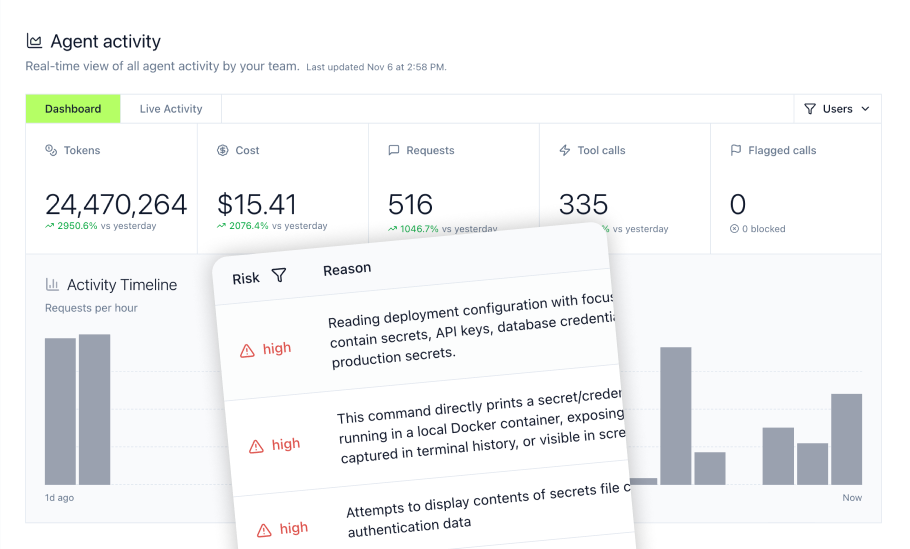
For firms concerned about what AI coding agents and research tools access, an LLM Proxy monitors every tool invocation, bash command, and file operation. Security guardrails block dangerous commands, restrict access to .env files and credentials, and maintain complete audit trails of all AI operations.
3. Streamlining legal operations with model context protocol deployments
The traditional approach to AI integration in law firms required custom connectors for every tool-to-system combination. Five AI tools connecting to five data sources meant 25 separate integrations—each requiring maintenance, security review, and ongoing updates.
MCP eliminates integration complexity:
MCP reduces this equation from N×M to N+M. Industry demonstrations have shown complete legal workflows—finding lease agreements, summarizing them, drafting emails, creating tasks, scheduling meetings—all from a single prompt in under an hour. Traditional integration approaches would have required weeks.
Real-World deployment speed:
Some teams can prototype MCP servers quickly, but firm-wide rollouts typically take weeks depending on security review, permissions, and change management. This timeline represents a fundamental shift from enterprise AI projects that typically span months.
One-Click deployment benefits:
- STDIO-based MCP servers deploy instantly with built-in hosting through platforms like MCP Gateway
- OAuth protection wraps around any local MCP server automatically
- Real-time monitoring dashboards track server health, usage patterns, and security alerts
What this means for legal operations:
- New AI capabilities deploy in days rather than months
- IT teams manage all AI tools through a centralized registry
- Developers request and receive AI tool access instantly through self-service portals
4. Transforming legal research and document review with enterprise AI
Legal research represents one of the highest-value applications for MCP-powered AI. Traditional research required attorneys to manually search across multiple databases, synthesize findings, and verify citations—a process consuming hours per matter.
Mcp-powered research capabilities:
AI agents using MCP can process requests like "Find cases involving data privacy violations in EU courts from the last 5 years" by coordinating case analysis, precedent identification, jurisdictional research, and legal interpretation while maintaining citation accuracy and authority verification.
Document analysis in practice:
MCP-connected systems can discover dozens of lease agreements in a matter, extract key information (tenants, amounts, dates), convert currencies, create dashboard visualizations, and generate calendar events for upcoming dates—all automatically with links back to source documents.
Key research use cases:
- Multi-jurisdictional case discovery: Coordinate searches across federal, state, and international legal systems
- Contract analysis at scale: Extract terms, identify risks, and compare against standard provisions
- Precedent identification: Analyze case law patterns and predict likely outcomes based on similar facts
- Due diligence automation: Surface relevant documents and flag issues across entire data rooms
Connecting AI to legal databases:
The Elasticsearch MCP Server enables AI agents to search legal knowledge bases using query DSL for flexible document retrieval. Legal teams can:
- Query internal precedent databases for relevant prior work product
- Search historical support ticket data and resolution patterns
- Perform semantic searches across years of firm documentation
5. Enhancing practice management through ai-driven insights
Practice management involves tracking billable hours, managing resources, forecasting revenue, and analyzing operational efficiency—all areas where AI delivers measurable improvements when connected to the right data sources.
Financial reporting and analysis:
MCP connections to data warehouses like Snowflake allow AI agents to automate revenue reporting, expense tracking, and budget variance analysis. Finance teams can ask natural language questions like "Show monthly realization rates by practice group for Q3" and receive instant visualizations with drill-down capabilities.
Resource allocation optimization:
AI agents query time and billing systems to identify:
- Attorneys approaching capacity who need work redistributed
- Matters trending over budget before they become problems
- Historical staffing patterns that predict optimal team composition
Time tracking and billing:
Small firm practitioners using MCP tools report the ability to create time entries through natural language commands, eliminating manual data entry while ensuring accurate billing records. The same tools summarize call notes and automatically save them to matter records.
Productivity metrics:
Organizations deploying MCP-powered AI systems report substantial efficiency improvements on routine tasks. These improvements translate directly to legal operations contexts, enabling teams to focus on high-value client work rather than administrative overhead.
6. Integrating AI with existing legal IT infrastructure seamlessly
Law firms have invested heavily in document management systems, practice management platforms, and specialized legal software. MCP enables AI integration without ripping out existing infrastructure.
How MCP works with legacy systems:
MCP functions as a translation layer between AI models and existing systems. When an attorney asks an AI assistant to "find all documents related to the Smith acquisition," the MCP server:
- Translates the natural language request into the appropriate query format
- Authenticates against the document management system using existing credentials
- Returns results with proper access controls enforced
- Maintains audit logs for compliance requirements
Integration without workflow disruption:
MCP is the missing layer that lets legal teams actually use AI with confidence, compliance, and creativity. The protocol works with existing AI tool deployments without changes to developer or attorney workflows.
Technical integration paths:
- Remote MCP connectors for cloud-hosted legal software (NetDocuments, Clio, etc.)
- Hosted MCP servers that containerize STDIO-based tools for production deployment
- Custom connectors for proprietary firm systems requiring specialized access
What legal IT teams gain:
- Centralized credential management for all AI tool API keys and tokens
- Single dashboard for monitoring usage, performance, and cost allocation
- Policy enforcement that automatically restricts data access based on role
Learn more about MCP connector architecture for technical implementation details.
7. Fostering innovation: Legal technology adoption and MCP benefits
The legal technology sector is experiencing consolidation around standardized protocols for AI interoperability. Major platforms are implementing MCP, signaling a fundamental shift in how legal tech companies compete and collaborate.
Industry adoption momentum:
The MCP ecosystem has grown exponentially, with a rapidly growing ecosystem—now cited as powering 10,000+ MCP servers—demonstrating accelerating adoption across technology sectors. This momentum is extending into legal technology as firms recognize the benefits of standardized AI integration.
The partnership model:
Legal technology companies are forming MCP-based partnerships rather than competing head-to-head on proprietary integrations. This collaboration signals that the industry increasingly views MCP as enabling partnership and interoperability.
What this means for law firms:
- Vendor flexibility: Choose best-of-breed tools knowing they'll integrate through MCP
- Reduced lock-in: Switch AI orchestrators (ChatGPT, Claude, and other MCP-compatible assistants) without rebuilding integrations
- Innovation access: New legal AI tools become accessible immediately if they support MCP
Competitive advantage:
Organizations using MCP-powered AI infrastructure achieve faster deployment cycles and improved operational efficiency—advantages that translate to faster client service and lower operating costs. According to American Bar Association research, firms that successfully implement AI technologies report improved client satisfaction and competitive positioning.
8. Mastering AI governance and observability for legal firms
Without proper governance, AI tools operate as black boxes with significant security risks. Law firms face unique challenges: bar ethics rules require reasonable efforts to prevent inadvertent disclosure of confidential information, and malpractice concerns demand accountability for AI-assisted work products.
The shadow AI problem:
Shadow AI continues to grow as attorneys adopt AI tools without IT oversight. Individual lawyers may use ChatGPT, Claude, or specialized legal AI without governance controls—creating compliance risks the firm cannot monitor or control.
What governance requires:
- Real-time monitoring of every AI tool interaction across Claude Code, Cursor, ChatGPT, and more
- Complete audit trails for SOC2 and regulatory compliance
- Policy enforcement that automatically restricts data access and usage
- Cost analytics tracking spending per team, project, and tool
Mcp-based governance in practice:
A legal firm MCP Gateway provides centralized governance—unified authentication, audit logging, and rate control for all MCP connections. Administrators can:
- See which MCP tools teams are using and track usage patterns
- Configure tool access by role (e.g., enable read-only operations while excluding write tools)
- Block risky tool calls before they execute
Observability for coding agents:
AI coding agents operate with extensive system access—reading files, executing commands, and accessing production systems. The LLM Proxy provides essential visibility:
- Track every tool call and bash command
- See which MCPs are installed and monitor usage
- Protect sensitive files from access
- Block dangerous commands in real-time
Read more about AI governance trends for legal operations.
9. Leveraging AI for enhanced legal marketing strategies
Legal marketing associations provide frameworks for attorney brand building, thought leadership, and business development. MCP enables firms to implement these strategies efficiently by connecting AI to marketing platforms, email systems, and analytics tools.
Ai-powered marketing execution:
- Thought leadership platforms: AI agents draft initial versions of articles, presentations, and social content based on attorney expertise and firm positioning
- Event management automation: Coordinate invitations, follow-ups, and attendee communications across multiple systems
- Referral network optimization: Track referral patterns and suggest relationship-building opportunities
Content marketing at scale:
Legal teams can use MCP-connected AI to:
- Analyze which topics generate engagement among target client demographics
- Draft client alerts and newsletters in firm voice based on legal developments
- Repurpose existing content across formats (blog posts, LinkedIn, webinars) efficiently
Communication analysis:
The Gmail MCP Server enables AI assistants to analyze communication patterns for marketing insights—identifying which messages generate responses, optimal send times, and effective subject line patterns—all while maintaining appropriate confidentiality boundaries.
Addressing the adoption gap: Why MCP matters for every firm size
The AI adoption gap in legal remains significant. While large firms with 500+ attorneys show higher adoption rates, solo practitioners lag considerably. This disparity matters because the majority of attorneys work in smaller firms—representing most of the profession without access to enterprise AI capabilities.
MCP democratizes AI access:
Small firms can deploy MCP tools without capital-intensive development projects. Attorneys can use natural language to:
- Update case notes and manage contacts
- Assign tasks and organize files across multiple systems
- Summarize emails and create time entries automatically
These capabilities previously required expensive practice management software or custom development—now accessible through MCP implementations that work with existing tools.
Conclusion: Transform your legal practice with MCP infrastructure
The Model Context Protocol represents a fundamental shift in how legal firms can deploy AI—moving from months-long integration projects to production-ready systems in days. For firms ready to deploy MCP with enterprise governance, MintMCP provides the infrastructure layer that makes this transformation possible.
What MintMCP delivers:
- One-click deployment for STDIO-based MCP servers with automatic OAuth protection
- Real-time monitoring across all AI tools and MCP connections
- SOC2 Type II certification with complete audit trails for compliance
- Centralized governance that transforms shadow AI into managed infrastructure
Whether you're a solo practitioner looking to automate administrative tasks or a large firm deploying AI across multiple practice groups, MCP provides the standardized foundation that makes AI integration practical, secure, and scalable.
Get started with MCP infrastructure that meets the unique security and compliance requirements of legal practice.
Frequently asked questions
How quickly can a legal firm deploy mcp-based AI tools?
Deployment timelines have compressed dramatically. Legal operations teams have built MCP servers in one day and deployed them firm-wide in one week. With MintMCP Gateway, firms can deploy STDIO-based MCP servers with one-click deployment, adding OAuth protection and enterprise monitoring in minutes rather than months.
Does MCP compromise attorney-client privilege?
No—MCP's architecture specifically preserves confidentiality. Data doesn't move outside secure environments; AI agents query systems and receive answers while existing permissions, ethical walls, and access controls remain intact. Every interaction is logged for audit purposes.
What compliance standards does mcp-based infrastructure support?
Enterprise MCP gateways like MintMCP are SOC2 Type II certified with complete audit trails. The protocol supports OAuth 2.1 authentication, role-based permissions, and comprehensive logging to meet bar ethics requirements and regulatory obligations.
Can small firms benefit from MCP or is this only for large law firms?
MCP tools may actually favor smaller, more agile firms. Small firms can adopt AI through MCP implementations without capital investment. The same administrative automation that requires enterprise budgets elsewhere becomes accessible through standardized MCP tools that work with existing systems.
How does MCP handle security risks like prompt injection?
Prompt injection represents a significant security risk for MCP-connected agents. Proper implementation requires input/output filtering, allow-lists for tool calls, least privilege access, and explicit consent mechanisms for high-risk operations. MintMCP's LLM Proxy blocks dangerous commands in real-time and protects sensitive files from unauthorized access.