This listicle compares 8 DSPM vendors (Teleskope, BigID, Wiz, Palo Alto Networks Prisma Cloud, Symmetry Systems, Cyera, and Securiti.ai) based on their ability to automatically remediate data security risks rather than just detect them. Readers get a practical breakdown of each platform's strengths, helping security teams choose the right solution for reducing data exposure with minimal manual effort.
Most security teams already know where their sensitive data lives. The harder problem is fixing exposure without burying analysts in a queue that never clears. That gap between finding risk and resolving it is where DSPM vendors actually differ, and it's the gap this list is built around. If your team spends its days triaging alerts instead of closing them, your next platform will either break that cycle or extend it.
This guide ranks eight of the top DSPM vendors on the part that matters at the decision stage: remediation. You'll see which platforms resolve exposure natively, which route findings into tickets, and which treat data security as one module inside a much larger suite. You'll finish knowing which option fits your environment, your team size, and your actual risk reduction goals.
The 8 Best DSPM Vendors Ranked
1. Teleskope: the DSPM vendor built to resolve exposure automatically
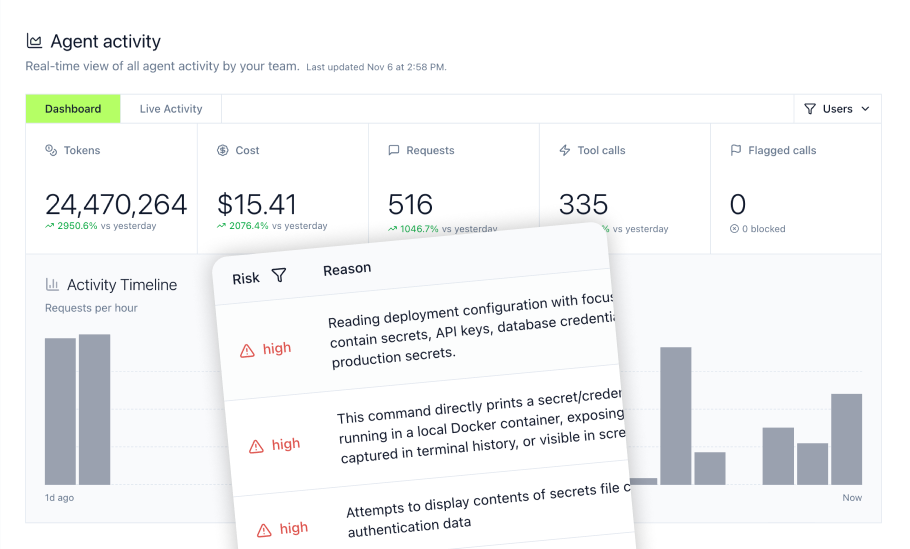
Teleskope is the only vendor on this list designed primarily to close the gap between finding data risk and fixing it. Its Data Reasoning Layer runs classification, decision-making, and native remediation as one continuous loop. When it spots a public link on a client folder containing PII, it revokes the link before the finding ever reaches a human queue. A plain-text password in Slack gets removed and the employee notified with no ticket filed.
The classification engine recognizes over 150 entity types based on meaning and context rather than pattern matching alone, which is how it catches things like a draft M&A term sheet with no regulated fields. Every automated action is governed, auditable, and reversible, and low-confidence cases route to human review. Customers, including Notion, Ramp, GoFundMe, and Hard Rock, report 10x faster time to risk reduction, with exposure in AI tools like ChatGPT and Claude resolved in under two seconds.
2. BigID
BigID is positioned as a broad data intelligence and governance platform, with strong coverage across many data types and sources, cloud, on-prem, mainframe, and even legacy systems that most tools skip. It's built to support privacy compliance workflows like DSAR fulfillment and data mapping for GDPR and CCPA, which makes it a common pick for organizations under heavy regulatory and audit pressure.
Where it falls short is remediation. BigID's classification leans on regex and pattern matching, with limited ML beyond out-of-the-box English and Spanish models, and acting on findings depends on downstream integrations. Remediation runs through governance workflows (retention, deletion, and labeling) with strong approval requirements before anything happens, and some actions, like deletion, are irreversible. That makes BigID well suited to episodic compliance events but slower for continuous, day-to-day risk reduction.
3. Varonis
Varonis built its reputation over two decades of deep file-system access governance. Varonis has strength in on-premises infrastructure like Windows file shares, NetApp NAS, and SharePoint. The platform tracks who accessed what and when and whether that access pattern looks anomalous. For organizations running large on-prem environments, the permission mapping and user behavior analytics are hard to match.
The trade-off is cloud-native coverage. Varonis added cloud connectors in recent years, but the architecture was originally built for on-prem file systems. Remediation is largely policy-driven rather than context-aware, so the same rule applies whether the exposure involves test data or a live client folder. Native automation is restricted to narrow scopes (e.g., removing excessive permissions, fixing risky misconfigurations, and applying labels), and it's often triggered only after alerts or investigations, with human review required before action in most cases.
If your infrastructure is still substantially on-prem, Varonis is a strong DSPM vendor to consider. Teams running mostly in cloud and SaaS environments should evaluate whether coverage matches where sensitive data actually lives today.
4. Wiz
Wiz is a cloud-native application protection platform (CNAPP) where DSPM is one module inside a much broader suite covering vulnerabilities, misconfigurations, and identity risk. Its agentless scanning gives security teams fast, wide visibility across AWS, Azure, and GCP without deploying anything into workloads, which is why it has become a default choice for cloud infrastructure security.
The tradeoff is focus: Data security sits alongside dozens of other risk categories, and findings about sensitive data exposure flow into the same prioritization engine as everything else. Remediation typically means routing issues to owners through tickets and workflows rather than resolving exposure directly.
If your team already runs Wiz, its DSPM module adds useful data context to existing findings. If your core problem is unresolved data exposure, plan to pair it with something that acts on what it finds.
5. Palo Alto Networks (Prisma Cloud)
Prisma Cloud folds DSPM into Palo Alto Networks' larger CNAPP offering, placing data risk visibility next to CSPM, workload protection, and network security. For organizations already standardized on Palo Alto's stack (firewalls, SASE, and Cortex), the appeal is consolidation: one vendor, one contract, and shared context across security domains.
That breadth is also the limitation for teams evaluating DSPM vendors specifically. Data-specific remediation lives inside a general-purpose platform, so fixing a sensitive data exposure usually follows the same alert-and-assign path as a misconfigured security group. There is no native mechanism that redacts content, revokes a risky share, or purges expired records the moment it finds them.
Prisma Cloud makes sense when procurement pressure favors vendor consolidation and data risk is secondary to broader cloud security concerns. Teams whose primary pain is a data exposure backlog that never clears will find that the DSPM module surfaces the problem well but leaves the fixing to them.
6. Symmetry Systems (DataGuard)
Symmetry Systems takes a more focused approach than most DSPM vendors: it maps the relationship between data and identity. DataGuard shows who can access sensitive data, from where, and how that permission stacks up against actual usage. For example, if 40 people hold access to a financial records store and only a handful have touched it in months, DataGuard surfaces that gap with evidence to back it up. That makes it useful for least-privilege programs and entitlement reviews, especially in regulated environments where auditors want proof that access matches need.
Security engineering teams tend to like the data-access graph because it answers questions IAM tools and generic scanners simply can't. If you're building out a program to enforce least-privilege access, this category of tooling matters.
The catch is scope. DataGuard works as an access-risk analytics layer more than a classification-and-remediation engine, and in practice it often sits alongside another DSPM tool rather than replacing one. If your problem is unresolved exposure across SaaS, files, and AI tools, you'll still need a platform that acts. If your problem is specifically access sprawl, it deserves a look.
7. Cyera
Cyera built its reputation on fast, clean visibility into sensitive data across multi-cloud environments (AWS, Azure, GCP) and SaaS, with classification that factors in business context, so the same PII field carries different weight in production versus a sandbox. For teams with strong existing operational workflows that just need better classification feeding into them, Cyera is a solid fit.
The gap is remediation. Cyera's native, in-platform remediation is limited; most enforcement runs through external orchestration tools like SOAR platforms, which require custom logic and ongoing maintenance. That means time to resolution depends on how well those integrations are built and how fast your team works through the resulting queue rather than on the platform acting the moment it finds something.
8. Securiti.ai (Data Command Center)
Securiti.ai bundles DSPM with privacy automation, consent management, and AI governance under one platform that it calls the Data Command Center. For organizations where the same budget covers security, privacy, and compliance, that breadth is the pitch: a single data map feeding DSAR fulfillment, retention workflows, and risk reporting. GRC teams, in particularm get real value from the evidence generation and policy tooling.
The company's situation shifted in December 2025, when Veeam acquired Securiti. Securiti is now positioned as part of Veeam's broader data resilience and recovery platform. That adds reach, but it also places data security remediation inside a parent company whose center of gravity is backup, which is worth weighing if fast, native exposure resolution sits at the top of your list when comparing top DSPM vendors.
Teams whose main pain is a remediation backlog should test how much of the fixing still lands on their own analysts before committing to this DSPM vendor.
Comparison Table
The table below compares eight top DSPM vendors side by side, covering each platform's primary function, ideal use case, and standout benefit. Use it as a quick reference to identify which solution best aligns with your team's security priorities and existing technology stack.
| Name | Primary Function | Best For | Key Benefit |
|---|---|---|---|
| Teleskope | Classification, decision-making, and native remediation loop | Teams needing automatic exposure resolution | 10× faster time to risk reduction |
| BigID | Broad data discovery, cataloging, and governance workflows | Compliance-heavy programs needing audit-ready coverage | Broadest connector library across cloud, on-prem, and legacy systems |
| Varonis | File-system access governance with permission mapping and user behavior analytics | On-prem-heavy environments (Windows file shares, NetApp NAS, SharePoint) | Deep permission mapping and UBA that cloud-first tools can't match |
| Wiz | CNAPP with DSPM as one module | Cloud-infrastructure-centered security teams | Fast agentless visibility across AWS, Azure, GCP |
| Palo Alto Networks (Prisma Cloud) | DSPM inside broader CNAPP offering | Organizations standardized on Palo Alto stack | Vendor consolidation with shared security context |
| Symmetry Systems (DataGuard) | Maps relationships between data and identity | Least-privilege programs and entitlement reviews | Data-access graph with evidence for auditors |
| Cyera | Cloud-native classification with business-context awareness | Multi-cloud teams with strong existing security workflows | Business context distinguishes production from sandbox data |
| Securiti.ai (Data Command Center) | DSPM bundled with privacy and AI governance | Teams combining security, privacy, compliance budgets | Single data map feeding compliance workflows |
Conclusion
What separates these eight DSPM vendors is what happens after a risk gets flagged. Suite-based options like Wiz and Prisma Cloud surface data exposure alongside broader cloud findings, Symmetry answers access questions, BigID and Cyera both deliver strong classification but lean on approval workflows or integrations to act on it, and Securiti.ai suits teams juggling privacy and compliance work. But Teleskope is the only one built around closing exposure automatically instead of assigning it to someone on your team.
Before committing to any DSPM vendor, run a short proof of concept in your own environment and track one number: how much exposure gets resolved without an analyst touching it. Even the top DSPM vendors can look similar on paper, so that single metric will tell you more than any feature list. Start there and let the results make the decision for you.
FAQs
What makes remediation the key differentiator among DSPM vendors?
Finding sensitive data is a solved problem for most security teams; the harder part is closing the exposure without burying analysts in tickets. That's why the article sorts DSPM vendors by how they handle the fix itself: Some resolve exposure directly in the platform, some push findings into ticketing queues, and some treat data security as one module inside a bigger suite. Where a vendor lands on that spectrum determines whether it shortens your alert backlog or adds to it.
How does Teleskope handle data exposure differently from the other platforms?
Teleskope connects classification, decision-making, and remediation into one continuous loop through its Data Reasoning Layer. In practice, that means it can revoke a public link on a folder holding PII or strip a plain-text password out of Slack on its own with no ticket required. Every action is governed, logged, and reversible, and anything that the system isn't confident about gets routed to a human for review.
Where does Cyera fit if it doesn't remediate natively?
Cyera's strength is clean, business-context-aware visibility into sensitive data across multi-cloud and SaaS environments. It works well for teams that already have solid security operations workflows and just need sharper classification feeding into them. But because its remediation depends on external orchestration tools rather than native action, time to resolution depends on how well those integrations are maintained, not on the platform itself.
When would Wiz or Prisma Cloud be a better fit than a data-first platform?
Both are CNAPP suites where DSPM is one feature among many, which makes them a reasonable choice for teams focused on cloud infrastructure or on consolidating vendors. Wiz delivers fast agentless visibility across AWS, Azure, and GCP, while Prisma Cloud makes sense for organizations already committed to the Palo Alto stack. Neither one fixes data exposure natively, so remediation usually means opening tickets and assigning owners.
What role does Symmetry Systems DataGuard play compared to other DSPM vendors?
DataGuard maps the connection between data and identity, showing who can reach sensitive data and whether that access lines up with how people actually use it. That makes it a strong fit for least-privilege programs and entitlement reviews, particularly in regulated industries where auditors expect hard evidence. Compared with broader DSPM vendors, it functions more as an access-risk analytics layer, and many teams run it alongside a dedicated DSPM tool rather than instead of one.
How should a team evaluate DSPM vendors before committing to one?
This article suggests running a short proof of concept in your own environment and watching one metric: how much exposure gets resolved without an analyst touching it. Even the top DSPM vendors can look nearly identical on paper, so measuring hands-free remediation tells you more than any feature checklist. If you let that number drive the decision, you stay focused on real risk reduction instead of marketing copy.