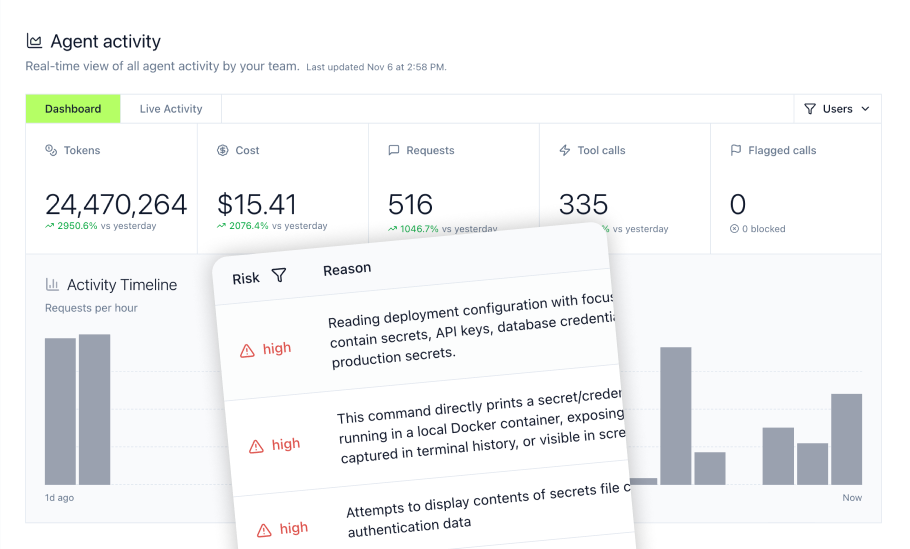
Connecting Supabase to AI systems securely and efficiently is a growing challenge for enterprise development teams. The Model Context Protocol provides a standardized approach to connect AI agents with Supabase databases, authentication systems, and real-time features but deploying these connections securely at enterprise scale requires proper infrastructure. This guide shows DevOps engineers how to implement Supabase MCP integrations that meet enterprise security requirements while enabling AI-powered automation across data pipelines.
Key takeaways
- MCP standardizes how AI agents interact with Supabase APIs, replacing fragmented custom integrations with a unified protocol
- Supabase’s official MCP server provides access to project management, database operations, migrations, and real-time data through natural language interactions
- Enterprise deployments require centralized authentication, audit trails, and access controls that local MCP servers cannot provide
- MintMCP’s gateway architecture enables one-click deployment of Supabase MCP servers with automatic OAuth protection and enterprise monitoring
- Hosted connectors eliminate infrastructure management while maintaining complete audit trails for SOC2 and compliance requirements
- Virtual MCP servers allow administrators to curate Supabase tool collections for different teams based on read-only vs. write permissions
- Supabase MCP integration reduces manual database management tasks while providing AI agents with real-time access to PostgreSQL data
What is MCP and why Supabase MCP matters
The Model Context Protocol is an open standard that enables developers to build secure, two-way connections between their data sources and AI-powered tools. For DevOps teams, this means AI agents can interact with Supabase databases, manage schema changes, execute SQL queries, and automate deployment tasks without requiring custom API integrations for each tool.
Traditional Supabase integrations follow a fragmented approach. Every AI tool, IDE, or automation system requires its own authentication setup, API wrapper, and maintenance overhead. When you need to connect Claude, ChatGPT, Cursor, and internal automation tools to Supabase, you maintain four separate integrations with different authentication patterns and no centralized audit trail.
MCP acts as a bridge between AI applications and external APIs. MCP servers expose external functionality as standardized tools. AI clients interact with these tools without prior knowledge of implementation details. This standardization dramatically reduces integration complexity while improving security and observability.
Supabase MCP server capabilities
Supabase’s official MCP server connects AI tools directly to Supabase’s platform, giving AI agents the ability to read projects and databases, create and update schemas, execute queries, manage migrations, and track database changes through natural language interactions.
The server provides these core toolsets:
Project Management
- Create and manage Supabase projects programmatically
- Pause and restore projects
- Retrieve project configuration and settings
- Monitor project status and health
Database Operations
- Design tables and track them using migrations
- Execute SQL queries and run reports
- Generate TypeScript types based on database schema
- Manage database schemas and relationships
Development Workflows
- Create database branches for development
- Apply and rollback migrations
- Retrieve logs to debug issues
- Monitor real-time database changes
Authentication & Security
- Configure authentication providers
- Manage user roles and permissions
- Set up Row Level Security policies
- Handle service role keys and API tokens
Why DevOps teams need enterprise MCP infrastructure
MCP prioritizes developer convenience over enterprise security. The protocol supports OAuth and other authentication methods, but implementation is optional and almost universally skipped. This creates significant risks for enterprise deployments.
Running Supabase MCP servers locally on developer machines introduces these problems:
- Credential Sprawl: Personal access tokens stored in configuration files across hundreds of developer laptops
- No Audit Trail: Zero visibility into which databases AI agents access or what operations they perform
- Access Control Gaps: No centralized way to revoke access or enforce role-based permissions
- Compliance Violations: Inability to demonstrate SOC2 or GDPR compliance without comprehensive logging
Enterprise DevOps teams require infrastructure that provides authentication, authorization, audit logging, and governance controls—capabilities that local MCP servers simply cannot deliver.
Understanding MintMCP gateway architecture for Supabase
MintMCP’s enterprise gateway solves the deployment challenge by running MCP servers in managed infrastructure with centralized security controls. Rather than asking every team member to manage local installations, administrators configure Supabase MCP connectors once and provide governed access through Virtual MCP servers.
How the gateway works
The gateway operates as a proxy layer between AI agents and Supabase APIs:
- Connector Registration: Administrators add Supabase MCP servers as connectors through the MintMCP console
- Virtual Server Creation: Connectors are bundled into Virtual MCP servers with curated tool collections for specific teams
- Unified Authentication: Team members authenticate with MintMCP and complete downstream OAuth flows only when required
- Request Routing: AI agents send tool requests to the Virtual MCP endpoint, which routes them through the gateway
- Audit Logging: Every interaction flows through MintMCP, creating comprehensive audit trails
This architecture provides critical benefits for DevOps operations:
- Deploy Once, Use Everywhere: Register Supabase connectors once and share across multiple Virtual MCP servers tailored to different teams
- Centralized Credential Management: Administrators configure authentication at the connector level instead of managing tokens across individual machines
- Complete Observability: Monitor which databases agents access, what operations they perform, and track usage patterns
- Enterprise Security: SOC2 Type II certified infrastructure with encryption, access controls, and compliance-ready logging
Three deployment patterns for Supabase MCP
MintMCP supports three approaches to deploying Supabase MCP connectors, each suited to different enterprise requirements:
Remote MCP Connectors
Point the gateway at Supabase’s hosted MCP server that Supabase maintains. This option provides the easiest deployment path with automatic updates and Supabase-managed infrastructure. Use remote connectors when you want minimal operational overhead and can rely on Supabase’s hosted service.
Hosted MCP Connectors
Supply the standard STDIO configuration for Supabase’s open-source MCP server and let MintMCP run it in managed infrastructure. This approach gives you control over the server version and configuration while MintMCP handles container lifecycle, scaling, and monitoring. Hosted connectors work well when you need specific toolset configurations or want to customize the server behavior.
Custom MCP Connectors
Build and deploy your own Supabase MCP server implementation with custom functionality. Package the artifacts and deploy onto MintMCP’s managed runtime for complete control over features and integration logic. Use custom connectors when you need to extend Supabase functionality with internal APIs or implement specialized workflows.
All three patterns enforce the same authentication, authorization, and logging policies described in the gateway architecture documentation.
Step-by-Step: Deploying Supabase MCP with MintMCP
This section walks through deploying Supabase MCP integration for your DevOps team using the hosted connector approach, which balances ease of deployment with configuration flexibility.
Prerequisites
Before starting, ensure you have:
- MintMCP account with administrator privileges
- Supabase project with databases you want to expose
- Supabase personal access token or OAuth app credentials
- Clear understanding of which teams need access to which projects
Creating a Supabase personal access token
Your Supabase MCP connector needs authentication credentials to access projects and perform operations. Supabase offers personal access tokens for single-workspace deployments and OAuth flows for multi-workspace scenarios.
For initial deployment, create a personal access token:
1. Navigate to Supabase Dashboard → Account → Access Tokens
2. Click “Generate new token”
3. Set token name (e.g., “MintMCP Supabase Connector”)
4. Choose appropriate expiration (organizations typically enforce 90-day maximum)
5. Select required scopes based on your needs:
api.access_token- Full API access (required for most operations)project.read- Read project informationdatabase.read- Read database schemasmigrations.write- Manage migrations
6. Generate token and store securely
Store your app’s credentials and generated tokens securely. The storage mechanism depends on your integration architecture and the platform that it runs on. In general, you should use a storage mechanism that is intended to store sensitive data on the platform that you are using.
For production deployments, migrate to OAuth 2.0 flows that provide per-user authentication and automatic token refresh.
Configuring the hosted Supabase MCP connector
Navigate to the MintMCP console and follow these steps:
1. Add Connector
- Go to MCP Connectors section
- Click “Add Connector”
- Select “Hosted Server” option
2. Configure Server Settings
Paste the MCP standard configuration for Supabase’s official server:
{
   "mcpServers": {
 	"supabase": {
   	"command": "npx",
   	"args": [
     	"-y",
     	"@supabase/mcp-server-supabase@latest"
   	],
   	"env": {
     	"SUPABASE_ACCESS_TOKEN": "<your-token>",
     	"SUPABASE_PROJECT_REF": "<your-project-ref>"
   	}
 	}
   }
 }
3. Set Environment Variable Scopes
SUPABASE_ACCESS_TOKEN: Set to “Global” for organization-wide access with a service account token, or “Per-User” to prompt each user for their own tokenSUPABASE_PROJECT_REF: Set to “Global” with your default project reference or “Per-User” for multi-project access
MintMCP encrypts all stored environment variables.
4. Deploy and Verify
- Click “Save” to trigger deployment
- MintMCP launches the server in a managed container
- Monitor the connector detail page for startup logs and available tools
The deployment typically completes within 30-60 seconds. If the server fails to start, check logs for common issues like invalid tokens or missing dependencies.
Note: Check Supabase’s official MCP server repository for the latest installation methods and configuration options, as deployment approaches may be updated.
Creating virtual MCP servers for team access
With the Supabase connector deployed, create Virtual MCP servers that bundle tools for specific teams. This approach prevents over-privileging by exposing only the minimum required capabilities.
DevOps Team Virtual Server
Create a Virtual MCP server for DevOps engineers who need full Supabase access:
1. Navigate to Virtual MCP Servers
2. Click “Create Virtual Server”
3. Name it “Supabase - DevOps Full Access”
4. Add your Supabase connector
5. Enable all toolsets: project management, database operations, migrations, authentication
6. Configure tool customization to expose all available tools
7. Set team members who should have access
Developer Team Virtual Server
Create a restricted Virtual MCP server for general developers:
1. Create new Virtual Server named “Supabase - Developer Read Access”
2. Add the same Supabase connector
3. Enable limited toolsets: database queries (read-only), schema browsing
4. Use tool customization to remove write operations
5. Assign to development team members
Data Team Virtual Server
Create a data-focused Virtual MCP server:
1. Create Virtual Server named “Supabase - Data Analytics”
2. Add Supabase connector
3. Enable only: SQL queries, schema inspection, log retrieval
4. Expose only analytics-related tools
5. Assign to data team members
This pattern implements role-based access control at the tool level, ensuring teams only access capabilities appropriate for their responsibilities.
Connecting AI agents to virtual MCP servers
Once Virtual MCP servers are configured, team members connect their AI agents using the published endpoints. The connection process varies by AI tool:
Claude Desktop Configuration
Recommended: add your Virtual MCP (VMCP) URL via the Connectors UI
1. In Claude Desktop, go to Settings → Connectors → Add custom connector
2. Paste your VMCP URL (from MintMCP) and finish setup
3. This is the officially supported way to use remote MCP servers in Claude Desktop
ChatGPT Custom Actions
Configure the Virtual MCP server as a Custom GPT action:
1. Generate OpenAPI specification from the Virtual MCP endpoint
2. Create new Custom GPT with generated spec
3. Configure OAuth 2.0 authentication pointing to MintMCP
4. Team members authenticate when first using the GPT
Cursor Integration
MCP servers can run locally or be hosted remotely, and Cursor supports both configurations. Configure the Virtual MCP server in Cursor’s MCP settings:
1. Open Cursor settings
2. Navigate to MCP Servers configuration
3. Add remote MCP server with Virtual MCP endpoint URL
4. Authenticate through MintMCP OAuth flow
Each connection method maintains individual user attribution for audit purposes while routing requests through the centralized gateway.
Implementing enterprise security controls
Supabase MCP integration introduces unique security challenges that traditional API security frameworks cannot address. MCP breaks traditional security assumptions through autonomous decision-making, dynamic tool discovery, unpredictable execution patterns, and context injection.
Authentication strategy: From prototypes to production
Enterprise deployments should follow a staged authentication approach:
Stage 1: Prototype with Personal Access Tokens
- Initial proof-of-concept deployments can use personal access tokens for rapid testing:
- Configure tokens with minimum required scopes
- Set 90-day expiration (recommended)
- Store in MintMCP’s encrypted environment variables
- Plan migration path to OAuth before production
Stage 2: OAuth 2.0 for Production
Production deployments require OAuth 2.0 for per-user attribution:
- Create Supabase OAuth app for your organization
- Configure MintMCP OAuth integration
- Each user completes OAuth flow on first Virtual MCP access
- Tokens refresh automatically without user intervention
- Comprehensive audit trails show which user performed each action
Stage 3: Enterprise SSO Integration
Large enterprises with centralized identity management need SAML/SSO:
- Integrate MintMCP with Okta, Azure AD, or other identity providers
- Users authenticate once with SSO credentials
- MintMCP obtains Supabase tokens through configured OAuth flows
- Access revocation happens at identity provider level
- Complete compliance with identity management policies
MintMCP’s authentication architecture supports all three stages, enabling gradual migration as deployment matures.
Implementing tool governance policies
Tool descriptions inject content directly into AI prompts, creating injection attack vectors that require governance and sanitization controls. MintMCP provides multiple layers of tool governance:
Tool Curation at Virtual Server Level
Not all teams need access to all Supabase capabilities. Virtual MCP servers let administrators curate tool collections:
- DevOps teams: Full read/write access to all toolsets
- Development teams: Read-only database access, schema browsing
- Data teams: Query execution, log retrieval, analytics tools
- Security teams: Authentication management, access control configuration
Read-Only vs. Write Access Patterns
Configure tool availability based on operation types:
Read-only tools for general access:
- Query database - Execute SELECT queries
- Retrieve schema - View table structures
- List projects - Browse available projects
- Get logs - Review activity logs
Write operations for authorized users only:
- Create table - Design new schemas
- Apply migration - Deploy schema changes
- Update configuration - Modify settings
- Create project - Initialize new projects
Real-Time Security Rules
MintMCP’s LLM proxy rules enable blocking dangerous operations before they execute:
- Block deletion operations on production databases
- Prevent force-dropping of critical tables
- Require approval workflows for schema changes
- Flag suspicious patterns for security review
Create rules through the MintMCP console at the gateway level, applying consistent policies across all Virtual MCP servers.
Audit and compliance requirements
Tool interactions access sensitive data and require comprehensive logging for compliance and incident investigation. Enterprise Supabase integrations must maintain detailed audit trails for multiple regulatory frameworks.
SOC2 Type II Compliance
MintMCP provides pre-built SOC2 compliance through:
- Comprehensive logging of all tool invocations with user attribution
- Access control enforcement with role-based permissions
- Change management procedures for connector updates
- Incident response capabilities with alerting and notifications
- Continuous monitoring through the activity log
GDPR Compliance for EU Operations
Organizations with EU operations need:
- Right to erasure implementation for user data
- Data portability through export capabilities
- Privacy by design architecture with minimized data collection
- Cross-border transfer controls for geographic restrictions
MintMCP’s audit and observability features automatically generate compliance reports demonstrating policy enforcement and access controls.
Integrating Supabase MCP with data workflows
Supabase MCP integration unlocks AI-powered automation across data pipelines. Database management and schema design have long been the domain of DevOps experts, but with native Supabase integration, it’s easier than ever to bring automation directly into your workflow.
Automated database schema management
AI agents with Supabase MCP access can automate schema workflows:
Schema Design and Migration
Configure AI agents to:
- Analyze application requirements and propose schema designs
- Generate migration files based on natural language descriptions
- Review schema changes for optimization opportunities
- Create rollback migrations automatically
- Verify schema compatibility with application code
Implementation Pattern
Set up automated schema management by connecting the Supabase MCP server to your schema workflow:
1. Create Virtual MCP server for database architects
2. Enable project management and migration toolsets
3. Configure agent to monitor schema change requests
4. Agent generates migrations using Supabase tools
5. Creates pull requests with migration files
6. Flags complex migrations requiring human review
This pattern reduces manual schema design time while maintaining code quality standards.
Real-Time data monitoring and analytics
Monitor database changes and react to events through AI agents with Supabase MCP access.
Change Detection and Alerting
Supabase Realtime extends PostgreSQL using a WebSocket server that listens to database changes through PostgreSQL’s replication protocol. When a row changes in your tables, PostgreSQL emits a change event that gets broadcast to subscribed clients.
AI agents can:
- Subscribe to real-time database changes using Supabase Realtime
- Analyze data patterns and identify anomalies
- Trigger workflows based on specific data events
- Generate reports on data usage patterns
- Alert teams to critical data changes
Automated Data Operations
Agents orchestrate data operations by:
- Executing scheduled data cleanup tasks
- Generating and distributing data reports
- Monitoring data quality metrics
- Triggering ETL processes based on data patterns
- Managing backup and restore operations
All operations flow through MintMCP’s gateway for complete visibility and audit logging.
Query optimization and performance monitoring
Supabase MCP enables AI-powered query analysis:
Performance Analysis
Configure agents to:
- Analyze slow query logs automatically
- Suggest index optimizations for common queries
- Review query plans and identify bottlenecks
- Compare query performance across deployments
- Generate performance reports for database teams
Example Query Optimization
-- Create index for frequently accessed columns
 CREATE INDEX idx_messages_created_at
 ON messages(created_at DESC);

 -- Enable replication identity for real-time
 ALTER TABLE messages
 REPLICA IDENTITY FULL;
Automated Optimization
Agents maintain database performance by:
- Creating indexes for frequently accessed columns
- Identifying unused indexes for removal
- Monitoring query execution times
- Alerting on performance degradation
- Testing optimization strategies in branch databases
All optimization attempts are logged in MintMCP’s activity log for audit and compliance.
Project lifecycle automation
AI agents can manage the complete Supabase project lifecycle with MintMCP oversight:
Environment Management
Automate environment operations:
- Spin up new Supabase projects for feature branches
- Configure authentication providers automatically
- Set up database replication for testing
- Manage project scaling based on usage
- Archive and clean up unused projects
Deployment Automation
Streamline deployment workflows:
- Apply migrations to staging environments
- Run integration tests against branch databases
- Promote successful changes to production
- Rollback failed deployments automatically
- Generate deployment documentation
Example Migration Script
-- Migration: Add user profiles table
 CREATE TABLE profiles (
   id UUID PRIMARY KEY DEFAULT gen_random_uuid(),
   user_id UUID REFERENCES auth.users(id) ON DELETE CASCADE,
   username TEXT UNIQUE,
   avatar_url TEXT,
   created_at TIMESTAMPTZ DEFAULT NOW()
 );

 -- Enable Row Level Security
 ALTER TABLE profiles ENABLE ROW LEVEL SECURITY;

 -- Create policy for user access
 CREATE POLICY "Users can view their own profile"
 ON profiles FOR SELECT
 TO authenticated
 USING (auth.uid() = user_id);
Securing Supabase data access with row level security
Supabase allows convenient and secure data access from the browser, as long as you enable Row Level Security (RLS). RLS must always be enabled on any tables stored in an exposed schema. By default, this is the public schema.
Enabling row level security
Any table you create in the public schema will be accessible via the Supabase Data API. To restrict access, enable Row Level Security on all tables:
-- Enable RLS on a table
 ALTER TABLE "table_name"
 ENABLE ROW LEVEL SECURITY;
Once you have enabled RLS, no data will be accessible via the API when using the public anon key, until you create policies.
Creating RLS policies
Policies are Postgres’s rule engine. Each policy is attached to a table, and the policy is executed every time a table is accessed. Think of them as adding a WHERE clause to every query.
Example: User-Specific Access
-- Policy: Users can only view their own todos
 CREATE POLICY "Individuals can view their own todos"
 ON todos FOR SELECT
 TO authenticated
 USING (auth.uid() = user_id);
This policy translates to:
SELECT *
 FROM todos
 WHERE auth.uid() = todos.user_id;
 -- Policy is implicitly added
Example: Team-Based Access
-- Policy: Team members can view team data
 CREATE POLICY "Team members can view team data"
 ON projects FOR SELECT
 TO authenticated
 USING (
   team_id IN (
 	SELECT team_id
 	FROM team_members
 	WHERE user_id = auth.uid()
   )
 );
Best practices for RLS
Always Specify Roles in Policies
Use the TO operator to specify which role the policy applies to:
-- Recommended approach
 CREATE POLICY "rls_test_select"
 ON rls_test
 TO authenticated
 USING (auth.uid() = user_id);
This prevents the policy from running for anon users, since the execution stops at the TO authenticated step.
Check for Authentication Explicitly
When a request is made without an authenticated user, auth.uid() returns null. To avoid confusion, explicitly check for authentication:
-- Recommended approach
 USING (
   auth.uid() IS NOT NULL
   AND auth.uid() = user_id
 )
Monitoring and observability for Supabase MCP
Comprehensive monitoring ensures your Supabase MCP integration operates reliably and securely. MintMCP’s observability features provide visibility into every aspect of the system.
Activity log and audit trails
The MintMCP activity log captures every Supabase MCP interaction:
- User who initiated each request
- Timestamp and duration
- Tool called and arguments provided
- Response data and status codes
- Virtual MCP server used
- Success or failure indicators
This comprehensive logging enables:
- Security incident investigation
- Compliance audit responses
- Usage pattern analysis
- Performance optimization
- Anomaly detection
Performance metrics to track
Monitor these key metrics for healthy Supabase MCP operations:
Request Latency
- Average response time per tool
- 95th percentile latency
- Timeout frequency
- Geographic latency distribution
Error Rates
- Failed requests by error type
- Authentication failures
- Rate limit hits
- Timeout occurrences
Usage Patterns
- Most frequently called tools
- Peak usage times
- Per-user request volumes
- Database access frequency
Resource Consumption
- API rate limit utilization
- Connector memory usage
- Request queue depth
- Concurrent connection count
Setting up alerts and notifications
Configure proactive monitoring through MintMCP’s alerting system:
Security Alerts
- Failed authentication attempts exceeding threshold
- Unusual access patterns indicating compromised credentials
- High-privilege operations on production databases
- Tool calls attempting dangerous operations
Operational Alerts
- Connector failures or unavailability
- Elevated error rates indicating API issues
- Rate limit approaching exhaustion
- Performance degradation beyond SLA thresholds
Compliance Alerts
- Access attempts outside allowed hours
- Operations on databases outside scope
- Missing audit log entries
- Configuration changes to security policies
MintMCP supports Slack notification actions for real-time alerting when critical events occur.
Troubleshooting common Supabase MCP integration issues
Authentication and authorization problems
Issue: Users Cannot Authenticate with Virtual MCP Server
Symptoms: OAuth flow fails, users see permission denied errors, tokens don’t refresh
Solutions:
- Verify OAuth app configuration in Supabase matches MintMCP settings
- Check redirect URLs are properly configured
- Ensure users have permission to access Supabase projects
- Review token scopes align with required permissions
- Confirm MintMCP can reach Supabase OAuth endpoints (no firewall blocks)
Issue: Token Expiration Causing Failures
Symptoms: Intermittent failures, works then stops, re-authentication required
Solutions:
- Migrate from personal access tokens to OAuth 2.0 with automatic refresh
- Configure token refresh thresholds in MintMCP
- Implement token rotation policies for service accounts
- Monitor token expiration dates through audit logs
Connector deployment failures
Issue: Hosted Connector Won’t Start
Symptoms: Connector status shows “failed”, logs indicate startup errors
Solutions:
- Verify environment variables are correctly configured
- Check Supabase token has required scopes
- Ensure command and arguments match official server specification
- Review logs for missing dependencies or version conflicts
- Test configuration locally before deploying to MintMCP
Issue: Tools Not Appearing in Virtual MCP Server
Symptoms: Connector running but no tools available, empty tool list
Solutions:
- Confirm Supabase token has appropriate capabilities enabled
- Check tool customization settings aren’t filtering all tools
- Verify connector successfully connects to Supabase API
- Review connector logs for tool registration errors
- Ensure Supabase token permissions allow accessing tool data
Performance and rate limiting
Issue: Slow Response Times from Supabase Tools
Symptoms: Timeouts, delayed responses, users report sluggish performance
Solutions:
- Check Supabase API rate limits aren’t exhausted
- Implement caching for frequently accessed project data
- Optimize tool calls to batch related operations
- Review connector resource allocation in MintMCP
- Consider geographic proximity of MintMCP infrastructure to Supabase
Issue: Supabase API Rate Limits Exceeded
Symptoms: 429 errors, rate limit messages in logs, service unavailable
Solutions:
- Switch to OAuth authentication which provides higher rate limits
- Implement request throttling at gateway level
- Cache project metadata and database schemas
- Distribute load across multiple Supabase projects
- Upgrade to Supabase Pro plan with higher limits if needed
Why MintMCP provides superior Supabase MCP integration
While Supabase’s official MCP server provides the protocol implementation, MintMCP delivers the enterprise infrastructure required for secure, compliant production deployments.
One-Click deployment with managed infrastructure
Unlike manual local installations, MintMCP provides instant STDIO-based MCP deployment with automatic OAuth protection. DevOps teams deploy Supabase MCP connectors in minutes instead of days, without managing container orchestration, load balancing, or high availability infrastructure.
Unified governance across all AI tools
MintMCP’s Virtual MCP architecture bundles multiple connectors into manageable endpoints, eliminating complexity of individual tool management. Monitor every AI tool interaction across Claude, ChatGPT, Cursor, and custom agents from a single interface with complete visibility into Supabase operations.
Enterprise security and compliance
Pre-built SOC2 Type II certification with complete audit trails for SOC2 and GDPR requirements. MintMCP provides SAML and OIDC authentication with existing identity providers, eliminating the need to build custom compliance infrastructure.
Real-Time security controls
Block dangerous commands and protect sensitive databases instantly through the LLM proxy layer. Create security rules at the gateway level that apply consistently across all Virtual MCP servers, preventing security incidents before they occur.
For DevOps teams serious about AI-powered automation, MintMCP transforms Supabase MCP from experimental technology into production-ready infrastructure with enterprise security, compliance, and governance built in.
Getting started with MintMCP and Supabase
Ready to deploy Supabase MCP for your enterprise? Follow these next steps:
For Administrators:
1. Sign up for MintMCP - Create your organization account at https://mintmcp.com
2. Review the Quickstart - See Introduction to MintMCP for core concepts
3. Deploy Your First Connector - Follow Hosted Connectors guide with Supabase configuration
4. Create Virtual MCP Servers - Reference Virtual MCP Servers documentation for your first team setup
5. Configure Authentication - Set up OAuth and SSO using Authentication Models guide
For End Users:
1. Connect Your AI Client - Choose your platform:
- Claude Web with VMCP
- ChatGPT with VMCP
- Cursor Client Setup
2. Complete OAuth Flow - Authenticate once with your MintMCP credentials
3. Start Using Supabase Tools - Access curated Supabase capabilities through your AI client
Frequently asked questions
What’s the difference between using supabase’s hosted MCP server directly and connecting to IT through MintMCP?
Supabase’s hosted MCP server runs natively on Supabase’s infrastructure, providing a quick and straightforward setup for individual developers or small projects. However, it operates in isolation and does not include enterprise-grade governance features.
By contrast, when you connect to Supabase’s MCP server through the MintMCP gateway, you retain the same underlying MCP capabilities while gaining MintMCP’s governance and compliance layer. This includes centralized authentication (OAuth 2.0, SSO), fine-grained access controls, workspace-level visibility, policy enforcement, and full audit trails of every interaction.
Can Supabase MCP through MintMCP access private databases in our organization?
Yes, Supabase MCP can access private databases based on the authentication credentials provided. When using personal access tokens, the connector accesses databases the token owner can access. With OAuth 2.0, each user authenticates individually, and the MCP server accesses only databases that user has permission to view.
For organization-wide access to shared databases, create a service account with appropriate project permissions. Configure the app credentials in MintMCP as a service account token at the connector level. This approach provides fine-grained control over which databases the MCP server can access while maintaining individual user attribution for actions performed through Virtual MCP servers.
How do we prevent AI agents from accidentally deleting production databases?
Implement multiple layers of protection through MintMCP’s security controls. First, create separate Virtual MCP servers for different teams with curated tool collections that exclude deletion capabilities for most users. Only DevOps administrators should have Virtual MCP access with database deletion tools.
Second, configure LLM proxy rules that block deletion operations on protected databases by matching tool names and arguments. Third, enable read-only mode for Supabase toolsets by setting appropriate flags in the connector configuration, preventing any write operations.
Finally, implement approval workflows where high-risk operations require human confirmation before execution. This defense-in-depth approach ensures dangerous operations cannot execute accidentally while maintaining functionality for authorized administrators.
What’s the recommended way to handle Supabase API rate limits for high-volume AI agent usage?
Supabase provides higher rate limits for authenticated requests compared to unauthenticated requests, making OAuth 2.0 authentication the optimal choice for enterprise deployments. Migrate from personal access tokens to OAuth apps to immediately increase available rate limits.
Implement caching at the MCP connector level for project metadata, database schemas, and other data that changes infrequently. Configure request throttling through MintMCP to prevent bursts that exhaust rate limits. For extremely high-volume scenarios, Supabase Pro and Enterprise plans provide higher rate limits negotiated based on your needs.
Monitor rate limit consumption through the MintMCP activity log and set up alerts when approaching 80% utilization to proactively adjust usage patterns.
How does MintMCP handle compliance requirements like SOC2 and GDPR for Supabase integrations?
MintMCP provides SOC2 Type II certification out of the box, eliminating the need to build custom compliance infrastructure. The platform automatically generates comprehensive audit trails showing who accessed which Supabase databases, what operations they performed, and when each action occurred.
For GDPR compliance in organizations with EU data, MintMCP supports Business Associate Agreements through enterprise contracts. GDPR requirements are met through right to erasure implementation, data portability features, privacy by design architecture with minimized data collection, and cross-border transfer controls.
The audit and observability features generate compliance reports demonstrating policy enforcement, access controls, and security incident handling required for audits across all regulatory frameworks.