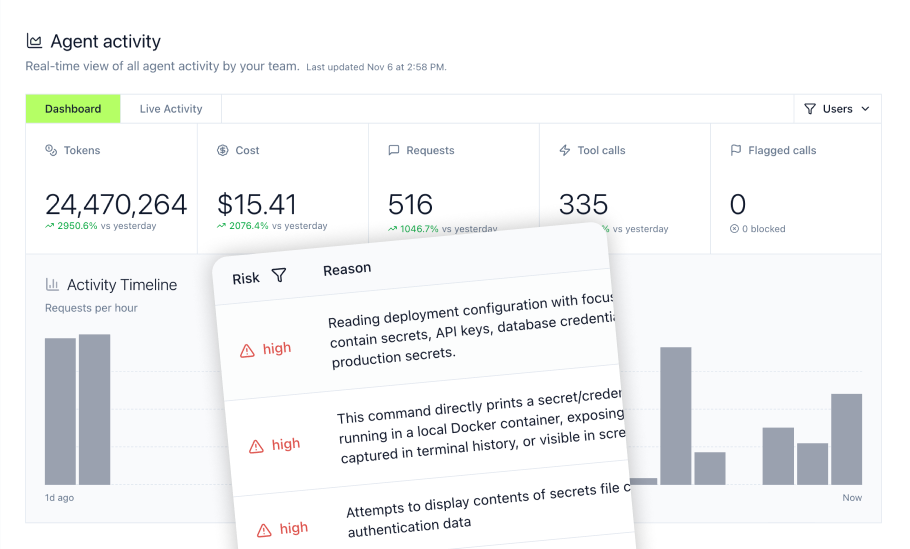
Building secure AI tool access for enterprise applications requires careful orchestration between web frameworks and MCP infrastructure. Remix's server-side architecture combined with MintMCP's enterprise gateway creates a powerful solution for exposing AI capabilities through web interfaces while maintaining security and compliance. This guide explores how DevOps and engineering teams can leverage Remix applications with MintMCP to provide governed access to AI tools across their organizations.
Key Takeaways
- Remix's server-side rendering architecture keeps MCP credentials and API keys secure on the server, never exposing them to client browsers
- MintMCP's Virtual MCP servers provide centralized access control and audit trails for Remix-based AI applications
- OAuth 2.0 integration between Remix and MintMCP enables per-user authentication without managing individual MCP server instances
- Server-side MCP connections eliminate the security risks of client-side credential management while maintaining responsive user experiences
- Enterprise-grade audit logging tracks every AI tool interaction for compliance and security monitoring
- Remix's progressive enhancement ensures AI tools remain accessible even in restricted enterprise environments
- Edge deployment capabilities reduce latency for globally distributed teams accessing AI tools
Understanding Remix's Role in MCP Architecture
Why Remix for Enterprise MCP Integration
Remix brings unique advantages to MCP integration that traditional single-page applications cannot match. The framework's server-first philosophy aligns perfectly with enterprise security requirements for AI tool access.
At its core, Remix executes critical operations on the server rather than in the browser. This fundamental design choice means sensitive MCP credentials, API keys, and tool interactions never reach client devices. When users interact with AI tools through a Remix interface, their browsers communicate only with your Remix server, which then securely connects to MintMCP's gateway infrastructure.
The framework's built-in session management provides encrypted storage for authentication tokens and user state. This eliminates the need for complex client-side token management while ensuring secure credential handling across user sessions. Remix automatically handles session rotation, expiration, and renewal - critical features for maintaining security in long-running AI tool interactions.
MCP Protocol Challenges in Web Environments
The Model Context Protocol was originally designed for local development environments where MCP servers run on individual machines. This architecture presents significant challenges for web-based enterprise deployments.
Traditional local MCP servers require each user to manage their own server instances, credentials, and configurations. This approach doesn't scale for organizations with hundreds of users who need AI tool access through web browsers. Security becomes a major concern as credentials must be distributed across numerous endpoints with no central control or visibility.
MintMCP's gateway architecture solves these challenges by running MCP servers in managed infrastructure with enterprise security controls. However, web applications still need a secure way to connect users to these centralized MCP servers without exposing credentials or allowing unauthorized access.
This is where Remix becomes essential. The framework acts as a secure proxy layer between web browsers and MintMCP's infrastructure, handling authentication, authorization, and session management while keeping all sensitive operations server-side.
Server-Side Security Benefits
Running MCP connections through Remix's server-side architecture provides multiple layers of security that protect both your organization and your users.
Credential Isolation and Management
All MCP authentication happens server-to-server between your Remix application and MintMCP. Users authenticate with your Remix application using standard web authentication methods like OAuth 2.0 or SAML, while the server maintains secure connections to MintMCP using service credentials. This separation ensures that even if a user's browser is compromised, MCP credentials remain secure.
Request Validation and Filtering
Every AI tool invocation passes through your Remix server before reaching MCP servers. This provides an opportunity to validate requests, enforce business rules, and filter out potentially harmful operations. Your Remix application can implement rate limiting, content filtering, and access controls specific to your organization's policies.
Complete Audit Trail
Server-side integration ensures that every interaction between users and AI tools flows through a central point where it can be logged and monitored. Combined with MintMCP's comprehensive audit features, this architecture provides the detailed activity logs required for compliance with SOC2, HIPAA, and other regulatory frameworks.
MintMCP Gateway Integration Patterns
Virtual MCP Servers and Remix Applications
Virtual MCP servers are MintMCP's solution for organizing and securing access to AI tools. These servers bundle multiple MCP connectors into unified endpoints that Remix applications can easily consume.
Instead of managing individual connections to dozens of MCP servers, your Remix application connects to carefully configured Virtual MCP servers that provide exactly the tools each user group needs. For example, you might create separate Virtual MCP servers for developers, analysts, and customer service teams, each with different tool sets and permissions.
The Virtual MCP architecture simplifies Remix integration by providing:
- Unified endpoints that aggregate multiple tool sources
- Consistent authentication across all connected tools
- Centralized access control managed through MintMCP's console
- Tool curation that exposes only relevant capabilities to each user group
Your Remix application simply needs to know which Virtual MCP endpoint to use for each user or role, dramatically simplifying the integration complexity.
Authentication Flow Architecture
Authentication between Remix and MintMCP follows industry-standard OAuth 2.0 patterns while adding layers specific to MCP tool access. MintMCP's authentication models support multiple approaches depending on your security requirements.
The typical flow works as follows:
- Users authenticate with your Remix application using your existing identity provider
- Your Remix server authenticates with MintMCP using client credentials
- MintMCP validates the connection and returns access tokens
- Remix stores these tokens securely in server-side sessions
- Subsequent tool invocations include the access token for authorization
This architecture supports both service account authentication (where your Remix app uses a single set of credentials) and per-user authentication (where each user has individual MCP access). OAuth configuration with MintMCP provides flexibility in how you structure authentication based on your compliance requirements.
For enterprises with existing SAML or OIDC infrastructure, MintMCP's SSO integration enables seamless authentication using your current identity provider. Users sign in once with their corporate credentials and gain access to AI tools without managing separate passwords or tokens.
Tool Governance and Access Control
MintMCP's tool governance features provide fine-grained control over which AI capabilities users can access through your Remix application. This governance happens at multiple levels:
Virtual Server Level Configuration
Administrators configure Virtual MCP servers with specific tool sets appropriate for different user groups. A Virtual MCP server for financial analysts might include database query tools and reporting capabilities, while excluding tools that modify production data. This curation happens in MintMCP's console before your Remix application ever connects.
Runtime Access Controls
Even within a Virtual MCP server, tool customization allows dynamic control over tool availability. Your Remix application can pass user context to MintMCP, which then applies additional filters based on user roles, time of day, or other business rules.
Audit and Compliance
Every tool invocation through your Remix application generates detailed audit logs in MintMCP. These logs include:
- User identity and authentication method
- Tool name and parameters
- Timestamp and duration
- Success or failure status
- Any error messages or warnings
This comprehensive logging meets requirements for SOC2 compliance and other regulatory frameworks while providing visibility into AI tool usage patterns.
Building Secure MCP Interfaces with Remix
Route Design for Tool Organization
Remix's file-based routing system naturally aligns with MCP's tool organization structure. Each route in your Remix application can correspond to a category of AI tools or a specific Virtual MCP server, creating an intuitive navigation structure for users.
Consider organizing routes by:
- Tool category:
/tools/database,/tools/analytics,/tools/automation - User role:
/analyst/tools,/developer/tools,/admin/tools - Business function:
/finance/ai-tools,/marketing/ai-tools,/operations/ai-tools
This organization makes it easy for users to find relevant tools while maintaining clear security boundaries. Each route can implement specific authentication requirements, ensuring users only access tools appropriate for their role.
Progressive Enhancement Strategies
Remix's progressive enhancement philosophy ensures AI tools remain accessible even in restricted enterprise environments. Forms submit naturally to the server without requiring JavaScript, making tools available even when client-side scripting is disabled for security reasons.
This approach provides several benefits:
- Accessibility: Tools work for users with disabilities who rely on assistive technologies
- Reliability: Network issues or JavaScript errors don't prevent tool access
- Security: Reduced attack surface as less code runs in the browser
- Performance: Faster initial page loads and interactions
Your Remix application can enhance the experience when JavaScript is available (adding real-time updates, rich interactions) while maintaining full functionality without it.
Session Management Best Practices
Secure session management is critical for MCP integrations. The framework's built-in session management provides **signed** storage for authentication tokens and user state, preventing tampering while keeping data integrity intact. For sensitive data that must be hidden from clients, use server-side session storage or implement additional encryption.
Key considerations for session management include:
Token Storage and Rotation
Store MintMCP access tokens and refresh tokens in encrypted session cookies that never reach client JavaScript. Implement automatic token refresh before expiration to maintain seamless user experiences during long-running AI operations.
Session Timeout Policies
Configure appropriate session timeouts based on your security requirements. Financial services might require 15-minute idle timeouts, while internal tools might allow longer sessions. Remix's session management makes it easy to implement these policies consistently.
Multi-Factor Authentication
For high-security environments, implement additional authentication factors before allowing access to sensitive AI tools. Store MFA verification status in the session and re-verify for particularly sensitive operations.
Production Security Considerations
Network Security Requirements
Securing network communication between Remix applications and MintMCP requires careful configuration of firewalls, TLS certificates, and API endpoints.
Your Remix server should communicate with MintMCP exclusively over TLS-encrypted connections. MintMCP's API endpoints support TLS 1.2 and higher, ensuring secure data transmission. Configure your Remix application to verify SSL certificates and reject connections with invalid or self-signed certificates.
Implement IP allowlisting where possible, restricting MintMCP API access to known Remix server IP addresses. This adds an additional layer of security beyond authentication tokens. For dynamic cloud environments, use VPC peering or private endpoints to establish secure network paths.
Input Validation and Sanitization
Every parameter passed to MCP tools through your Remix application requires careful validation to prevent injection attacks and unauthorized operations.
MintMCP's LLM proxy provides an additional security layer with capabilities for:
- Prompt injection detection that identifies attempts to manipulate AI behavior
- Content filtering that blocks sensitive data from reaching AI models
- Parameter validation that ensures tool inputs meet expected formats
Your Remix application should implement validation at multiple levels:
- Client-side validation for immediate user feedback (when JavaScript is available)
- Server-side validation in Remix actions before sending to MintMCP
- Schema validation against MCP tool specifications
- Business logic validation enforcing organizational policies
Compliance and Audit Requirements
Enterprise deployments must maintain comprehensive audit trails for regulatory compliance. MintMCP's audit and observability features provide the foundation, but your Remix application needs to contribute additional context.
Include in your audit logs:
- User context: Identity, roles, authentication method, IP address
- Request context: Tool name, parameters, timestamp, session ID
- Business context: Project, department, cost center, purpose
- Result context: Success/failure, duration, any errors or warnings
Store audit logs redundantly - both in MintMCP and your own systems - to ensure availability for compliance audits. Implement log retention policies that meet your regulatory requirements, typically 7 years for financial services or 6 years for healthcare.
Performance Optimization Strategies
Caching and Response Optimization
Intelligent caching reduces latency and API calls to MintMCP while maintaining data freshness. Remix's built-in caching strategies work well for MCP tool responses that don't change frequently.
Cache at multiple levels:
- Tool metadata: Cache tool descriptions and schemas for hours or days
- User permissions: Cache role-based access controls for the session duration
- Read-only results: Cache query results based on tool-specific TTL policies
- Configuration data: Cache Virtual MCP server configurations until explicitly invalidated
Implement cache invalidation strategies that balance performance with data accuracy. For example, database query results might cache for 5 minutes while user permissions cache for the entire session.
Edge Deployment Benefits
Deploying Remix applications to edge locations reduces latency for globally distributed teams accessing AI tools. Platforms like Cloudflare Workers, Vercel Edge Functions, or AWS CloudFront enable running Remix close to users while maintaining secure connections to MintMCP.
Edge deployment provides:
- Reduced latency: Responses served from locations near users
- Improved reliability: Automatic failover between edge locations
- Geographic compliance: Data processing in specific regions for regulatory compliance
- Cost optimization: Reduced bandwidth costs for frequently accessed content
Configure your edge deployment to cache static assets and tool metadata while routing dynamic API calls through to your origin servers that maintain MintMCP connections.
Monitoring and Performance Metrics
Track key performance indicators to ensure your Remix MCP integration meets user expectations:
- Tool invocation latency: P50, P95, and P99 response times
- Authentication success rate: Percentage of successful login attempts
- API availability: Uptime for MintMCP connections
- Error rates: Failed tool invocations by type
- Usage patterns: Most frequently used tools and peak usage times
MintMCP's monitoring features provide visibility into backend performance, while your Remix application should monitor frontend metrics like page load times and interaction delays.
Implementation Example
Here's a simplified example showing how Remix integrates with MintMCP for secure tool access:
import type { LoaderFunctionArgs } from "@remix-run/node";
import { useLoaderData } from "@remix-run/react";
import { authenticateUser, getMCPClient } from "~/services/auth.server";


export const loader = async ({ request }: LoaderFunctionArgs) => {
 // Authenticate user and get their session
 const user = await authenticateUser(request);


 // Get MCP client configured for this user's role
 const mcpClient = await getMCPClient(user.role);


 // Fetch available tools from MintMCP Virtual Server
 const tools = await mcpClient.listTools();


 // Return tools with user context (no json() wrapper needed)
 return {
   tools,
   user: {
     email: user.email,
     role: user.role
   }
 };
};


export default function ToolsPage() {
 const { tools, user } = useLoaderData<typeof loader>();
 // ...
 }
}
This example demonstrates the key principles: authentication happens server-side, MCP connections are managed securely on the server, and only necessary data is sent to the browser.
Best Practices for Production Deployment
Security Hardening Checklist
Before deploying your Remix MCP integration to production, ensure:
- All environment variables are stored in secure secret management systems
- TLS certificates are valid and properly configured
- Session cookies use secure, httpOnly, and sameSite flags
- Content Security Policy headers prevent XSS attacks
- Rate limiting protects against abuse
- Input validation prevents injection attacks
- Error messages don't leak sensitive information
Scalability Considerations
Design your Remix application to handle growing AI tool usage:
- Implement horizontal scaling for Remix servers
- Use connection pooling for MintMCP API connections
- Configure appropriate timeout values for long-running tools
- Implement circuit breakers to prevent cascade failures
- Plan capacity for peak usage periods
- Monitor resource utilization and scale proactively
Maintenance and Updates
Establish processes for maintaining your Remix MCP integration:
- Regular security updates for Remix and dependencies
- Monitoring MintMCP service announcements and API changes
- Periodic review of access controls and tool permissions
- Regular audit log reviews for suspicious activity
- Performance optimization based on usage patterns
- User feedback collection and feature improvements
Frequently Asked Questions
How does Remix handle authentication with multiple Virtual MCP servers?
Remix applications can connect to multiple Virtual MCP servers simultaneously by maintaining separate authentication contexts for each server. Your Remix server stores access tokens for each Virtual MCP endpoint in the user's session, selecting the appropriate token based on the tool being accessed. This allows you to organize tools across different Virtual MCP servers (for example, production versus development tools) while maintaining a single user session. The authentication flow remains transparent to users who see a unified interface regardless of the underlying Virtual MCP server architecture.
What's the recommended approach for handling long-running AI operations in Remix?
Long-running AI operations require special handling to avoid HTTP timeouts and maintain responsive user experiences. The recommended approach uses Server-Sent Events (SSE) or polling to provide progress updates while the operation runs asynchronously. When a user initiates a long-running tool through Remix, immediately return a job identifier and start the operation in the background. Your Remix application polls MintMCP for status updates or receives webhooks when the operation completes. MintMCP's audit system tracks the entire operation lifecycle, ensuring complete visibility even for asynchronous operations.
Can Remix applications use MintMCP's custom connectors for proprietary systems?
Yes, Remix applications work seamlessly with custom MCP connectors deployed on MintMCP. Once you deploy a custom connector to MintMCP's infrastructure, it becomes available through Virtual MCP servers just like standard connectors. Your Remix application doesn't need to know whether a tool comes from a standard or custom connector - the Virtual MCP server abstracts this complexity. This enables you to build Remix interfaces for proprietary systems, legacy applications, or specialized AI tools while maintaining the same security and governance model.
How do I implement multi-tenant isolation in a Remix MCP application?
Multi-tenant isolation requires careful separation at both the Remix and MintMCP levels. Configure separate Virtual MCP servers for each tenant in MintMCP, ensuring complete data isolation at the connector level. In your Remix application, identify tenants through subdomains, URL paths, or authentication claims, then route requests to the appropriate Virtual MCP endpoint. Store tenant configuration in your session management and validate tenant access on every request. MintMCP's tool governance provides additional isolation by restricting tool access per tenant, preventing cross-tenant data access even if authentication is compromised.
What are the cost implications of using Remix with MintMCP compared to direct MCP server deployment?
Using Remix with MintMCP typically reduces total cost of ownership compared to managing individual MCP servers. While MintMCP charges for the managed infrastructure and enterprise features, this eliminates costs associated with maintaining local MCP servers, distributing credentials, implementing authentication, building audit systems, and ensuring compliance. The Remix application layer adds minimal overhead - mainly compute costs for your web servers. Most organizations find that the operational savings, security improvements, and reduced development time more than offset the MintMCP subscription costs. The ability to centrally manage and monitor AI tool access also reduces support costs and security incident expenses.